UGANDA’S parliament has passed the Protection of Sovereignty Bill, 2026, enacting into law a piece of legislation that critics say could be weaponised to silence dissent – even as last-minute amendments stripped out some of its most contentious provisions. The bill now awaits the signature of President Yoweri Museveni, who is expected to assent.
The legislation was approved on Tuesday, 5 May 2026, during a packed plenary sitting chaired by Speaker Anita Among, following what ChimpReports described as a session conducted under tight military and police security, with deep divisions laid bare between government and opposition over the extent to which the state should regulate foreign influence.
In its amended form, the bill criminalises actions deemed to promote “the interests of a foreigner against those of Uganda” and designates individuals or groups formally acting on behalf of foreign interests – in political processes, public decision-making or national security matters – as “agents of foreigners.” Those convicted face prison sentences of up to 20 years.
WHAT THE AMENDMENTS CHANGED
The government introduced sweeping revisions ahead of the plenary vote in an attempt to blunt the bill’s most damaging edges. The most significant amendment excised an original clause that had classified Ugandan citizens living abroad as foreigners – a provision that had drawn fierce objection from the diaspora, civil society, and the business community.
Parliament also narrowed the definition of “agent of a foreigner” to cover only those who formally and knowingly act on behalf of foreign interests in specified influence-related activities. Broad ministerial approval requirements for foreign funding were replaced with a declaration regime, and exemptions were inserted protecting lawful foreign direct investment, diaspora remittances, portfolio investment, humanitarian assistance, concessional financing, and development assistance.
Institutions, including medical, academic, and faith-based organisations, were also carved out from certain restrictions, following objections from religious bodies and universities. The committee overseeing the bill said it had received submissions from 224 stakeholders across 60 groupings, including the Bank of Uganda, the Uganda Law Society, political parties, the United Nations, business associations, universities, health researchers, and civil society organisations.
“The amendments are intended to harmonise the definitions with the scope of the Bill to limit the application of the law to only agents of foreigners and not any other person.”
Parliamentary Committee on Defence and Internal Affairs
BANK OF UGANDA SOUNDS THE ALARM
Among the most striking interventions against the bill came from an unexpected quarter: the Bank of Uganda. Governor Michael Atingi-Ego appeared before the joint parliamentary committees on 28 April 2026 and delivered a blunt macroeconomic warning that cut to the heart of Uganda’s financial vulnerability.
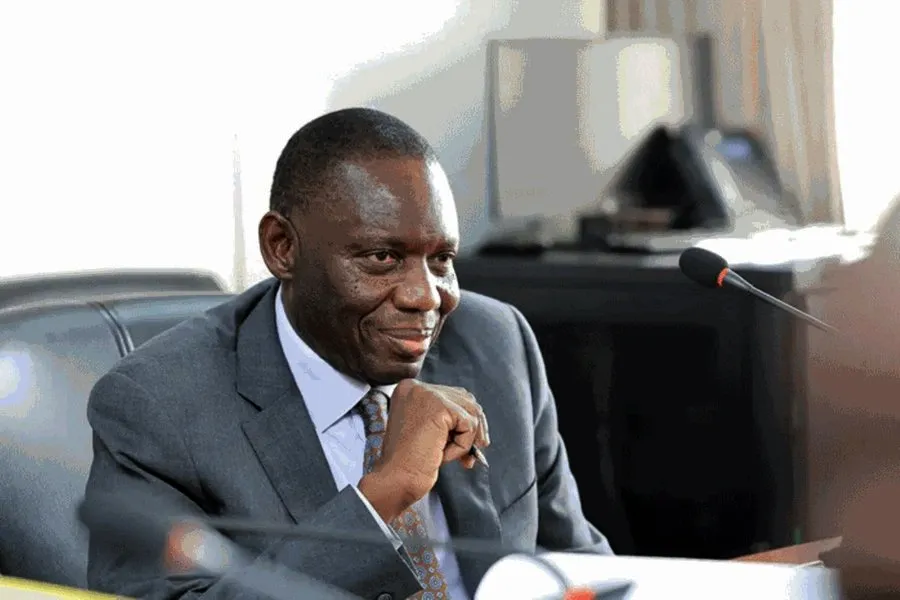
“A country without reserves is not sovereign,” the Governor told MPs, arguing that the bill’s restrictions — even in its original form — risked sharply reducing inflows of foreign investment, remittances, and portfolio capital that help finance Uganda’s persistent trade deficit. Uganda received US$1.5 billion in remittances in the last financial year, he noted, while foreign investors hold close to US$3 billion in Ugandan government securities, representing roughly 12 percent of outstanding issuances.
“The moment you damp out these inflows here, we risk running down our reserves, and that is an economic disaster for a country,” Atingi-Ego told lawmakers. He further warned that the bill could conflict with Article 162 of Uganda’s Constitution, which shields the central bank from direction or control by any person or authority in the exercise of its functions.
The clash between the Finance Ministry and the central bank was explicitly flagged in the committee’s report. While the Finance certificate estimated the bill’s cost at Ugx 29.029 billion, the Bank of Uganda characterised the legislation as a potential “macro financial shock.” The committee acknowledged that the certificate was “technically compliant” but conceded it failed to capture broader risks to “financial sector stability, capital flows, and monetary policy effectiveness.”
CIVIL SOCIETY: ‘CHILLING EFFECT’ REMAINS
Rights organisations and civil society groups were not mollified by the amendments. Human Rights Watch had warned, before the vote, that the bill employs vague language capable of being broadly applied to target activists, journalists, and organisations, and said it risked further shrinking civic space in a country already cited for suppressing dissent.
ARTICLE 19 Eastern Africa submitted a detailed legal and policy analysis to parliament, warning that the bill’s regulatory regime for civil society introduced mandatory registration backed by criminal sanctions, alongside broad discretionary powers for the Internal Affairs Minister to approve, deny, suspend, or revoke registration. The organisation called for the bill’s outright withdrawal, arguing that it created a framework likely to “chill expression, restrict association, and narrow civic space.”
The parliamentary committee itself acknowledged the risk: its report warned that vague offences risked a “chilling effect” in which “advocacy, research, journalism, or business operations may be discouraged.”
Opposition MP Gilbert Olanya of Kilak South County argued on the floor of parliament that the bill fundamentally contradicts Uganda’s Constitution and poses grave risks to civil liberties, the economy, and Uganda’s standing in the world. Ndorwa County East MP Wilfred Niwagaba went further, asserting that the bill criminalises free speech and infringes the constitutional principle of people’s sovereignty enshrined in Article 1. Calls to withdraw the bill were voted down.
“The Bill fundamentally contradicts the Constitution and poses risks to civil liberties, the economy and Uganda’s global standing.”
MP Gilbert Olanya, Kilak South County
MUSEVENI’S FOUR DECADES IN POWER
The bill’s passage is the latest in a long sequence of legislative moves that have drawn international condemnation under the rule of Museveni, who has governed Uganda for four decades. His administration has faced repeated accusations of authoritarianism, the jailing of political opponents, and the systematic suppression of civil society.
Museveni sought to contain the controversy ahead of the vote by publishing a four-page letter to Ugandans on 30 April 2026, dismissing fears that the law would restrict remittances, church donations, or private investments. He asserted that the bill he had initiated in cabinet was never intended to target ordinary citizens or the diaspora. Parliamentary supporters of the bill hailed it as a historic affirmation of national sovereignty.
Critics, however, point to international precedent. Kampala law firm MMAKS Advocates noted in a legal alert that Russia’s substantially similar Foreign Agents Act was condemned by the European Court of Human Rights as arbitrary, disproportionate, and bearing “the hallmarks of a totalitarian regime” — a finding it described as persuasive authority before Uganda’s own Constitutional Court.
With the bill now on its way to Museveni’s desk, civil society organisations have signalled they are considering constitutional challenges. Uganda’s critics internationally — including Western donor governments and multilateral institutions — have warned that the legislation, if implemented aggressively, could fundamentally alter the country’s relations with international partners and reshape the operating environment for the estimated 11,000 civil society organisations working across the country.