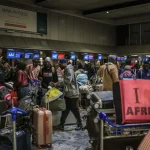
IN a striking demonstration of Africa’s fractured migration politics, Ghana is simultaneously executing two opposing state functions: airlifting 300 of its citizens out of South Africa to escape alleged xenophobic violence, while its security forces raid domestic slums to arrest and deport illegal immigrants of other nationalities.
The dual-track policy, approved by Foreign Minister Sam Okudzeto Ablakwa, exposes a profound irony at the heart of Ghana’s foreign and domestic strategy. Accra demands Pan-African protection for its diaspora in Pretoria while exercising uncompromising sovereign border control against West African neighbors in Madina.
The evacuation follows a formal advisory from Ghana’s High Commission in Pretoria, which documented “distress from recent xenophobic attacks” against Ghanaian nationals. Among the evacuees is Emmanuel Akowuah Asamoah, whose case became a diplomatic flashpoint after footage of alleged harassment went viral. Ghana’s government has committed state funds to bring these citizens home – a direct acknowledgment that they are no longer safe in a fellow African Union (AU) member state.
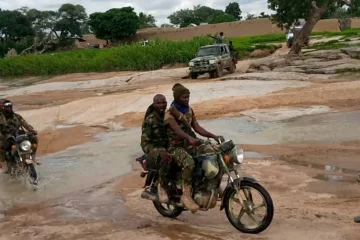
Yet barely 48 kilometers from Accra’s Flagstaff House, Ghana’s Immigration Service staged a very different operation. Armed officers raided Madina Zongo Junction, a densely packed migrant enclave, rounding up undocumented foreigners, street beggars, and suspected human traffickers. The official objective: repatriation. The operational language: enforcement, not protection.
The evacuation is the symptom of a rapidly deteriorating bilateral relationship. Ghana recently summoned South Africa’s envoy to demand answers over the alleged mistreatment of its citizens. But Accra escalated the conflict by petitioning the AU to schedule a June 2026 debate on “xenophobic attacks” against African nationals – a move South Africa’s Minister of Justice, Ronald Lamola, swiftly condemned as “regrettable.”
Pretoria’s counter-offensive was surgical. Rather than deny isolated violence, Lamola pivoted to accuse Ghana of hypocrisy, noting that Accra’s own immigration laws reserve specific economic sectors for citizens – a policy not unlike the local employment preferences that fuel South African resentment. He further proposed an alternative AU agenda: addressing the root causes of migration, including governance failures and youth unemployment, rather than singling out South Africa.
“South Africa hosts over three million African migrants legally under frameworks like the SADC Protocol,” Lamola stated. “No nation, including Ghana, tolerates illegal immigration on its soil.”
The xenophobic eruptions in South Africa cannot be divorced from economic despair. With unemployment exceeding 30% – and youth joblessness near 60% – foreign nationals operating informal shops or taxi routes have become scapegoats. The situation has been aggravated by external shocks, including the Iran war, driving fuel prices to record highs, which in turn raises food and transport costs, stoking public anger.
Crucially, South African authorities emphasize that attacks are not directed at legal, documented migrants, but at perceived illegals and criminal networks. This distinction, however, is lost in viral misinformation, where fake videos amplify ethnic hatred.
Ghana’s position is a test of the AU’s flagship AfCFTA free movement protocol. If Accra insists on the right to remove illegal immigrants from its territory while demanding that South Africa shelter undocumented Ghanaians, the entire framework of continental solidarity collapses.
President Cyril Ramaphosa’s Freedom Day pledge to fight prejudice has yet to produce a decline in violence. Conversely, Ghana’s Madina raid suggests that when the shoe is on the other foot, no African capital is willing to trade sovereignty for solidarity.
Both nations invoke *ubuntu* – the Nguni philosophy of shared humanity – but reality demands structure, not sentiment. Without bilateral migration pacts, transparent enforcement of legal immigration, and genuine investment in youth employment across West and Southern Africa, the cycle of violence and retaliation will continue.
As the AU summit approaches, Ghana and South Africa stand at a crossroads: either they agree that all nations have both a right to deport illegals *and* a duty to protect legal migrants, or they accept that Pan-Africanism is a slogan, not a safeguard.
For the 300 Ghanaians boarding evacuation flights, that slogan has already failed.