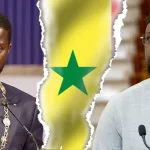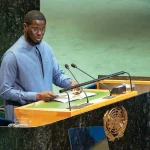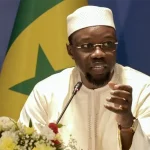

In the long and turbulent theatre of West African politics, this week may be remembered as the moment the curtain began to fall on Bassirou Diomaye Faye’s presidency — not through a coup, not through scandal, but through the slow, methodical democratic encirclement by the man who made him president.
On Saturday, 6 June 2026, at a historic inaugural congress in Diamniadio outside Dakar, PASTEF-Les Patriotes — the Pan-Africanist movement that swept Senegal’s political establishment from power in 2024 — held its first-ever party congress since its founding in January 2014. The outcome could not have been more decisive, or more damaging, for President Faye.
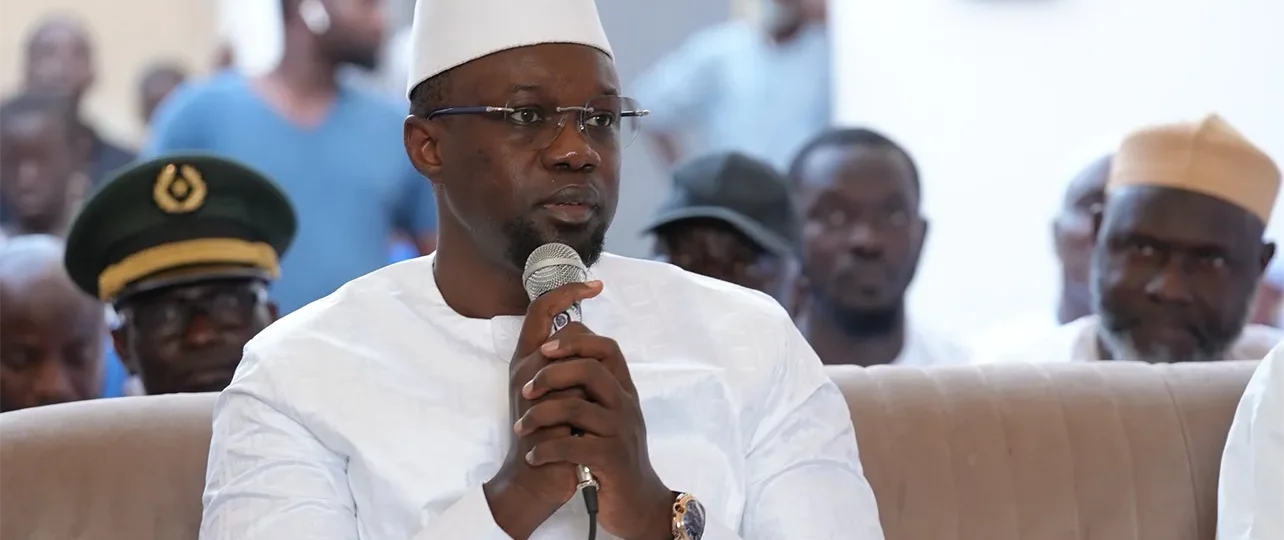
Ousmane Sonko, the firebrand founder whom Faye fired as prime minister just fifteen days prior, was unanimously re-elected party president. All 583 delegates voted in his favour. Not a single dissenting voice. The party described the result as a renewal of its “unshakable confidence” in Sonko. It was, in political terms, a declaration of war delivered with parliamentary courtesy.
“He has not a single deputy in the National Assembly. Whether he wants it or not, we are in a situation of cohabitation.”
THE ARITHMETIC OF ANNIHILATION
The numbers that define Senegal’s political crisis are brutal in their simplicity. PASTEF controls 130 of the 165 seats in Senegal’s unicameral National Assembly — a parliamentary supermajority of 78.8 percent that gives it dominion over the legislative calendar, the committee system, parliamentary inquiries, and, crucially, the power to bring down any government through a motion of censure.
Sonko, elected National Assembly president on 26 May with 132 of 133 votes cast, now occupies the second-highest office in the Senegalese state. He controls the parliamentary agenda. He can summon ministers. He can launch investigations. He can, when the political moment is right, activate a parliamentary majority that Faye has no hope of matching.
And then came the congress bombshell: approximately 60 political parties and citizen movements have formally joined PASTEF’s ranks, signing a merger charter that transforms the party from a dominant force into something approaching a total political monopoly over Senegal’s democratic space. Where PASTEF was already a political tsunami, it has now absorbed the tributaries. The already formidable wave has become a continental shelf.
For President Faye, the optics could scarcely be worse. He now governs as, in effect, an independent — his Wikipedia entry already updated to list his party affiliation as “Independent (2026–present)” after leaving PASTEF. His cabinet, a 30-member government formed on 2 June, was put together without a single formal PASTEF representative, led by Ahmadou Al Aminou Lo, a 60-year-old technocrat and former BCEAO official who carries no party loyalty and limited political weight.
A FRACTURE BORN OF DEBT AND SOVEREIGNTY
The rupture between these two men — who once represented one of the most compelling political partnerships in recent African history — was not, at its heart, a personal falling-out. It was ideological. It was strategic. And it was, arguably, inevitable.
The fault line opened over Senegal’s ballooning public debt crisis and the question of how to address it. When auditors revealed billions of dollars in previously undisclosed liabilities in 2024, the two leaders diverged sharply on the path forward. Faye, the pragmatist, was open to re-engaging the International Monetary Fund for a new loan programme. Sonko, the sovereign Pan-Africanist, rejected this path as a capitulation to the very international financial architecture that PASTEF had campaigned against.
It was the kind of disagreement that could not be quietly managed, because it went to the soul of the movement. PASTEF was not merely an electoral vehicle — it was a political project premised on breaking Senegal’s dependence on the Washington Consensus. To negotiate with the IMF on the IMF’s terms was, for Sonko, a betrayal of the revolution that brought them both to power.
Faye dismissed Sonko on 22 May 2026. Within four days, PASTEF’s parliamentary majority had elected Sonko speaker of the National Assembly. Within fifteen days, they had crowned him undisputed party leader at a congress of 583 delegates. The speed and completeness of the response left no room for ambiguity: PASTEF had chosen its founding father over its president.
“Our voice is that of a democratic revolution, popular and sovereign.”
THE BORROWED TIME PRESIDENCY
President Faye is not yet politically dead. He retains the formal powers of the executive — the right to appoint ministers, sign decrees, represent Senegal internationally, and command the armed forces. He has one important constitutional card still to play: from November 2026, after two years in office following the last parliamentary elections, he will be constitutionally permitted to dissolve the National Assembly and call snap elections.
But this option is a gamble stacked against the house. The current parliament, elected in November 2024, cannot be legally dissolved before that date. And even when the window opens, dissolving the assembly would mean dissolving the very supermajority that Faye’s own September 2024 dissolution decision helped create. Fresh elections would pit a presidency without a party against a movement now commanding 60 allied formations. The political mathematics would be even more catastrophic for Faye than the status quo.
There is one additional constraint that tightens the vice further: a reform of Senegal’s electoral code, passed by the PASTEF-dominated parliament in May 2026, has made Sonko himself eligible to run for the presidency. What was once a legal barrier preventing the movement’s founding figure from taking the top job has been removed, almost certainly by design. The congress in Diamniadio was not merely a party gathering. It was the launch of the next presidential campaign — one that need not wait for 2029 if cohabitation collapses governance entirely.
Sonko, notably, has thus far played the role of responsible institutionalist. He has ruled out, for now, using the motion of censure to bring down Lo’s government. He has called for dialogue. He has described the situation as “cohabitation” and urged Faye to “come down from his pedestal.” This is the language of a man who understands that patience is power — that the longer the institutional standoff continues without resolution, the more illegitimate Faye’s isolated executive appears, and the more inevitable Sonko’s eventual ascension looks.
COHABITATION OR COUNTDOWN?
Senegal has no precedent for cohabitation of this kind. The country’s post-independence political culture was built around strong presidential authority, reinforced by the model of Léopold Sédar Senghor, Abdou Diouf, and ultimately the machine politics of Abdoulaye Wade and Macky Sall. What is unfolding now is constitutionally novel — a sitting president governing without a single MP in parliament, confronting a speaker who is simultaneously his former prime minister, his former party leader, and his most credible successor.
Foreign investors and multilateral institutions are watching with mounting anxiety. With billions in undisclosed debt still to be addressed and IMF negotiations in limbo, Senegal’s economic credibility hangs in the balance. A government without parliamentary legitimacy cannot credibly commit to fiscal reform. A president without a party cannot secure the political consensus that structural adjustment demands. The institutional gridlock has a direct economic cost.
For the African continent, the situation carries a wider resonance. Senegal was long held as a model of democratic stability — a country that, unlike many of its Sahel neighbours, had navigated transfers of power without military intervention. The spectacle of a democratically elected president stranded by his own party’s parliamentary army is, in one sense, evidence that Senegal’s institutions are working: power is being contested through votes, through congresses, through constitutional mechanisms, not through coups. But it is also evidence of what happens when a revolutionary movement achieves total political dominance — and then fractures along the fault line of governance versus ideology.
“PASTEF controls 78.8 percent of the National Assembly. Sixty political formations have now merged into its ranks. The movement that made Faye president has become the institution most capable of ending his presidency.”
THE ROAD TO THE PALACE RUNS THROUGH THE SPEAKER’S CHAIR
The trajectory of Senegalese politics, as it stands this week, points in one direction. Sonko is the dominant figure of the country’s dominant party. He controls the legislature. He has the constitutional eligibility, now secured by a parliamentary reform, to contest the presidency. He has a coalition of 60 formations that has dramatically expanded PASTEF’s national organisational reach ahead of the 2027 local elections, which will serve as the first critical electoral test of the cohabitation era.
Local elections in 2027 will be PASTEF’s opportunity to demonstrate that its political machine remains the most powerful force in every corner of Senegal — a demonstration that would set the stage for the 2029 presidential election as a foregone conclusion, assuming the current standoff does not produce an earlier crisis. But Sonko has not foreclosed the possibility of an earlier reckoning. The motion of the censure weapon remains holstered, not surrendered. Every week of institutional deadlock tightens the political noose around a presidency that began with enormous popular promise and has found itself governing from an island.
President Faye came to power as a symbol of a new Africa — young, incorruptible, uncontaminated by the patronage networks that had corroded Senegalese governance for decades. He was released from prison and elected to the presidency within days, one of the most remarkable political reversals in the continent’s recent history. He was, in a very literal sense, Sonko’s candidate, Sonko’s protégé, Sonko’s vehicle when the courts closed the door to Sonko himself.
That is the deepest irony of his current predicament. The institutions that now threaten his presidency — the party, the parliament, the movement — are institutions that Sonko built, and that Sonko controls. Faye’s dismissal of his mentor may have been constitutionally clean, but it was politically suicidal. He lit a fuse that his former prime minister has now transformed into a bonfire.
Whether Faye survives to the 2029 presidential election will depend on whether he can find, in the coming months, a formula for reintegrating PASTEF into governance, or whether the cohabitation hardens into a full constitutional crisis that forces an earlier resolution. The November 2026 window — when both parties gain new constitutional tools, Faye the power to dissolve parliament and PASTEF the unimpeded power to censure — is the next critical inflection point.
Until then, Senegal’s president governs on borrowed time, in a borrowed house, with a borrowed mandate — while the man who lent him all three sits in the speaker’s chair, patient, organised, and waiting.
■ KEY FACTS AT A GLANCE
PASTEF seats in National Assembly: 130 of 165 (78.8%)
Sonko’s National Assembly election result: 132 of 133 votes (26 May 2026)
PASTEF congress delegate vote for Sonko: 583 of 583 — unanimous (6 June 2026)
New formations joining PASTEF merger: approximately 60 parties and citizen movements
Earliest date Faye may dissolve parliament: November 2026 (two-year constitutional bar)
Senegal local elections: 2027 | Presidential election: 2029
Sonko’s presidential eligibility: Restored by electoral code reform passed May 2026