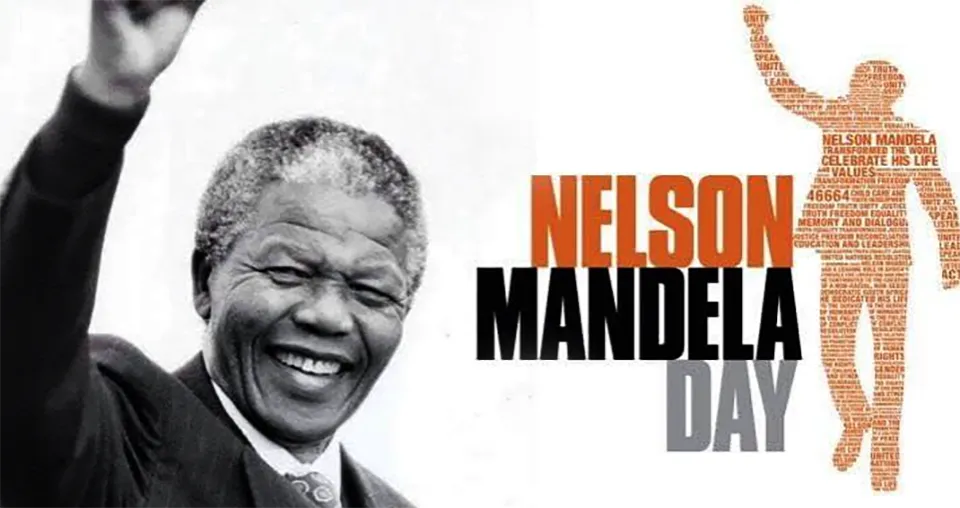

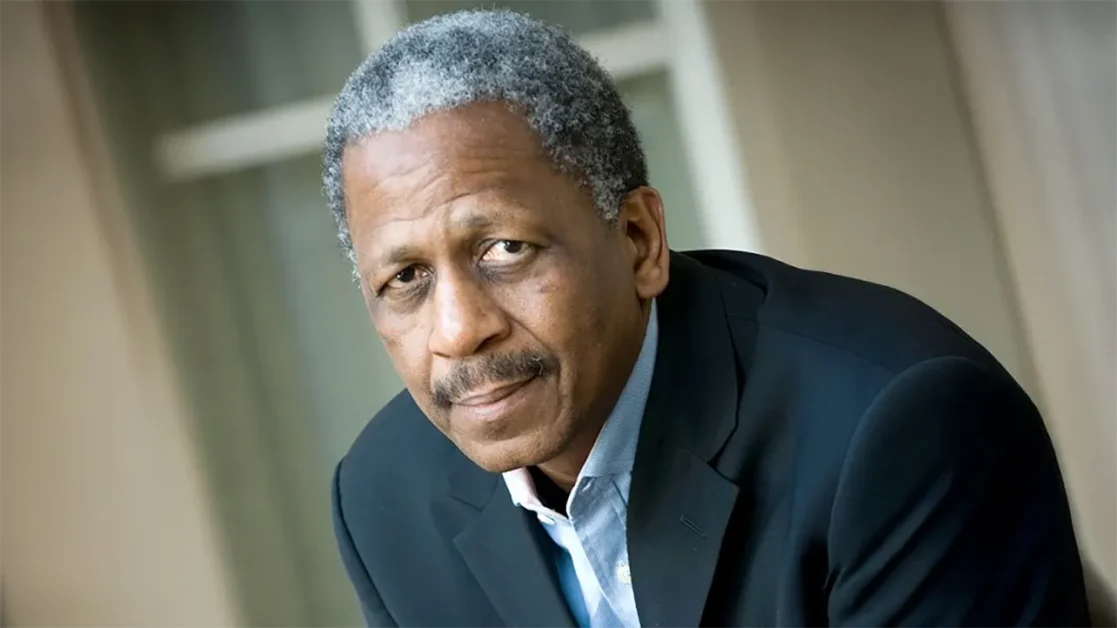
ON July 18, the day the world pauses to mark what would have been Nelson Mandela’s birthday, Senegal will do something no African capital has done for a South African liberation veteran in recent memory: it will place a doctoral cap on the head of Dr Mathews Phosa, the former Premier of Mpumalanga, ex-Treasurer-General of the African National Congress, and one of the last men standing from the room in which South Africa’s constitutional settlement was written.
The honour will be conferred at a conference titled “Mandela Day in Dakar,” running from July 18 to 19 at the Institut Supérieur de Management’s Baobab Campus, under a theme as ambitious as it is unsettling: “De-solidarisation and the shifting world order: re-reading Mandelaism to rebuild bond and meaning.” It is not a title chosen for comfort. It is a title chosen because Senegalese and pan-African organisers appear to believe the glue that once bound African and Global South solidarity together – the glue Mandela himself embodied – is coming apart, and that Phosa’s presence in Dakar is meant to help diagnose why.
A Doctorate With History Behind It
The choice of Dakar is not incidental. It was the University Cheikh Anta Diop that conferred an honorary doctorate on Mandela himself in 1992, two years after his release and two years before he became president. Three decades later, in 2023, President Cyril Ramaphosa received the same honour from the same institution, telling the gathering it was, in his words, the doctorate that meant the most to him precisely because it came from the university that had once honoured his mentor. Phosa’s conferral this Mandela Day extends that lineage – but this time through the Institut Supérieur de Management rather than UCAD, and through a man who was never president, never head of state, and whose contribution lies instead in the unglamorous, unrecorded labour of negotiation, drafting and armed command that made a Mandela presidency possible at all.
That distinction matters. Phosa was Umkhonto we Sizwe’s regional commander in Mozambique after fleeing an assassination plot in the mid-1980s. He was one of the ANC operatives sent back into South Africa in 1990 to open negotiations with the apartheid state, a member of the ANC’s Constitutional Committee, and a hand on the pen that produced the Groote Schuur and Pretoria Minutes and, ultimately, a Constitution still regarded as among the most progressive in the world. In 1994, he became the first Premier of Mpumalanga. From 2007 to 2012, he served as ANC Treasurer-General, a role that placed him at the fraught intersection of party finance and factional politics in the Zuma years. Dakar’s citation, in other words, does not honour a man who stood behind Mandela for photographs. It honours one of the architects who worked so that Mandela would have a state to lead.
Phosa’s Keynote and the Weight of the Moment
Phosa will deliver the conference’s opening keynote, “The South African political transition, current state and prospects” – a title that, read against the country’s present turmoil, is less a retrospective than a warning. He arrives in Dakar as South Africa’s own democratic settlement is under sustained strain: a Government of National Unity testing the ANC’s capacity to share power, a Madlanga Commission of Inquiry exposing the entanglement of criminal networks with the state security apparatus, and a wave of anti-immigrant sentiment that has strained diplomatic relations with Nigeria, Ghana and other African partners. For a man who helped negotiate South Africa’s transition from apartheid, the brief will be to explain not only how the miracle was made, but why the machinery built by that miracle now creaks.
The panels that follow his keynote are structured less as commemoration than as interrogation. The first will examine Mandela’s meaning for peace and leadership; the second, the political and economic legacy of a post-apartheid South Africa – a legacy that, thirty-two years on, still carries the country’s highest-in-the-world inequality alongside its constitutional achievements. A third panel pairs Mandela with Cheikh Anta Diop, the Senegalese historian and Egyptologist whose work reclaimed African civilisational history from colonial erasure, to ask where the continent stands in the race toward the Fourth Industrial Revolution – a pointed question for a Dakar audience sitting in a management institute rather than a history faculty.
Ubuntu, the Atlantic, and the Politics of Solidarity
Further sessions will range across Ubuntu philosophy as a governing ethic, Mandela’s influence on artistic and civic movements across the continent, and the transatlantic slave trade – a subject that situates Mandela’s freedom within a much longer African struggle against dispossession that predates and outlives apartheid. Organisers have also placed on the agenda the Global South’s contribution to the emergence of a democratic South Africa, an implicit reminder that Mandela’s liberation was underwritten by Non-Aligned solidarity, Cuban internationalism, Nordic funding and, not least, West African diplomatic backing of the kind Senegal itself extended during the anti-apartheid years.
It is the conference’s final and most uncomfortable panel, however, that gives the Dakar gathering its real news value: a session on Afropessimism and the recurring xenophobia and Afrophobia inside South Africa itself. To hold that conversation in Dakar, in the presence of a man who helped write the founding document of South Africa’s constitutional democracy, is to force an accounting that South African institutions have often avoided at home. It asks, bluntly, whether a country liberated with the blood and diplomacy of the rest of the continent has kept faith with the continent that liberated it – at a moment when South African mobs have attacked Nigerian, Zimbabwean, Malawian and other African nationals, and when diplomatic relations with Abuja and Accra have cooled in response.
Why Dakar, Why Now
Senegal’s decision to stage this reckoning is itself a statement. Among West Africa’s fragile democratic landscape – where Mali, Burkina Faso and Niger have expelled elected governments in favour of military juntas, and where Guinea-Bissau’s own transition remains uncertain – Senegal has held to competitive, peaceful transfers of power, most recently the 2024 election of President Bassirou Diomaye Faye. That stability gives Dakar the standing to convene a conversation about African democratic backsliding without appearing hypocritical, and it gives the honour bestowed on Phosa an added layer of meaning: one stable democracy recognising the men who built another, at a moment when the continent’s democratic gains feel more reversible than at any point since the 1990s wave of liberation Mandela himself came to symbolise.
For Phosa, now in his seventies and among a dwindling cohort of leaders who negotiated South Africa’s transition first-hand, the Dakar doctorate arrives as both vindication and burden. It affirms, in the words of a peer democracy, that his generation’s project retains meaning. But the conference’s own theme – de-solidarisation, a fracturing world order, the need to “rebuild bond and meaning” – makes clear that recognition is not the same as reassurance. Mandela’s Dakar doctorate in 1992 was awarded to a man about to build a nation. Phosa, in 2026, is awarded to a man asked to explain what has become of it, and whether the Mandela idea can still hold a fractious continent, and a fractious world, together.