
THREE decades into a war that has consumed more lives than almost any conflict since the Second World War, the Democratic Republic of Congo (DRC) has made a calculated wager: that the road to justice for its people runs not through The Hague alone, but through an institution of its own making.
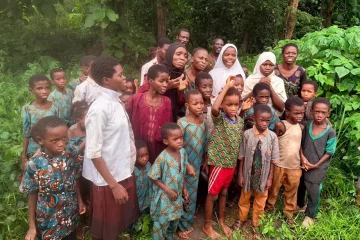
Kinshasa this week formed the Council for the Examination of Atrocities in the DRC, a new advisory body assembled to guide two Congolese state institutions as they build the legal and evidentiary architecture for prosecuting war crimes and securing reparations for victims of a conflict that has displaced 5.8 million people and killed, by some estimates, millions more.
The composition of the council is itself a statement of intent. It is co-chaired by Julienne Lusenge, a DRC human rights defender who has spent decades documenting sexual violence in the east, alongside Howard Morrison, a former judge at both the International Criminal Court and the UN tribunal for the former Yugoslavia. It draws further weight from Stephen Rapp, the American jurist who secured the historic conviction of former Liberian president Charles Taylor, and Pascal Turlan, a former senior ICC official with direct experience of Congo’s case files.
This is not a symbolic panel. It is a bench of people who have put warlords and heads of state behind bars before, and Kinshasa is betting their expertise can compensate for what international institutions have failed to deliver in the Great Lakes for a generation.
A CAMPAIGN, NOT AN EVENT
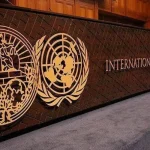
The council should be read as one front in a widening Congolese offensive for accountability, not a standalone gesture. Last month, Kinshasa filed proceedings against Rwanda at the International Court of Justice, accusing Kigali of breaching international conventions on genocide, racial discrimination and torture through its role in the eastern conflict. President Félix Tshisekedi has gone further still, telling the UN General Assembly that his country is enduring a “silent genocide” and pressing, so far without success, for an international commission of inquiry.
The throughline connecting the ICJ filing, the Tshisekedi appeal and this week’s council is a government that has concluded it can no longer wait for the international system to act on its behalf – and is instead building parallel machinery to force the issue.
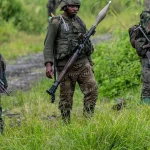
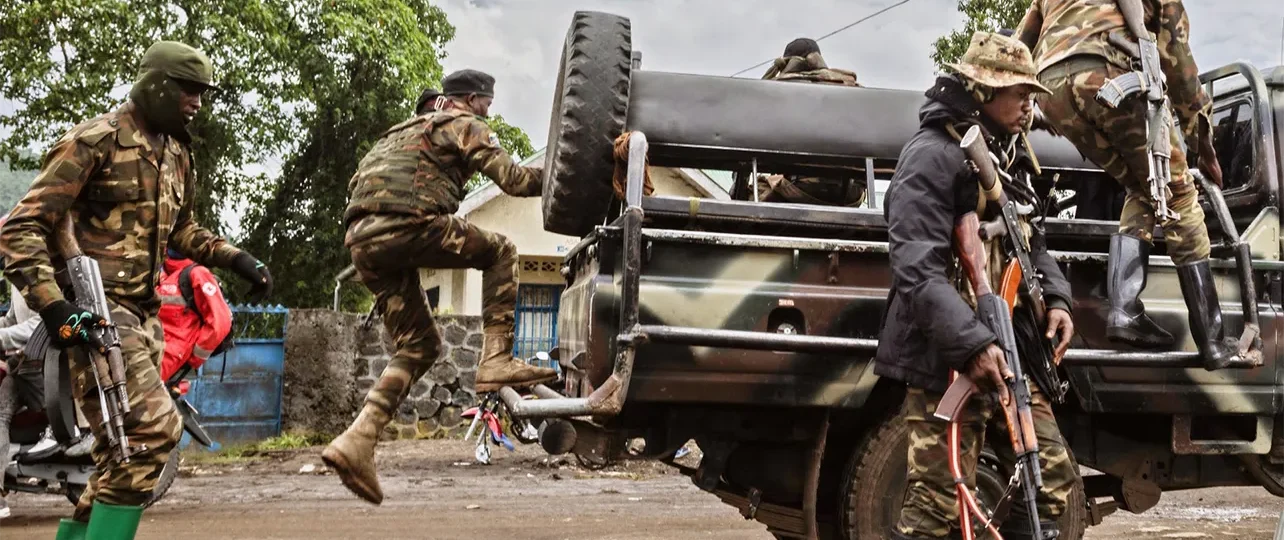
The stakes could hardly be higher. Eastern Congo’s war is, at its root, an unresolved inheritance of Rwanda’s 1994 genocide, when perpetrators fled across the border and entrenched themselves in the Kivus, fuelling three decades of cyclical violence over territory, ethnicity and the region’s vast mineral wealth. More than a hundred armed groups now operate in Ituri, North Kivu and South Kivu. The M23 offensive, which the United Nations and Western governments say is backed by Rwandan troops and which Kigali denies, seized swathes of territory, including Goma, before a fragile, US-brokered ceasefire and the subsequent Doha Framework sought to stabilise the front lines. Rwanda has consistently rejected accusations that it commands or arms the rebel movement.
Neither ceasefire nor framework has stopped the killing. Human rights monitors continue to document summary executions, mass sexual violence, hospital raids and enforced disappearances carried out by M23 fighters, allied Wazalendo militias and, in some documented cases, Congo’s own security forces — a pattern of abuse spread widely enough that accountability, if it comes, will not be a simple matter of one side facing judgment.
THE HARDER QUESTION
What the council cannot yet answer is whether documentation will translate into prosecution. Congo has tried the path of international law before: an earlier ICJ case against Rwanda, filed in 2002, was dismissed in 2006 for lack of jurisdiction. The International Criminal Court’s own record in Congo, despite two decades of investigation, has produced only a handful of convictions relative to the scale of documented atrocity. MONUSCO, the UN’s peacekeeping mission, has been progressively drawn down even as violence intensifies — extended for another year in December, but with a shrinking footprint in the provinces where it is needed most.
Domestic justice carries its own complications. A Congolese military court sentenced former president Joseph Kabila to death in absentia in September on charges including treason and murder tied to his alleged support for M23 — a verdict welcomed by the current government but delivered without defence counsel present, the kind of process that invites the same scrutiny over fair-trial standards that rights groups have long directed at Kinshasa’s military tribunals.
This is the tension the new council will have to navigate: building a credible, internationally defensible case for accountability while operating inside a state whose own security forces stand accused of some of the same categories of violations it is investigating. Lusenge, Morrison, Rapp and Turlan bring exactly the kind of institutional memory needed to insulate the process from the accusation that it is simply a tool of the government against its enemies — but their credibility will only carry the council so far if Kinshasa is unwilling to turn the same lens on its own forces.
WHY THIS MATTERS BEYOND THE KIVUS
For a continent that has watched international justice mechanisms move at glacial speed, or not move at all, on African conflicts — from the Sahel to the Horn — Congo’s decision to build its own accountability infrastructure, staffed with practitioners who have secured convictions where multilateral courts stalled, is a notable departure. It reflects a broader pattern across the continent of states and civil society seeking to define justice for African victims on African terms, rather than deferring indefinitely to institutions in The Hague or New York that Africans themselves have often found slow, selective or politically constrained.
Whether Kinshasa’s council becomes a genuine mechanism of reckoning or another well-credentialed body whose findings gather dust will depend on factors well beyond its members’ expertise: whether the ceasefire holds, whether Rwanda is compelled to answer for its role at the ICJ, and whether a government under enormous pressure to show results is prepared to let the evidence lead wherever it goes — including, if necessary, back to its own uniforms.
For the millions who have been killed, displaced or violated in three decades of war, that answer cannot come soon enough.