THERE are moments that cut through the noise of politics, conflict, and daily struggle to remind us, with breathtaking clarity, what it means to be alive. Sunday, 26 April 2026, delivered one such moment – literally delivered – at approximately 10,000 metres above the African earth.
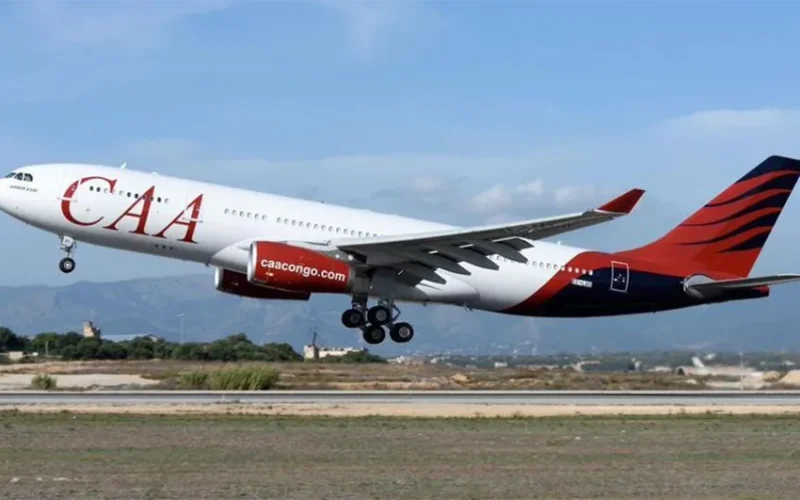
On a routine CAA Airbus A320 flight from Lubumbashi to Kinshasa, as passengers settled into the familiar hum of cruising altitude and flight attendants prepared for descent, something utterly extraordinary was quietly unfolding in a window seat. A 30-year-old Congolese woman – composed, silent, and possessed of a grace that defies comprehension – was bringing a new life into the world. Alone. Without a cry. Without fuss. Leaning gently on her two daughters, aged three and five, who sat beside her, oblivious to the miracle their mother was performing.
The cabin crew only became aware of what had happened when they heard a sound no pre-landing checklist could have prepared them for: the cry of a newborn baby.
The Quietest Arrival
It was, in every sense, a discreet entrance into the world. The mother, reportedly at full term and travelling in a long dress, had boarded the flight with the quiet determination of a woman who had done this before – and indeed she had. This was her fifth birth. An experienced hand at the most human of all endeavours.
According to Dr. Emmanuel Lukombe, Secretary General for Social Welfare at the Ministry of Health and one of four medical professionals who happened to be on board that morning, the birth took place around 10:10 a.m., precisely as the seat-belt sign was illuminated in preparation for landing. The aircraft was at that moment flying over Angolan territory – meaning this child entered the world, technically, in the skies of a neighbouring nation, a detail that lends the story a quietly pan-African poetry.
“The birth occurred around 10:10 a.m., at the time when the instructions to keep seats in an upright position had just been announced,” Dr. Lukombe explained. By then, the baby had already arrived.
When Africa’s Doctors Showed Up
What could have been a crisis became, instead, a testament to human readiness and collective care. Among the passengers on that flight were four medical professionals, including a paediatrician. When the flight attendants raised the alarm, they moved swiftly and with purpose – securing the mother, assessing the newborn, and ensuring both were stable for the remainder of the short journey to N’djili International Airport in Kinshasa.
It was, in microcosm, a portrait of African professional excellence stepping forward without hesitation. No headlines were needed, no directives from above – just four doctors responding to the oldest call there is.
The pilot, for his part, acted with equal decisiveness. A request for an emergency ambulance was radioed ahead immediately, and by the time the aircraft touched down on Kinshasa soil, emergency medical services were positioned and ready. The mother and her newest child were received with the full care they deserved.
What This Moment Means
In the Democratic Republic of Congo — a country that has known too much hardship, too much loss, too much disruption — this story lands differently. It lands like sunlight.
A child born in flight carries with it a symbolism that no speechwriter could manufacture. This baby arrived not in a clinic or a hospital ward, but suspended between cities, between nations, between the earth and the heavens. It arrived in motion — which is, when you consider the arc of Congo’s journey, deeply resonant. A country in motion. A continent in motion. Life insists on itself regardless of circumstance.
The mother’s extraordinary composure speaks to something deep in the African woman’s experience: a capacity to carry the full weight of life and deliver it, quietly, without demanding recognition. Her daughters beside her. Her dignity intact. The world unaware until it heard the cry.
A Gentle Word of Caution
This joyous story also invites reflection on the practical realities of air travel for expectant mothers. Medical professionals consistently advise that pregnant women consult their doctors before booking flights, particularly in the third trimester. Airlines across the continent and the world have specific policies regarding travel near term — most require medical clearance after 28 weeks and restrict travel entirely in the final weeks of pregnancy.
The Civil Aviation Authority (CAA) in the DRC may well wish to use this occasion to gently but clearly communicate those guidelines to travellers, not to diminish the wonder of what happened on Sunday, but to ensure that every mother and every child receives the safest possible start to their shared story.
The Sky Is Not the Limit
As the week begins, let this story settle in the heart for a moment before the news cycle moves on. Let it do what only these stories can do: restore something. Remind us why the work we do — the reporting, the governing, the building, the healing — matters. There is a new Congolese life in this world today who made their entrance at altitude, above the African sky, witnessed by a plane full of strangers who, in that instant, became a community.
Welcome to the world, little one. You have already shown us that you know how to arrive.