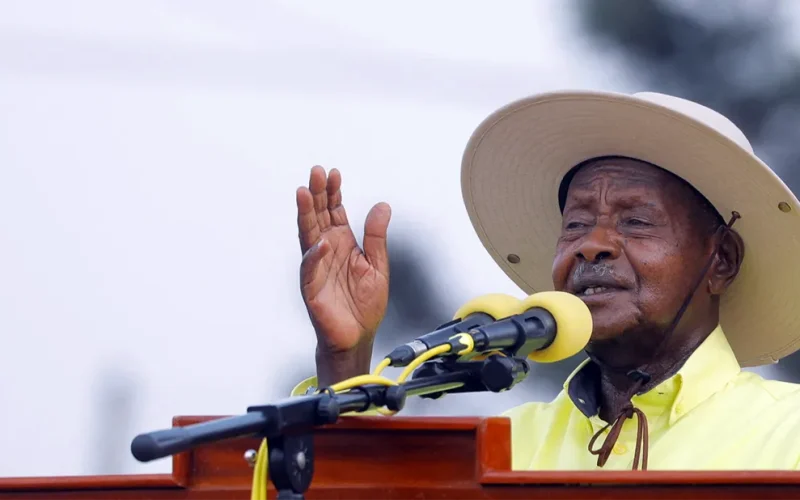
PRESIDENT Yoweri Museveni moved swiftly to calm economic fears over Uganda’s controversial Protection of Sovereignty Bill 2026, assuring citizens the legislation targets only foreign meddling in policy decisions – not the free flow of private capital, remittances, or church donations that fuel the nation’s growth.
The long-serving leader has dismissed warnings from his own Bank of Uganda Governor Michael Atingi-Ego as “noise,” vowing the bill safeguards Uganda’s sovereignty without strangling its open economy.
Museveni said: “None of them (provisions in the legislation) says: ‘Do not send to Uganda or take out of Uganda money you have earned legally anywhere in the world; do not send church donations to or from Uganda; do not receive or send out remittances from Ugandans working abroad. We run a free economy. Forex is bought and sold in privately run Forex Bureaus. This is the strength of the Ugandan economy. The freedom of the private sector compensates for the obstruction of the corrupt or non-patriotic public servants and political opportunists passing for politicians.”
Museveni instructed parliamentary committees to refine the bill, ensuring it stays laser-focused on policy sovereignty and avoids “meandering in the areas of the freedom of private enterprise or private money transfer or church donations.” He framed the National Resistance Movement’s 40-year rule as a bulwark against foreign interference: “Please, muteleke (leave us alone), so that we can make our own decisions. Do not fund groups to influence our decisions as a country. As our constitution covers it, we exercise our sovereignty regularly through elections and referenda (Article 1 (4), Article 59 and 68 of the constitution.
“To all and sundry, please don’t interfere by word, action, or money in that effort. Policy and ideological decisions can make or break countries. Uganda had become a failed state because of the politics of identity (tribe, religion, gender – chauvinism) as opposed to the politics of interests 0 (e,g markets for products of the wealth creators). The NRM and Ugandans have made choices on politics, social issues, diplomatic issues, and economic issues over the past 40 years.”
The intervention from the highest office in Uganda escalates a high-stakes showdown between Museveni and Atingi-Ego, whose stark parliamentary testimony on April 28 warned the bill risks “economic disaster” by choking $1.5 billion in balance-of-payments inflows that built Uganda’s near-$6 billion reserves. “A country without reserves is not sovereign,” the governor said. “The moment you tamper with these inflows here, we risk running down our reserves.”
Atingi-Ego laid out a domino effect: slashed inflows weaken the shilling, spike import costs, ignite inflation past the 5% target, and force brutal choices like rate hikes. With inflation at a regional low of 3%, he slammed the bill for ignoring three decades of liberalization. The Bank of Uganda – sidelined during drafting – called it a threat to financial independence in its technical assessment.
Tabled April 15 by State Minister General David Muhoozi, the bill criminalises “agents of foreigners” receiving over UGX 400 million ($108,000) in foreign funds without approval – fines up to UGX 4 billion, jail up to 20 years. Critics decry the low threshold amid $2.5 billion annual diaspora remittances (3.8% of GDP).
Opposition to the bill has increased. The World Bank has expressed fears of staff liability, the UN has cited Vienna Convention breaches, the Buganda Kingdom has warned of cultural program hits, and the Human Rights Watch has likened it to Russia’s “foreign agent” crackdown. Even ex-Museveni allies like Mwesigwa Rukutana have urged withdrawal. Diaspora polls show 77% demand changes; 47,000 social media comments rail against it.
Finance Ministry backs the bill for “national control,” but the central bank warns of “radical uncertainty,” disrupted mobile money (36.3 million accounts, 27 million daily transactions), and global de-risking.
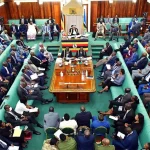
Parliament’s joint committee hearings continue, with an NRM majority poised to pass amendments or the full bill. Museveni’s “noise” jab tests the Bank’s constitutional independence – and Uganda’s economic lifeline hangs in the balance.