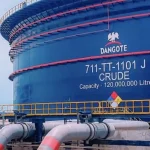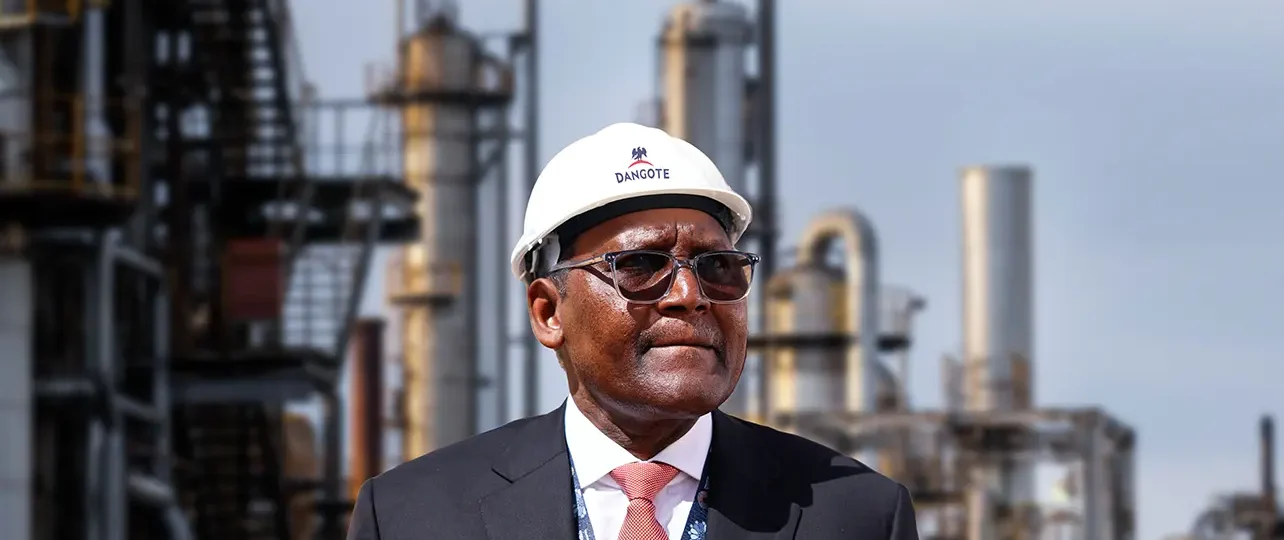

WHEN Aliko Dangote commissioned Africa’s largest oil refinery in May 2023, it was hailed as a game-changer for Nigeria – a nation paradoxically blessed with vast crude reserves yet dependent on imported fuel. Two years later, that $19 billion investment has become the flashpoint for one of the continent’s most consequential business battles, pitting the billionaire industrialist against powerful interests accused of sabotaging local production to protect lucrative import monopolies.
On Tuesday, Nigeria’s House of Representatives voted to intervene in what lawmakers warned has become a crisis threatening the nation’s energy security. The decision marks a significant escalation in a conflict that has simmered since the refinery’s launch, with parliament now formally investigating allegations of regulatory misconduct, arbitrary licensing, and corruption within the Nigerian Midstream and Downstream Petroleum Regulatory Authority.
The Core of the Conflict
At the heart of this dispute lies a troubling question: Why would a country crippled by fuel scarcity and foreign exchange shortages undermine its own domestic refining capacity?
Dangote has publicly accused NMDPRA chief Farouk Ahmed of enabling what amounts to regulatory capture, issuing import licenses for fuel priced below the cost of local production while simultaneously creating bureaucratic obstacles for the Lagos refinery. The industrialist has gone further, calling for a formal probe into Ahmed’s personal finances, alleging spending patterns inconsistent with declared government income.
These are not trivial accusations in a country where fuel import licenses have historically been channels for corruption, with billions of dollars in subsidies disappearing into private pockets over decades. The NMDPRA regulates the very important business that Dangote’s refinery threatens to disrupt, creating what critics describe as an inherent conflict of interest.
A Pattern of Sabotage
The refinery’s troubled relationship with state institutions began almost immediately. Despite a nameplate capacity of 650,000 barrels per day – enough to meet Nigeria’s entire domestic fuel demand—the facility has struggled to secure adequate crude supply. Under a naira-for-crude arrangement announced in October 2024, the Nigerian National Petroleum Company Limited pledged to supply at least 385,000 barrels daily. Dangote claims NNPCL has consistently fallen short, with alleged shortfalls reaching 29 million barrels.
Then came the quality disputes. In July 2024, NMDPRA made the extraordinary claim that Dangote’s diesel was inferior to imported products. Parliamentary tests told a different story: Dangote’s diesel contained 87.6 parts per million of sulphur, while imported samples exceeded 1,800 to 2,000 ppm, more than twenty times higher. The regulator’s credibility took a severe hit.
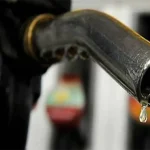
Most recently, the battle has shifted to pricing. Starting in November 2024, Dangote slashed petrol prices from 990 naira per litre to as low as 825 naira by February 2025, forcing NNPCL into a pricing war. Yet even as the refinery undercuts imports, regulatory barriers persist, with cheap imported fuel continuing to flood the market through licenses issued by the very authority now under investigation.
What Parliament Sees
Lawmakers have framed their intervention in stark terms. Representative Francis Waive’s motion, which passed Tuesday, describes the Dangote refinery as a “strategic national investment” whose success or failure will determine whether Nigeria breaks free from its fuel import dependency or remains trapped in a cycle that drains foreign exchange reserves and enriches middlemen.
The political calculus is clear: with the holiday travel season approaching, any disruption to fuel supply could trigger public anger and economic chaos. More fundamentally, the dispute represents a test of whether Nigeria’s government can support domestic industrialisation or whether entrenched interests will continue to prioritise short-term rent-seeking over long-term economic transformation.
Parliament has given its petroleum committees four weeks to resolve the dispute—an ambitious timeline for a conflict rooted in decades of institutional dysfunction and vested interests.
The Broader Stakes
This battle extends far beyond one refinery or one regulatory body. It encapsulates Nigeria’s struggle to escape the resource curse that has defined its post-independence history. For sixty years, Nigeria has exported crude oil only to import refined products at inflated prices, haemorrhaging capital and creating opportunities for corruption at every step.
Dangote’s refinery represented a chance to break this cycle. With capacity exceeding domestic demand, the facility could theoretically transform Nigeria from a fuel importer to a net exporter, strengthening the naira and generating employment. Instead, it has exposed the entrenched resistance to change within Nigeria’s petroleum sector.
The international investment community is watching closely. If Africa’s richest man, with unparalleled political connections and financial resources, cannot navigate Nigeria’s regulatory environment, what hope exists for smaller investors? The message being sent to potential industrialists is chilling: even overwhelming capital and technical capacity may not be enough to overcome bureaucratic obstruction driven by competing interests.
The Corruption Question
Dangote’s decision to publicly question the NMDPRA chief’s finances represents a significant escalation, crossing into territory that Nigerian business elites typically avoid. By alleging that Ahmed’s personal expenditures exceed what a government salary could support, Dangote has effectively accused the regulator of benefiting financially from the very import regime his policies protect.
These allegations resonate in a country where the petroleum sector corruption has been endemic. Fuel subsidy fraud alone costs Nigeria an estimated $7 billion annually before partial reforms, with import licenses serving as vehicles for massive wealth extraction. If Dangote’s claims prove substantiated, it would confirm what many Nigerians have long suspected: that regulatory opposition to the refinery stems not from legitimate policy concerns but from threatened financial interests.
An Uncertain Path Forward
Parliament’s four-week deadline is ambitious, perhaps unrealistically so. The interests aligned against Dangote, import cartels, compromised regulators, and elements within NNPCL that profit from the status quo are formidable and deeply entrenched. Unwinding decades of institutional capture cannot happen quickly, even with political will.
Yet the stakes are too high for continued drift. Nigeria’s economy, already strained by multiple shocks, cannot afford further uncertainty in its energy sector. International creditors and investors are losing patience with a government that appears unable to support its own industrial champions. And Nigerian citizens, who pay some of Africa’s highest fuel prices despite living atop massive oil reserves, are increasingly questioning why their natural resources enrich everyone except themselves.
The coming weeks will reveal whether Nigeria’s political class has the courage to confront the powerful interests that have long profited from the country’s dysfunction. If Parliament’s investigation is rigorous and its recommendations implemented, the Dangote refinery could still fulfil its promise of transforming Nigeria’s energy landscape.
But if the intervention proves to be political theatre, a temporary calming measure that ultimately changes nothing, then Africa’s largest refinery will stand as a monument to a different reality: that in Nigeria, even a $19 billion investment and the backing of Africa’s richest man may not be enough to overcome a system designed to extract rather than produce.
The battle of the elephants has reached a critical juncture. Nigeria’s future may well depend on which one prevails.