THE streets of Conakry pulse with an energy that cannot be contained. In markets and mosques, in homes and workplaces, a whisper has grown into a roar: “Enough is enough.” The people of Guinea, custodians of West Africa’s oldest independent nation, have found their voice again.
“We did not fight colonialism to accept new chains,” declares Aminata Diallo, a grandmother who sells bauxite trinkets to tourists near the port. Her weathered hands trace the outline of a map of Guinea in the dust. “Our children deserve better than broken promises.”
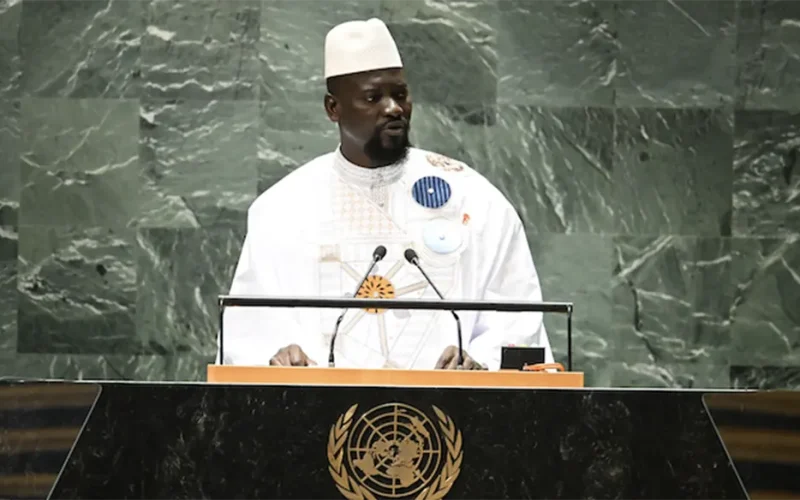
The promise was simple: two years of military rule, then a return to democracy. But as 2024 dawns, Colonel Mamady Doumbouya’s junta shows no sign of stepping aside. Instead, they craft a new constitution, one that could keep the colonel in power indefinitely – adding Guinea to a growing list of West African nations where democracy has been strangled by military boots.
But something is different now. The Forces Vives, a coalition of opposition groups, civil society organizations, and activists, has become the voice of millions. Their declaration echoes through the bauxite-rich hills: civilian rule must return by January 1st. It’s not just a deadline; it’s a declaration of faith in democracy itself.
“Look around our region,” says Ibrahim Sylla, a student activist, his voice carrying across a crowd gathered in the autumn heat. “Chad, Mali, Burkina Faso – each military takeover emboldening the next. But here in Guinea, we can start the domino effect in reverse. When we win back our democracy, others will follow.”
The resistance is not just in the capital. From the forests of Nzérékoré to the highlands of Labé, Guineans are uniting across ethnic and regional lines. Market women coordinate strikes through WhatsApp groups. Teachers turn their lessons into seminars on civic duty. Even some young military officers, speaking in whispers, question whether they’re on the right side of history.
The junta’s response has been predictable: tear gas, rubber bullets, sometimes worse. But each crackdown only strengthens the resolve of the Forces Vives. “They can block our streets,” says Mohammed Camara, a trade union leader, “but they cannot block the tide of history.”
As the January deadline approaches, Guinea stands at a crossroads. But this time, it’s not just Guinea’s future at stake. From Dakar to Abuja, democracy activists watch and wait. If Guinea’s people can peacefully reclaim their right to choose their leaders, it could trigger a democratic renaissance across West Africa.
In the meantime, the voices grow louder: “Enough is enough. Democracy is not just our heritage – it is our children’s birthright.” The people of Guinea are standing up, not just for themselves, but for a principle that echoes across borders and generations: the right of people to choose their own destiny.
And in the streets of Conakry, Aminata Diallo smiles as she hears the chants grow stronger. “We are not asking for permission anymore,” she says, her voice steady with conviction. “We are taking back what belongs to us – our future.”