WHEN dawn broke over Cotonou on Sunday morning, and armed mutineers seized Benin’s state broadcaster to announce their coup, the embattled government knew exactly where to turn: to their powerful neighbour, Nigeria, whose commitment to regional stability would be tested in the crucible of this unfolding crisis.
They would not be disappointed.
Within hours of receiving urgent appeals from Benin’s Ministry of Foreign Affairs, President Bola Ahmed Tinubu set in motion a military response that would prove decisive—Nigerian Air Force fighter jets screaming across the border to seize control of Beninoise airspace, ground forces mobilizing to support loyalist troops, and a clear message sent to would-be coup plotters across West Africa: Nigeria stands as guardian of constitutional order.
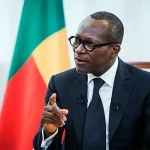
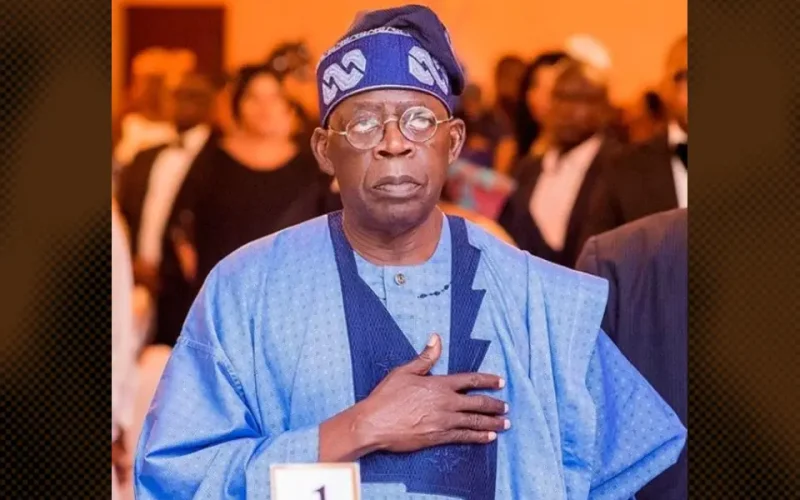
“Today, the Nigerian armed forces stood gallantly as a defender and protector of constitutional order in the Republic of Benin,” President Tinubu declared after the successful operation. “They have helped stabilise a neighbouring country and have made us proud of their commitment to sustaining our democratic values and ideals since 1999.”
A Neighbour’s Desperate Plea
The urgency in Benin’s official requests spoke volumes. In a Note Verbal delivered to Nigerian authorities, Benin’s Ministry of Foreign Affairs made clear the gravity of the threat: immediate air support needed “in view of the urgency and seriousness of the situation and to safeguard the constitutional order, protect national institutions and ensure the security of the population.”
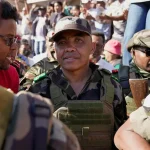
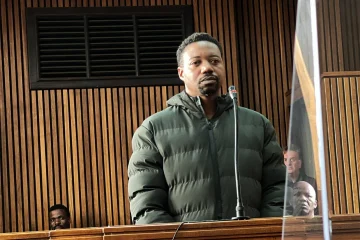
Colonel Pascal Tigri and his band of mutineers had struck with brazen confidence, seizing the National TV station and proclaiming the end of President Patrice Talon’s government, the suspension of democratic institutions, and the dawn of military rule. For precious hours, Benin’s 35-year democratic experiment—one of West Africa’s most enduring success stories—hung by a thread.
But Benin’s leadership understood what many embattled governments have learned in recent years: when democracy is under assault, quick action and reliable allies make all the difference.
Nigeria’s Swift Response
President Tinubu’s response was immediate and comprehensive. Nigerian Air Force assets deployed into Beninoise airspace for “surveillance and rapid intervention operations under Benin-led coordination”—a crucial detail that respected Benin’s sovereignty while providing the military muscle needed to tip the balance.
The aerial intervention proved transformative. With Nigerian jets overhead and the threat of overwhelming force suddenly very real, the coup plotters’ brief moment of triumph at the National TV station began to unravel. Loyalist forces, bolstered by Nigerian support, moved to retake control.
Benin’s second request—for Nigerian ground forces to support “the protection of constitutional institutions and the containment of armed groups”—was equally swiftly granted. Nigeria’s Chief of Defence Staff, General Olufemi Oluyede, confirmed that all requests had been fulfilled, with boots on the ground backing up the air campaign.
“Ours is to comply with the order of the Commander-in-Chief of our armed forces, President Tinubu,” General Oluyede stated with military precision.
Democracy’s Shield
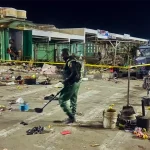
Within hours of the initial coup announcement, government forces—reinforced by their Nigerian allies—had flushed the mutineers from the National TV station and restored constitutional order. The coup that threatened to add Benin to West Africa’s growing list of military dictatorships had collapsed, undone by swift intervention and regional solidarity.
President Tinubu’s framing of the operation emphasised both its legal foundation and its broader significance: “Our armed forces acted within the ambit of the ECOWAS Protocol on Democracy and Good Governance,” he noted, highlighting how Nigeria’s intervention represented not rogue adventurism but principled defence of regional democratic norms.
The contrast with recent West African history could not be starker. Just weeks earlier, military forces in Guinea had overthrown the government during presidential elections, crushing hopes for a democratic transition. Niger, Burkina Faso, Mali, Guinea-Bissau—all have fallen to military juntas in recent years, creating an authoritarian arc across the Sahel where coups have become almost routine.
Benin appeared poised to join that grim roster. Nigeria ensured it did not.
Good Neighbours, Strong Democracies
Nigeria’s intervention showcases a model of regional leadership desperately needed in West Africa’s current turmoil. Rather than watching passively as another democracy crumbled, President Tinubu deployed military assets decisively while scrupulously respecting Benin’s sovereignty—operations conducted under “Benin-led coordination,” ground forces deployed “strictly for missions approved by the Beninese Command authority.”
This wasn’t neo-colonial interference but good-neighbour solidarity, the kind of regional cooperation that the Economic Community of West African States (ECOWAS) envisions but too rarely achieves.
For Nigeria, a nation that has zealously guarded its own democratic institutions since 1999, the message was clear: we will not stand idle while neighbouring democracies fall. For Benin, whose multiparty system has endured since 1991 without military interference until Sunday’s terrifying hours, the intervention came as a lifeline when constitutional order hung in the balance.
A Warning to Coup Plotters
President Tinubu’s statement concluding the crisis carried unmistakable intent: “Nigeria stands firmly with the government and people of the Republic of Benin.” In a region where military takeovers have proliferated precisely because they often succeed, that declaration resonates far beyond Cotonou.
Would-be putschists across West Africa must now calculate not just whether they can seize a TV station and proclaim victory, but whether they can withstand the response when Nigeria’s Air Force jets cross the border, when African democracy’s most populous democracy decides enough is enough.
Sunday’s failed coup in Benin may prove a turning point—the day regional solidarity began pushing back against the wave of military authoritarianism. Nigerian forces didn’t just save Benin’s democracy; they sent a signal that democracy in West Africa still has powerful protectors willing to act.
As General Oluyede and his forces return home, they carry with them the gratitude of a nation that came perilously close to losing its freedom, and the knowledge that when democracy called for help, Nigeria answered with jets, troops, and unwavering resolve.
In these dark times for West African democracy, that may be the brightest news of all.