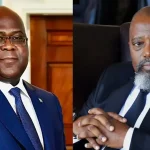
THE bitter political rivalry between President Félix Tshisekedi and his predecessor, Joseph Kabila, has erupted into open warfare, with eastern Democratic Republic of Congo as the battleground and the future of Africa’s second-largest nation hanging in the balance.
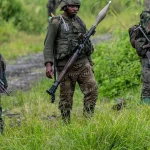
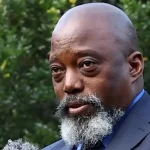
In a stunning power play, Kabila emerged in rebel-held Goma last week, aligning himself with the Rwanda-backed M23 insurgency and its political wing, the Alliance du Fleuve Congo (AFC). The move effectively transforms what began as a regional rebellion into a direct challenge to national power.
“Tshisekedi has failed the Congolese people,” declared one of Kabile’s supporters. “The time has come to restore legitimate governance to our wounded nation.”
Tshisekedi responded swiftly, banning Kabila’s People’s Party for Reconstruction and Democracy (PPRD) and freezing its assets. In a televised address, Tshisekedi accused his predecessor of “the ultimate betrayal” by “conspiring with foreign powers against Congolese sovereignty.”
The confrontation marks the collapse of the uneasy political arrangement that followed the disputed 2018 election, when many observers believed Kabila ceded power to Tshisekedi only after negotiating significant behind-the-scenes influence.
“This is the final break in a relationship that was a political analyst at the University of Kinshasa. “Neither man could accept the other’s legitimacy, and now they’ve taken their battle from the political arena to the battlefield.”
Kabila’s gambit leverages the military success of M23 rebels, who, with Rwandan support,t have captured strategic eastern cities including Goma and Bukavu. By providing political legitimacy to the rebels, Kabila positions himself as the leader of an alternative power centre with control over Congo’s mineral-rich eastern provinces.
Tshisekedi, fighting for his political survival, has turned to international allies. Sources confirm he has offered the United States preferential access to critical mineral resources in exchange for security assistance, while simultaneously requesting military support from Chad.
“This is no longer about eastern Congo’s security,” said a Western diplomat speaking on condition of anonymity. “It’s a winner-takes-all struggle for the presidency, with both men willing to divide the country to achieve their ambitions.”
The conflict resurrects a dynastic rivalry that dates back decades. Étienne Tshisekedi, the current president’s father, was a longtime opposition leader who stood against both Mobutu Sese Seko and Laurent-Désiré Kabila, Joseph’s father, who seized power in 1997.
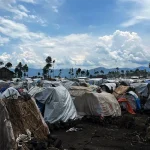
As both men marshal their forces – Tshisekedi with state resources and international backing, Kabila with rebel fighters and regional support – ordinary Congolese are caught in the crossfire. The fighting has displaced over 7 million people internally and forced more than 1 million to flee abroad.
Regional leaders have called for dialogue, but with each side viewing the conflict as existential, diplomatic efforts have found little traction. Meanwhile, UN peacekeepers struggle to protect civilians as the political battle escalates into what many fear could become Congo’s third major war this century.
“Tshisekedi and Kabila are playing a dangerous game of political chess,” said Pascal Kambale, former Deputy Director of the Open Society Initiative for Southern Africa. “But it’s the Congolese people who are being sacrificed as pawns.”