THE courtroom fell silent as the verdict echoed through Tunisia’s hollowed democracy: 22 years in prison for Moncef Marzouki, the nation’s former president, convicted in absentia of undermining state security. Hours later, another gavel fell, sentencing Sahbi Atig to 15 years for money laundering. By day’s end, the judicial machinery had claimed two more victims in President Kais Saied’s methodical dismantling of political opposition.
These were not isolated incidents but the latest salvos in what has become a judicial war against dissent—a war where courtrooms have replaced ballot boxes as the ultimate arbiters of political power in Tunisia.
From his exile in Paris, Marzouki’s defiant response cut through the legal theatre with stark clarity: “I say to these judges: your rulings are invalid, and you are invalid… You will be tried soon. Democracy will return.” His words carry the weight of a man who once led Tunisia during its brief democratic flowering, now watching helplessly as the country’s institutions devour themselves.
The 22-year sentence represents more than punishment – it is annihilation. This is Marzouki’s third conviction, following previous sentences of eight and four years. The escalating penalties reveal a judicial system not seeking justice but the total elimination of political adversaries. Each verdict serves as both punishment and warning: this is what awaits those who dare challenge the president’s authority.
The Assembly Line of Political Destruction
Sahbi Atig’s simultaneous sentencing to 15 years illuminates the industrial efficiency of Tunisia’s judicial persecution. A senior Ennahda official, Atig has been detained since 2023, one among countless opposition figures swept up in Saied’s expanding dragnet. His lawyer, Mokthar Jmaayi, stripped away any pretence of legal legitimacy: “The verdict aims to eliminate political opponents and lacks any credible evidence. It is a continuation of the punishment of opponents by using the judiciary.”
The charges—money laundering, conspiracy, undermining state security—have become the standardised accusations in Saied’s playbook. Their vagueness is their strength, allowing prosecutors to cast the net wide enough to ensnare any inconvenient voice. The April sentencing of opposition leaders to up to 66 years in prison demonstrates the system’s capacity for spectacular cruelty, treating political opposition as a capital offence deserving of life-destroying punishment.
The Captured Bench
The transformation of Tunisia’s judiciary from guardian of rights to enforcer of presidential will represents one of the most insidious forms of institutional capture in modern politics. Saied’s 2022 dissolution of the Supreme Judicial Council and dismissal of dozens of judges was not reform—it was conquest. Under the guise of purging corruption, he systematically removed judicial independence, replacing it with judicial subservience.
The president’s claim that he “does not interfere in the judiciary” has become a cruel joke, uttered while his handpicked judges deliver verdicts that read like presidential wish lists. The pattern is unmistakable: opposition leaders face trial, opposition leaders receive crushing sentences, opposition leaders disappear into Tunisia’s growing network of political prisons.
The Graveyard of Opposition
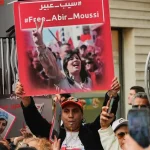
Walk through Tunisia’s political landscape today, and you will find a graveyard where democracy once bloomed. Abir Moussi, leader of the Free Constitutional Party, sits in prison for criticising electoral authorities. Rached Ghannouchi, the veteran Ennahda leader, remains incarcerated as his party faces systematic destruction. Marzouki, the former president who once embodied Tunisia’s democratic aspirations, has been sentenced to effective life imprisonment from his forced exile.
The statistics are stark: most political party leaders in Tunisia are either imprisoned, exiled, or facing imminent prosecution. This is not the result of a crime wave among the political class—it is the logical outcome of a system designed to criminalise political opposition itself.
The President’s Perfect Storm
Saied has orchestrated what amounts to a perfect storm of institutional destruction. By capturing the judiciary while maintaining the facade of legal proceedings, he has achieved what crude dictators can only dream of: the complete elimination of political opposition through seemingly legitimate means. Each sentence carries the stamp of judicial authority, each conviction the appearance of legal propriety.
The genius of this approach lies in its plausible deniability. When international observers raise concerns, Saied can point to courts and trials, to legal procedures and constitutional provisions. The machinery of oppression operates in broad daylight, protected by the very institutions it has corrupted.
The Silence of Complicity
Perhaps most disturbing is the international community’s muted response to this judicial coup. While dramatic military interventions capture headlines, the slow strangulation of democracy through captured courts proceeds with barely a whisper of protest. European leaders, preoccupied with migration flows from Tunisia, have largely ignored the systematic destruction of the democratic institutions that once made the country a regional beacon.
The Biden administration’s tepid reactions have emboldened Saied’s confidence that his judicial war can proceed without meaningful consequences. Each passing month of international silence grants him greater license to expand his assault on democratic norms.
The Endgame Revealed
The escalating sentences – from four years to eight to twenty-two for Marzouki, from standard terms to the spectacular 66-year sentences handed down in April – reveal an important truth about Saied’s ultimate intentions. This is not about reform or anti-corruption efforts. This is about the complete and permanent elimination of political pluralism in Tunisia.
The judicial system has become Saied’s most reliable weapon because it operates with the veneer of legitimacy while delivering the president’s desired outcomes with mechanical precision. Every opposition leader sentenced, every dissenting voice silenced, every critical organisation disbanded moves Tunisia further from the possibility of democratic restoration.
The Verdict on Democracy
As Tunisia’s captured courts continue their relentless work of political elimination, they are writing the obituary of the Arab Spring’s only success story. The country that once inspired a region with its democratic transition has become a cautionary tale of how institutional capture can achieve what military coups once accomplished – the total consolidation of authoritarian power.
The judges who deliver these verdicts may believe they are serving justice, but history will record them as accomplices in democracy’s murder. Their gavels have become hammers, systematically demolishing the pillars of pluralistic governance that took years to build and mere moments to destroy.
Marzouki’s defiant words from Paris—”Democracy will return”—stand as both prophecy and challenge. But first, Tunisia must reckon with the judges who chose to serve power rather than justice, and the president who turned courtrooms into theatres of political revenge. The verdicts have been delivered, but the final judgment on this dark chapter in Tunisian history remains to be written.