A confidential United Nations report has provided the answer to a key question surrounding the recent peace agreement between the Democratic Republic of Congo (DRC) and Rwanda: why the M23 rebel group was notably absent when the deal was signed.
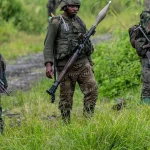
According to the UN report obtained by Reuters, Rwanda has exercised command and control over M23 rebels during their unprecedented advance in eastern Congo, gaining political influence and access to mineral-rich territory. The findings explain why M23 was not party to the US-brokered peace agreement signed between the DRC and Rwanda, as the group operates under direct Rwandan government control.
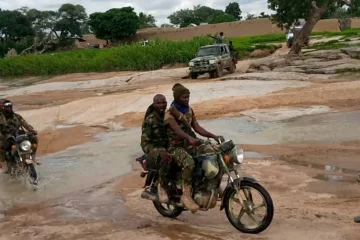
The report details extensive Rwandan support for the rebel group, including training M23 recruits and deploying advanced military equipment. The UN report said Rwanda has hosted leaders of a rebel coalition that includes M23 at its Gabiro Training Centre and also used military centres in Nasho and Gako to train M23 recruits.
Rwanda provided M23 with what the report describes as “high-tech systems capable of neutralising air assets,” giving the rebels a decisive tactical advantage over the Congolese army. The report indicates that Rwanda’s military support was aimed less at countering threats from the Democratic Forces for the Liberation of Rwanda (FDLR), a Hutu militia linked to the 1994 genocide, and more at gaining political influence and control over mineral-rich territories in eastern Congo.
M23 seized the two largest cities in the region, Goma and Bukavu, in early 2025, prompting accusations from the UN, Congo, and Western powers that Rwanda was backing the rebels with troops and arms. Rwanda has consistently denied these charges, claiming self-defence against FDLR-linked forces.
The UN experts estimated that around 6,000 Rwandan troops were active in Congo’s North and South Kivu provinces during the M23 offensive, with thousands more stationed along the border ready to deploy. Rwanda has sent between 7,000 and 12,000 soldiers to eastern Congo to support M23 rebels, analysts and diplomats told Reuters earlier this year, after the rebel group seized the region’s two largest cities in a lightning advance.
The report also accuses Rwanda of “flagrant and systematic violations” of a UN arms embargo and implicates it in a likely missile attack on UN peacekeepers in January 2025. The M23’s military decisions, including territorial advances and withdrawals, were reportedly made under direct Rwandan government instructions, underscoring Kigali’s operational control over the rebel group.
The UN report was submitted to the Security Council sanctions committee for the DRC in early May and is expected to be published soon. The findings come as Rwanda and the DRC signed the US-brokered peace deal in Washington, which aims to stabilise the region and pave the way for economic investment.
Under its terms, thousands of Rwandan soldiers are to withdraw from the DRC within three months. The deal also establishes a regional economic integration framework within 90 days and a joint security coordination mechanism within 30 days.
However, critics have raised concerns about the peace agreement’s effectiveness. The recent peace agreement signed between the Democratic Republic of Congo (DRC) and Rwanda fails to address justice for the victims of serious crimes by not including any provisions aimed at holding their perpetrators to account, Amnesty International said today.
The UN report’s revelations about Rwanda’s command structure over M23 provide crucial context for understanding the complex dynamics of the conflict and the challenges facing the implementation of the peace agreement. With M23 operating under Rwandan control rather than as an independent rebel group, the success of the peace deal may ultimately depend on Rwanda’s commitment to fully withdraw its forces and end its support for the rebels.
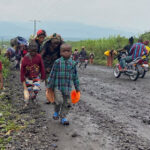
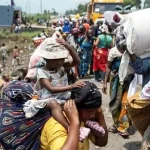
The conflict in eastern DRC has displaced millions of people and destabilised one of Africa’s most resource-rich regions for decades. The international community continues to monitor the implementation of the peace agreement while the UN maintains its peacekeeping mission, MONUSCO, in the region.