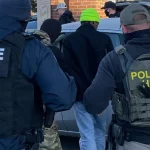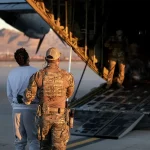
THE military cargo plane’s engines cut through the pre-dawn darkness as it touched down on South Sudanese soil, carrying eight men whose criminal convictions in America had sealed their fate in ways they could never have imagined. What began as a routine deportation case had transformed into a constitutional crisis that reached the highest court in the land – and ended with these men being thrust into one of the world’s most dangerous countries, a place most had never called home.
The eight deportees represent a grim milestone in American immigration enforcement. Only one of those immigrants is from South Sudan, a politically unstable country in northeastern Africa. The others hail from Cuba, Myanmar (Burma), Laos, Vietnam, and Mexico – a diverse group united only by their criminal records and their shared misfortune of becoming test cases for President Donald Trump’s unprecedented “third-country deportation” policy.
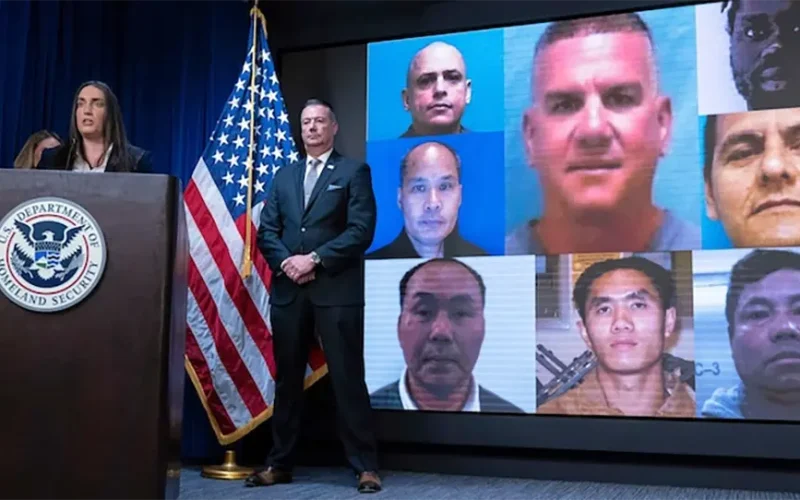
They had been found guilty of crimes, including first-degree murder, robbery and sexual assault. While the Trump administration branded them as “barbaric, violent criminal illegal aliens,” their lawyers painted a different picture – that of men who had served their time and were now being sent to face what could amount to a death sentence in a country ravaged by civil war.
For weeks, the men languished in makeshift detention facilities at a U.S. military base in Djibouti, their fate hanging in the balance as lawyers fought desperately to prevent their deportation. The legal challenge wound its way through the courts, with advocates arguing that sending them to South Sudan – where they had no connections, no family, and no prospect of safety – would violate international law and expose them to torture, arbitrary imprisonment, and death.
The Supreme Court on Thursday cleared the way for the Trump administration to deport to South Sudan a group of migrants that have been held for weeks on a military base in Djibouti. The high court’s decision, with only two liberal justices dissenting, represented a seismic shift in American immigration law, effectively giving the government carte blanche to deport individuals to countries they had never lived in.
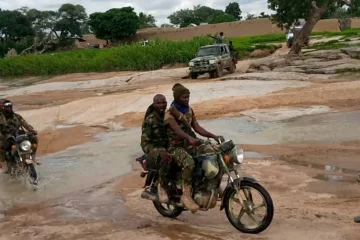
The plane that carried them from Djibouti to South Sudan was more than a deportation flight – it was a journey into one of the world’s most acute humanitarian catastrophes. South Sudan, the world’s newest nation, has been consumed by civil war since 2013. The conflict has displaced millions, destroyed infrastructure, and left the majority of the population in desperate need of basic services.
Two-thirds of South Sudan’s population suffers from severe food insecurity, exacerbated by recent flooding that destroyed farmland and homes. Medical facilities in conflict-affected areas are largely non-functional, leaving civilians without access to healthcare. Armed checkpoints dot the landscape, and violence can erupt without warning, making movement perilous even for locals who understand the terrain.
Into this chaos have been deposited eight men with criminal records, no local connections, and no understanding of the complex tribal and political dynamics that govern survival in South Sudan. Unlike refugees returning to their communities, these deportees have no support networks, no homes to return to, and no clear path to integration.
The Human Cost
The deportation of these eight men represents more than a legal precedent – it’s a human tragedy unfolding in real-time. In a country where even the most vulnerable locals struggle for survival, foreign arrivals marked by their criminal histories face extraordinary dangers. The stigma of being labelled as criminals and outsiders in a society already fractured by ethnic and political divisions makes them easy targets for exploitation, abuse, or worse.
Humanitarian agencies operating in South Sudan are already overwhelmed, struggling to provide basic services to millions of displaced South Sudanese. The arrival of additional individuals needing assistance – particularly those with no claim to local protection—only compounds an already impossible situation.
A Precedent Set
The successful deportation of these eight men to South Sudan has established a dangerous precedent. The Supreme Court on Monday blocked a lower court order that required 15 days’ notice to individuals the Trump administration is trying to deport to countries other than their own. This decision effectively removes critical safeguards that allowed deportees time to contact lawyers and present evidence against their removal.
The policy represents a fundamental shift from traditional deportation practices, which typically involved sending individuals back to their countries of origin where they might have family, speak the language, and understand the culture. Third-country deportations, by contrast, can amount to exile to places where survival itself becomes the primary challenge.
The Broader Implications
The case of the eight deportees has thrust Africa into the centre of Trump’s immigration enforcement strategy in unexpected ways. South Sudan, struggling with its own internal conflicts and humanitarian crises, has become an unwitting participant in American domestic policy. The country’s agreement to accept these deportees – likely in exchange for continued U.S. aid or diplomatic support – sets a precedent that could see other vulnerable nations pressured into accepting America’s unwanted migrants.
For the eight men now in South Sudan, the immediate future is one of profound uncertainty. They face not only the dangers of a war-torn society but also the practical challenges of survival without documentation, resources, or connections. Their deportation represents the intersection of American immigration policy with global humanitarian law, raising questions about the limits of state power and the obligations nations have to protect human life.
Lives in Limbo
As the dust settles on this legal and humanitarian drama, the fate of the eight deportees serves as a stark reminder of how immigration policy can become a matter of life and death. Their journey from American prisons to South Sudanese uncertainty illustrates the human cost of political decisions made in distant capitals.
The men who stepped off that military cargo plane into the dawn light of South Sudan carry with them not just their criminal records, but the weight of a legal precedent that could reshape American immigration enforcement for years to come. Their survival in one of the world’s most dangerous places will serve as a grim measure of whether the American justice system’s pursuit of deterrence has crossed the line into something far more troubling.
In the end, the deportation of these eight men to South Sudan represents more than a policy victory for the Trump administration – it’s a test of whether the international community will allow humanitarian concerns to be sacrificed on the altar of domestic political expediency. The answer, written in the lives of eight men now struggling to survive in a war-torn nation, may define the boundaries of acceptable state action in an increasingly interconnected world.