THE most promising international peace initiative for eastern Democratic Republic of Congo in decades has been dealt a devastating blow following revelations that Rwanda-backed M23 rebels executed over 140 civilians during the same period that diplomats celebrated breakthrough agreements in Washington and Doha.
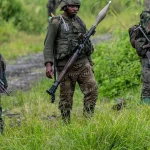
Human Rights Watch (HRW) has disclosed that the M23 armed group carried out systematic killings of mostly ethnic Hutu civilians between July 10-30 in at least 14 villages near Virunga National Park — even as negotiators were finalising what was hailed as a historic ceasefire agreement signed in Qatar on July 19.
The massacre represents one of the worst atrocities committed by M23 since the group’s resurgence in 2021, undermining the credibility of peace efforts that had gained unprecedented momentum with active mediation by the United States and Qatar.
The killings began around July 10, just two weeks after Rwanda and the DRC signed a US-brokered peace agreement in Washington on June 27 that specifically required both parties to “protect civilians” and facilitate UN peacekeeping operations.
As M23 fighters were systematically executing farmers and their families with machetes and gunfire across Rutshuru territory, diplomats were celebrating what the UN peacekeeping mission MONUSCO called “an important step towards sustainable peace.”
On July 19, as bodies were still being thrown into the Rutshuru River according to witness accounts, DRC representatives and M23 signed a declaration of principles in Doha promising a “full ceasefire” and final peace agreement by August 18.
The HRW investigation, based on interviews with 36 people, including 25 witnesses, documented executions in villages including Busesa, Kakoro, Kafuru, and Nyamilima. The UN Office of the High Commissioner for Human Rights reported an even higher toll, stating that “at least 319 civilians were killed by the M23, backed by members of the Rwanda Defence Force” between July 9-21.
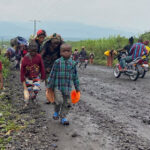
Survivors described horrific scenes of families being rounded up and marched to execution sites by rivers, with children threatened with death if they cried. One woman who escaped told researchers: “We walked all day until we reached the confluence of the rivers in the evening. They told us to sit on the edge of the riverbank, and then they started shooting at us.”
The killings specifically targeted ethnic Hutu civilians, raising what Human Rights Watch called “grave concerns of ethnic cleansing” — a charge that strikes at the heart of regional tensions dating back to Rwanda’s 1994 genocide.
International Credibility at Stake
The massacre exposes fundamental flaws in the US-Qatar mediated peace process, which was designed to end three decades of conflict in Africa’s mineral-rich Great Lakes region while securing American access to critical mineral reserves in eastern DRC.
The June 27 Washington agreement was accompanied by promises of US investment in eastern DRC’s abundant lithium and cobalt deposits, essential for electric vehicle batteries and renewable energy technology. The deal was seen as a strategic counter to Chinese influence in the region.
“The Rwanda-backed M23’s mass killings throw into sharp focus the gaps that exist between rhetoric on the international stage and the reality for civilians in eastern Congo,” said Clémentine de Montjoye, Human Rights Watch’s senior Great Lakes researcher.
Denial and Deflection
Rwanda and M23 have rejected the allegations despite overwhelming evidence. On August 11, Rwanda’s government claimed that an armed group opposed to M23 carried out the killings. The Alliance Fleuve Congo, M23’s political wing, attempted to discredit UN allegations by falsely claiming the massacre sites were inside protected park areas where farming was prohibited.
However, satellite imagery analysed by Human Rights Watch clearly shows active farmland at the killing sites, contradicting M23’s denials.
Peace Process in Jeopardy
The revelations threaten to unravel the most substantive peace initiative for eastern DRC in years. The agreements signed in Washington and Doha were designed to neutralise the Democratic Forces for the Liberation of Rwanda (FDLR), a Hutu rebel group formed by perpetrators of Rwanda’s genocide, while ensuring Rwanda’s withdrawal from Congolese territory.
Instead, the massacres suggest Rwanda-backed forces used anti-FDLR operations as cover for ethnic cleansing, targeting Hutu civilians who farm in areas near rebel strongholds.
The killings were reportedly carried out by M23’s 1st Battalion under Colonel Samuel Mushagara and Brigadier General Baudoin Ngaruye — the latter already under UN sanctions for previous war crimes.
International Response Demanded
Human Rights Watch is calling on the UN Security Council, European Union, and donor governments to impose additional sanctions on those responsible and ensure the prosecution of commanders implicated in war crimes. The organisation specifically urged governments providing military assistance to Rwanda to review their programs to ensure they are not fueling violations.
The International Criminal Court, which announced renewed investigative efforts in Congo in October 2024, should include the M23 massacres in its examination of crimes in North Kivu from January 2022.
Fragile Future
The August 18 deadline for a final peace agreement now appears increasingly unrealistic. The massacre shattered trust at a critical juncture when international attention and resources were finally focused on ending one of the world’s most intractable conflicts.
For the millions of civilians in eastern DRC who have endured decades of violence and displacement, the July killings represent yet another betrayal of promises for peace. As one survivor whose wife and three children were killed told Human Rights Watch: “I could see them from a distance… they were all shot dead.”
The international community now faces a stark choice: either confront the reality that current peace efforts are being undermined by the very actors they seek to appease, or watch another generation of Congolese civilians pay the price for diplomatic naivety in one of Africa’s most volatile regions.