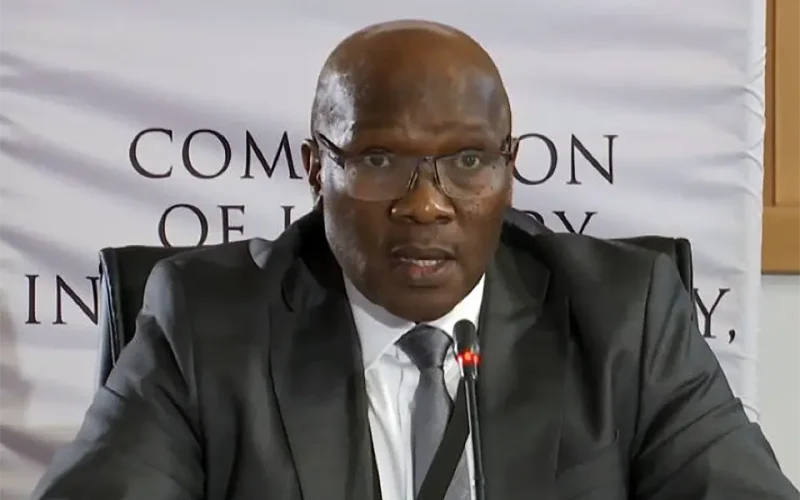
THE Madlanga Commission of Inquiry heard explosive testimony on Tuesday that threatens to implicate suspended Police Minister Senzo Mchunu and a senior Crime Intelligence officer in a web of corruption involving an alleged drug cartel.
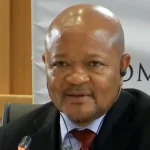
High-ranking policeman Lieutenant-General Dumisani Khumalo, who headed the country’s Crime Intelligence Unit until June, spent hours presenting WhatsApp messages and phone records that he claims reveal how political and policing figures became entangled with alleged drug trafficker Vusimuzi “Cat” Matlala.
At the heart of the allegations is ANC strategist Brown Mogotsi, a North West businessman who the evidence suggests acted as an intermediary between Matlala — whom Khumalo has identified as part of a drug trafficking cartel known as the Big Five — and the highest levels of law enforcement.
Minister’s Direct Communication with Fixer
The most damaging evidence presented involves direct WhatsApp communication between Mchunu and Mogotsi in late December 2024, just days before the minister ordered the disbandment of the Political Killings Task Team investigating political murders in KwaZulu-Natal.
Messages displayed at the commission show Mogotsi questioning Mchunu about Constitutional Court judgments and seeking classified police information. Phone records confirm multiple calls between the two men during the critical week before the task team’s dissolution on December 31, 2024.
“It is highly irregular for a police minister to have even entertained messages like these,” observers at the commission noted.
Most alarmingly, Mogotsi appeared to have advance knowledge of the disbandment order. On January 1, 2025 — just one day after the directive was issued — he sent a triumphant message to Matlala: “The Task Team tht came to yr house and harassed u has been Dissolved/Disbanded!”
He followed up with detailed classified information: “They got the letter on Monday. As we speak they are bringing all the dockets to Sibiya” — a reference to General Shadrack Sibiya, who would indeed take control of the dockets, as later confirmed.
When Judge Madlanga asked Khumalo directly whether Mogotsi possessed classified information and had the disbandment letter within a day of its issuance, the general answered yes to both questions.
Access to Police Intelligence Systems
The commission heard that Mogotsi had access to Persal, the police personnel database that should only be accessible to SAPS members. Screenshots shown at the hearing revealed that Mogotsi, who was not a police employee, had obtained classified staff information.
This access extended to sensitive operational intelligence about ongoing investigations and court proceedings relevant to Matlala’s business interests. The messages establish a clear pattern: Mogotsi would provide Matlala with updates on police investigations targeting him, while intermittently requesting funds.
R150,000 for Political Favours
The evidence revealed how Mogotsi extracted approximately R150,000 from Matlala to fund trips to Cape Town for ANC cadres attending the party’s January 8 birthday celebrations in Khayelitsha.
Messages show Mogotsi making increasingly bold demands: flights for additional people, accommodation details for Camps Bay properties, entertainment money, and R15,000 for “drinks and food.” He even requested funds for a “chair fee for a fancy banquet.”
Matlala initially complied, transferring R111,000 for travel and accommodation. But by March 2025, his patience was wearing thin. “The relationship shouldn’t be one sided brother,” he complained to Mogotsi. “I asked you several favours which are not even money related but none of them have been attended to.”
The power dynamic then shifted, with Matlala demanding that Mogotsi “speed up” payment for invoices his company had submitted to SAPS — payback for all the favours.
The Khan Connection
In potentially the most serious allegation of the day, Khumalo told the commission that the messages between Matlala and Mogotsi suggest Matlala had a “special relationship with General Khan” — an apparent reference to Feroz Khan, head of counterintelligence and security at Crime Intelligence.
One message from Mogotsi to Matlala reads: “Ok, arrange with Khan to give him cash if the information he has is worth.”
This suggests that an attempted murder accused, whom Khumalo has identified as a key figure in a drug cartel, had direct access to one of the country’s most senior police officers responsible for counterintelligence operations. Khumalo indicated that more evidence about the Khan relationship would be presented in closed session.
Khan has not yet had an opportunity to respond to the allegations.
The Bigger Picture: Political Killings and Drug Cartels
The evidence comes against the backdrop of Khumalo’s broader allegation that a drug cartel known as the Big Five has infiltrated political and policing circles. KwaZulu-Natal police boss Nhlanhla Mkhwanazi had previously alleged that Matlala was financially supporting the political aspirations of both Mogotsi and Mchunu when the latter was police minister.
The Political Killings Task Team that Mchunu disbanded was investigating a series of murders in KwaZulu-Natal. However, testimony revealed a case of apparent mistaken identity: the suspects who allegedly targeted the task team believed it was investigating them, when in fact it was a Gauteng counterintelligence team that had them under scrutiny.
Video footage shown at the commission captured Gauteng counterintelligence entering Matlala’s premises on December 19, 2024, to inspect and ultimately confiscate firearms. This would have signaled to Matlala that investigators were closing in — guns can be traced to murders. The pressure was on to get the authorities off his trail.
Just 12 days later, the Political Killings Task Team was disbanded.
Campaign of Misinformation
Khumalo dedicated significant testimony to what he described as a coordinated misinformation campaign that began immediately after the December 31 disbandment order.
He cited “breaking news” claims sent by Matlala to Mogotsi alleging that three key witnesses in a case against Khan had been offered promotions to change their statements — claims Khumalo dismissed as false.
Police analyst Calvin Rafadi emerged in testimony as part of a network assembled to support the public narrative justifying the disbandment, using his media influence in radio interviews.
Khumalo told the commission he wanted to illustrate “how facts can be changed to suit the misinformation that needs to be pushed.”
State Capture Echoes
Commission observers noted disturbing parallels with evidence heard at the Zondo Commission of Inquiry into State Capture, which repeatedly showed how ANC cadres had their lifestyles bankrolled by business people seeking political influence.
“Matlala’s sponsorship of Mogotsi is part of the pattern,” analysts observed, comparing it to the Gupta brothers’ sponsorship of former ministers, Bosasa’s funding of Nomvula Mokonyane, and businessman Jehan Mackay’s support of ANC spokesperson Zizi Kodwa.
Right to Respond
While the accused parties have not yet had an opportunity to challenge the evidence, legal experts note that the authenticity of WhatsApp messages and phone records would have been verified before presentation to the commission. What remains open to contest is the interpretation of these communications.
Mchunu, now on enforced leave, has previously confirmed that he knew Mogotsi, describing him as a “comrade” but not an “associate” — a distinction observers at the commission struggled to understand.
Khumalo himself was arrested in June on charges of fraud and corruption, alongside Crime Intelligence colleagues, over the allegedly irregular appointment of a woman named Dineo Mokwele who had no police experience. He appeared in court on June 27.
What’s Next
The Madlanga Commission is expected to resume on Wednesday at 9:30am, with more evidence anticipated about the alleged relationships between political figures, senior police officers, and organized crime.
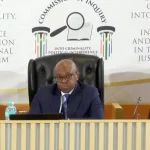
As Judge Madlanga presides over testimony that reveals unprecedented access to classified police intelligence by civilians with alleged criminal connections, questions mount about the extent of infiltration into South Africa’s law enforcement institutions.
The evidence presented Tuesday suggests that the investigation into political killings may have been derailed not through legitimate concerns about its operations, but through a sophisticated influence operation involving money, political connections, and compromised officials at the highest levels of the police service.
For now, the WhatsApp messages speak for themselves — even if their full meaning remains to be adjudicated.