THE Democratic Republic of Congo (DRC) and the M23 rebel group signed a landmark peace framework on Saturday, marking what officials described as a critical breakthrough in efforts to end fighting in eastern Congo that has killed thousands and displaced hundreds of thousands this year.
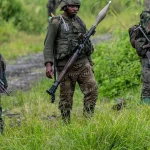
The agreement, signed by representatives from both sides in the Qatari capital, represents the most significant step yet toward resolving a conflict that has devastated communities across North Kivu and South Kivu provinces, where M23 – widely considered the region’s most powerful aggressor – has seized unprecedented swaths of territory with alleged backing from neighbouring Rwanda.
“The Framework reaffirms the Parties’ shared commitment to addressing the root causes of the conflict through structured dialogue, confidence-building measures, and a phased approach to de-escalation and stabilisation,” Qatar’s government announced in a statement. “It further underscores the priority placed on the protection of civilians, respect for human rights, the safe and dignified return of displaced persons, and the advancement of national reconciliation and unity.”
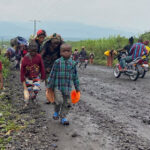
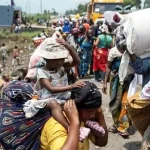
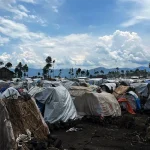
The humanitarian toll of the conflict has been catastrophic. Thousands have died and hundreds of thousands have been forced from their homes since M23, in its latest offensive supported by Rwanda, captured Goma, eastern Congo’s largest city, in January before expanding control across the region. The violence has repeatedly threatened to escalate into a full-blown regional war.
Qatar’s Minister of State for Foreign Affairs, Mohammed bin Abdulaziz Al-Khulaifi, acknowledged the agreement represents a beginning rather than an end to the peace process. “Peace cannot be enforced by force, but is built through confidence, mutual respect and sincere commitment,” he said at the signing ceremony.
According to Qatar’s announcement, “The Doha Framework serves as the foundational reference document for the broader peace process,” with “a series of subsequent protocols, annexes, and technical arrangements” to be developed to address “specific operational aspects, including the consolidation and verification of the ceasefire, modalities for troop disengagement, humanitarian access, reintegration pathways, and the support for national dialogue.”
U.S. envoy to the region Massad Boulos told Reuters the framework covered eight protocols, with six still requiring implementation agreements. He acknowledged that progress on the first two protocols – covering prisoner exchanges and ceasefire monitoring agreed in recent months – had been slower than expected.
“Yes, they were a little bit slow in the first few weeks,” Boulos told reporters. “Yes, people were expecting to see probably some immediate results on the ground, but this is a process… This is not a light switch that you just switch on and off.”
The signing comes as violence persists on the ground. On Friday, local officials reported as many as 28 people killed by Islamic State-allied militants in eastern North Kivu province, underscoring the complex security challenges facing the region beyond the M23 insurgency.
Rwanda has consistently denied allegations that it has supported M23, despite widespread international accusations. The rebel group now controls more Congolese territory than at any point in its history.
Saturday’s agreement builds on months of U.S. and Qatari-backed diplomatic efforts. Qatar has hosted multiple rounds of direct talks since April, though negotiations have largely focused on preconditions and confidence-building measures. The parties agreed in July to a declaration of principles that left many key issues unresolved, and reached a ceasefire monitoring deal in October.
Qatar “expresses its appreciation to the Government of the United States of America, the Republic of Togo, and the African Union Commission for their constructive engagement and continuous support throughout the facilitation process,” and “remains fully committed to accompanying the Parties in the implementation phase and to continuing to provide a neutral and supportive platform for dialogue, in coordination with regional organizations and the United Nations system.”
For civilians in eastern Congo, who have endured decades of conflict, displacement, and loss, the framework offers a glimmer of hope – though its true test will come in implementation and whether it can translate into tangible peace on the ground.