
FOURTEEN years after Tunisian street vendor Mohamed Bouazizi’s self-immolation sparked the Arab Spring and toppled dictator Zine El Abidine Ben Ali, Tunisia stands at a devastating crossroads. The nation once celebrated as the sole democratic success story emerging from that revolutionary wave now teeters on the edge of constitutional calamity, its fragile democratic gains dismantled piece by piece under President Kais Saied’s increasingly authoritarian grip.
The crisis has reached a critical inflexion point. What began in 2021 as Saied’s self-proclaimed mission to cleanse Tunisia of corruption has metastasised into a comprehensive assault on democratic institutions, civil liberties, and political opposition. The question is no longer whether Tunisia faces democratic backsliding – that ship has sailed. The question now is whether the country can avoid total systemic collapse as multiple pressure points threaten to rupture simultaneously.
The Mechanics of Repression
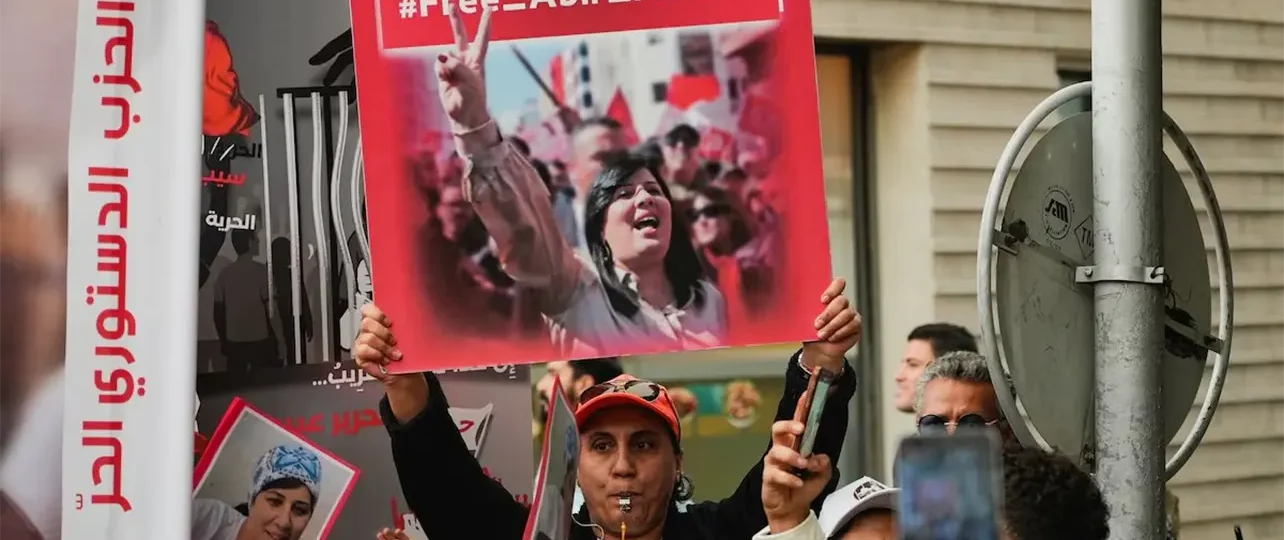
The recent sentencing of opposition leader Abir Moussi to 12 years in prison represents more than just another political prosecution. It exemplifies the weaponisation of Tunisia’s judiciary into an instrument of presidential control. Moussi, who has languished in detention since 2023 on charges her supporters dismiss as fabricated, joins dozens of opposition figures, journalists, and activists behind bars in what has become a systematic campaign of political elimination.
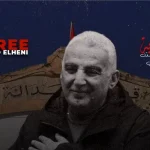
The scale of judicial repression is staggering. Last month, an appeals court handed down sentences of up to 45 years to dozens of opposition leaders, business figures, and lawyers on conspiracy charges. This week brought fresh arrests of opposition figures Chaima Issa, Ayachi Hammami, and Nejib Chebbi, triggering condemnation from international human rights organisations already alarmed by Tunisia’s trajectory.
Saied’s methods follow an authoritarian playbook that has proven devastatingly effective. After shutting down the elected parliament in 2021 and consolidating power through emergency measures, he systematically dismantled judicial independence by dissolving the Supreme Judicial Council and purging dozens of judges in 2022. Opposition groups and human rights advocates immediately recognised these moves as a constitutional coup, but Saied pressed forward, insulated by legal mechanisms he himself now controls.
The president dismisses all criticism with a simple narrative: he is saving Tunisia from traitors and a corrupt elite. This framing allows him to cast any opposition as illegitimate by definition, creating a self-reinforcing cycle of repression. Critics become conspirators; journalists become agitators; activists become threats to national security.
Unity Born of Desperation
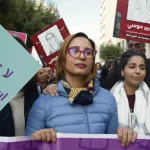
Saturday’s protests in Tunis marked a significant shift in Tunisia’s opposition dynamics. For the first time in years, activists and political figures from across the ideological spectrum marched together, united not by shared vision but by shared persecution. Hundreds carried portraits of imprisoned colleagues, transforming the demonstration into both a memorial and a mobilisation.
“Today, all opposition is in prison,” protester Noura Amaira observed. “The machine of dictatorship has spared no one, so unity in the streets has become a necessity, no longer a choice.”
This forced unity represents both potential strength and underlying fragility. Tunisia’s opposition has historically been fractured along ideological lines—Islamists, secularists, leftists, and liberals rarely finding common cause. Political fragmentation blunted previous attempts at mass mobilisation, allowing Saied to consolidate power while his opponents squabbled. Now, systematic repression has created what political debate could not: a united front.
Yet unity born of desperation differs fundamentally from unity built on shared purpose. The opposition has coalesced around what it opposes, Saied’s authoritarianism, but remains divided on what should replace it. This tactical alliance may prove sufficient to sustain street protests but insufficient to forge a viable alternative political vision.
The protests have gained momentum over recent weeks, evolving from sporadic demonstrations into weekly confrontations between citizens and state power. This regularity matters. Sustained protest movements can shift political dynamics by demonstrating regime vulnerability, emboldening fence-sitters, and imposing costs on maintaining repression.
Multiple Fault Lines
Tunisia’s crisis extends beyond political repression. The country faces converging pressures that threaten to overwhelm state capacity and ignite broader unrest.
In the southern city of Gabes, thousands have protested for weeks, demanding the closure of a chemical plant on environmental grounds, highlighting how economic and ecological grievances intersect with political frustrations. In Kairouan, clashes erupted for a second consecutive night after a man died following a police chase, with his family alleging police brutality. Witnesses reported demonstrators hurling stones, petrol bombs, and flares while police responded with tear gas – scenes uncomfortably reminiscent of the 2011 uprising.
The powerful UGTT union has called for a nationwide strike next month, a development that should alarm Tunisian authorities. The union played a crucial role in the 2011 revolution and maintains significant mobilisation capacity. A general strike would paralyse economic activity and potentially catalyse broader unrest, particularly as Tunisia marks the January anniversary of the revolution that promised so much and has delivered so little.
These separate flashpoints create the potential for cascading instability. A government stretched thin, managing political opposition, may lack bandwidth to address socioeconomic grievances. Heavy-handed responses to local protests can inflame rather than extinguish dissent. The accusation of police brutality in Kairouan – and the family’s vow to spark major protests if accountability is not ensured – illustrates how individual incidents can rapidly escalate in environments of accumulated grievance.
The Dangerous Endgame
Saied appears committed to a strategy of total dominance rather than accommodation. Every opposition figure imprisoned, every journalist silenced, every civil society organisation intimidated represents another step toward entrenching one-man rule. International human rights groups increasingly describe Tunisia as an “open-air prison” where basic freedoms have been systematically eroded.
This approach courts catastrophic risk. Authoritarian consolidation through repression can succeed when regimes possess sufficient coercive capacity, economic resources, and external support to sustain control indefinitely. Tunisia’s fundamentals in all three areas are shaky. The economy remains fragile, struggling with debt, unemployment, and inflation. Security forces are stretched, managing multiple protest zones. International patience wears thin as Western democracies that once championed Tunisia’s democratic transition now watch its reversal.
Saied’s historical analogy, positioning himself as a cleanser removing corrupt elites, echoes justifications offered by strongmen throughout history. Such narratives rarely survive contact with economic reality. When authoritarian governments cannot deliver material improvements, their claims to necessary firmness ring hollow. Tunisia’s economic struggles predate Saied, but his concentration of power means he now owns responsibility for addressing them. Failure to do so while simultaneously crushing dissent creates a volatile mix.
The president’s rejection of dictatorship accusations carries diminishing credibility as the gap between rhetoric and reality widens. Claiming to save democracy while dismantling its institutions fools few beyond committed supporters. International observers, opposition figures, and increasingly ordinary Tunisians recognise the disconnect.
A Reckoning Approaches
Tunisia confronts an untenable trajectory. Saied cannot imprison everyone who opposes him, yet his current strategy depends on exactly that calculus—make dissent sufficiently costly that opposition withers. But repression has limits. Prison cells fill. International condemnation mounts. Economic pressures build. Streets fill with protesters.
The upcoming weeks will prove crucial. The January revolution anniversary creates symbolic weight that opposition forces will surely leverage. The UGTT’s planned nationwide strike threatens to demonstrate the regime’s vulnerability. Ongoing protests in multiple cities strain security resources. New arrests generate fresh outrage.
Saied faces a fundamental authoritarian dilemma: having eliminated institutional constraints and concentrated power, he must now personally manage every crisis. Democratic systems distribute responsibility and absorb shocks through multiple channels. Authoritarian systems collapse when the center cannot hold.
Tunisia need not follow this path to its conclusion. The country could step back from the brink through dialogue, political opening, and genuine reform. But Saied has shown no inclination toward such accommodation. His bet appears to be that sustained repression will eventually break opposition resistance.
History suggests otherwise. The 2011 revolution demonstrated that even entrenched authoritarian regimes can fall rapidly when popular legitimacy evaporates. Ben Ali ruled for 23 years before fleeing into exile within weeks once protests reached critical mass. Saied has ruled for less than four years, yet already faces organised opposition, international isolation, and mounting domestic crises.
The question haunting Tunisia is not whether Saied’s law enforcement agencies and courts can continue repressing dissent. The question is for how long, and at what ultimate cost to the nation that once showed the Arab world that democracy was possible. That inspiring story now risks ending in cautionary tragedy, a reminder that democratic gains prove far easier to lose than to build, and that the distance between hope and despair can be measured in presidential decrees and prison sentences.
Tunisia stands at the precipice. Whether it steps back or falls forward will define not only the country’s future but also serve as a stark lesson about democracy’s fragility in a region that has seen too many such lessons already.