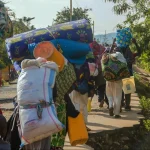
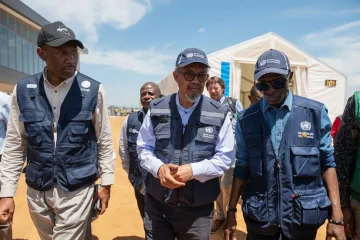
IN the scarred villages and displacement camps scattered across eastern Congo, where mothers have buried children and farmers have abandoned fertile fields to flee advancing militias, news of the M23 rebels’ promised withdrawal from Uvira has been met with cautious, exhausted hope.
For years, Rwanda steadfastly denied what local communities, humanitarian workers, and UN investigators knew to be true: that Kigali was orchestrating one of Africa’s most devastating proxy wars through the M23 rebellion. Now, the Rwanda-backed group’s announcement that it will pull forces from the strategic border town of Uvira, described as a response to U.S. pressure, represents an implicit acknowledgement of what Kinshasa has long asserted: Rwanda’s direct involvement in the conflict.
The development marks a potential turning point in a war that has killed thousands, displaced hundreds of thousands more, and left entire communities in North Kivu and South Kivu provinces living in a perpetual state of terror and uncertainty since M23’s resurgence in 2021.
The Weight of Denial, The Cost of War
Rwanda’s longstanding refusal to acknowledge its role in backing M23 has been more than diplomatic theatre – it has been a barrier to accountability and peace. A UN Group of Experts report in July concluded that Rwanda exercised “command and control” over the rebels, findings that Kigali repeatedly dismissed even as evidence mounted.
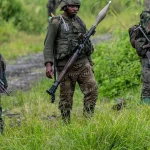
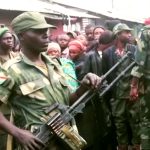
For communities in places like Goma, Sake, and now Uvira, the question of Rwanda’s involvement was never abstract. Residents have reported seeing uniformed Rwandan soldiers fighting alongside M23 forces. Displaced persons fleeing combat zones have described coordinated military operations far beyond the capabilities of a purely rebel force.
The M23’s January offensive, which seized Goma and Sake in a lightning campaign, demonstrated military sophistication and firepower that local observers attributed to external backing. The insurgents have since worked to establish parallel administrative structures in occupied territories, raising fears of a permanent partition of the mineral-rich eastern provinces.
Uvira: A Strategic Prize and a Test Case
The seizure of Uvira last week, less than a week after Presidents Felix Tshisekedi of Congo and Paul Kagame of Rwanda met with U.S. President Donald Trump and affirmed commitment to the Washington Accords, was widely seen as a brazen violation of peace commitments.
Uvira, situated on Lake Tanganyika’s shores at the Burundi border, is both a commercial hub and a strategic gateway. It’s fall to M23 forces sent shockwaves through diplomatic circles and prompted sharp criticism from U.S. Secretary of State Marco Rubio, who warned Rwanda that Washington would “take action to ensure promises made to the President are kept.”
Corneille Nangaa, leader of the Congo River Alliance that includes M23, framed the announced withdrawal as a “unilateral trust-building measure” aimed at supporting Qatar-mediated peace talks in Doha. As of Tuesday, however, civil society activists in Uvira reported that rebel forces remained in the town, with sources suggesting both M23 and Congolese forces would establish a 5-kilometre buffer zone.
For Uvira’s residents – many of whom fled when fighting erupted – the promise of withdrawal means little until they can safely return to their homes and livelihoods.
Burundi’s Shadow War
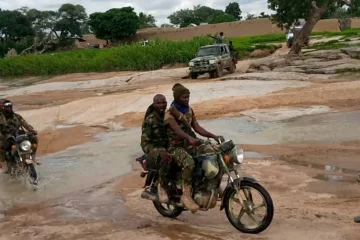
Adding complexity to an already tangled conflict is the previously unannounced involvement of Burundi, Congo’s neighbour to the east. While Rwanda has dominated international attention, Burundi has quietly deployed forces into eastern Congo, ostensibly to support Kinshasa against the M23 advance.
The capture of hundreds of Burundian soldiers by M23 forces has exposed Bujumbura’s military engagement in the conflict – an intervention that carries its own regional implications. Burundi’s involvement reflects the conflict’s tendency to draw in neighbouring states, each with its own security concerns and strategic interests in Congo’s unstable eastern borderlands.
Rwanda has sought to use Burundi’s presence to deflect blame, accusing Congolese and Burundian forces of provoking renewed fighting. Yet the capture of Burundian troops also underscores M23’s military strength – a strength that UN experts and regional observers attribute to Rwandan support.
Villages in the Crossfire
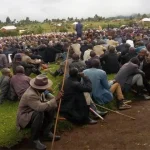
Beyond the diplomatic manoeuvring and geopolitical calculations lies a humanitarian catastrophe playing out in countless villages and displacement camps. In Rutshuru, Masisi, and Walikale territories, communities have been repeatedly displaced as front lines shift. Schools have closed, health centres have been looted or destroyed, and agricultural cycles have been disrupted, pushing food insecurity to crisis levels.
Women and girls have borne a particular burden, facing epidemic levels of sexual violence used as a weapon of war. Children have been recruited by armed groups or orphaned by violence. Entire families have spent years living in makeshift camps, dependent on overstretched humanitarian assistance.
Local peace committees and civil society organisations have continued their work even as fighting rages, mediating community disputes, negotiating safe passage for civilians, and documenting abuses. Their voices, calling for genuine peace, accountability, and an end to external interference, have often been drowned out by the din of artillery and diplomatic posturing.
The Path Forward: Fragile and Uncertain
The M23’s announced withdrawal from Uvira, if fully implemented, could represent a significant de-escalation. It may signal that international pressure—particularly from Washington—can influence Rwanda’s calculations. The fact that the withdrawal is being framed as supporting the Doha peace process suggests that parallel diplomatic tracks may be gaining traction.
Yet scepticism is warranted. M23 has made and broken commitments before. Rwanda’s pattern of denial followed by tactical adjustments has characterised its approach throughout the conflict. And the underlying drivers of instability—including competition for mineral resources, cross-border ethnic tensions, and weak state authority—remain unaddressed.
For the peace process to succeed, several conditions must be met: Rwanda must genuinely cease support for M23 and withdraw any forces on Congolese territory; M23 must disarm and integrate into political processes rather than military structures; Burundi’s role must be clarified and regulated; and the Congolese government must extend effective authority and services to recovered territories.
Most critically, peace must be more than the absence of active combat. It must include justice for victims, return of displaced populations, restoration of livelihoods, and reforms that address the governance failures that have made eastern Congo vulnerable to cycles of violence for more than two decades.
Conclusion: A Chance Worth Taking
In the villages and towns of eastern Congo, where residents have learned to distinguish between different armed groups by their uniforms and tactics, where children have grown up knowing only war, the promise of M23’s withdrawal offers a sliver of hope in a landscape defined by disappointment.
Rwanda’s implicit acknowledgement of involvement, evident in M23’s response to U.S. pressure, may finally open space for honest negotiation. Burundi’s exposed presence adds urgency to regional efforts to manage the conflict. And the convergence of diplomatic initiatives, from Washington to Doha, suggests international attention may be coalescing in meaningful ways.
Whether this moment represents a genuine turning point or merely another twist in a protracted conflict will depend on actions, not promises. For now, in displacement camps and battered villages across North and South Kivu, people are watching, waiting, and daring to hope that this time, peace might be more than elusive.
The situation in eastern DRC remains fluid, with developments continuing to unfold. Local civil society organizations and humanitarian agencies emphasize the need for sustained international engagement and accountability mechanisms to ensure any peace process delivers tangible security and dignity for affected communities.