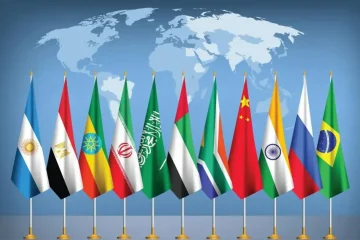
CHINA will grant duty-free access to 100% of tariff lines for imports from 53 African countries starting May 1, 2026, marking Beijing’s most aggressive trade expansion yet as it pivots away from Western markets amid escalating U.S. tariff wars. The move – excluding only Eswatini due to its diplomatic recognition of Taiwan – positions Africa as a resource buffer and alternative export destination as President Trump’s administration imposes tariffs up to 60% on select Chinese goods.
The policy expands zero-tariff treatment beyond the 33 least-developed countries covered since December 2024 to encompass Africa’s economic heavyweights, including Nigeria, South Africa, Kenya, and Egypt. China is forgoing an estimated $1.4 billion in tariff revenue to secure preferential access to minerals, oil, and agricultural products that fuel its industrial complex.
Trade Imbalance Deepens Despite New Access
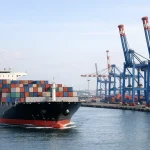
China-Africa trade reached $134 billion in the first five months of 2025, up 12.4% year-over-year, cementing China’s 16-year reign as the continent’s largest trading partner. Yet the relationship remains starkly imbalanced: African exports to China grew just 1-2.3% while Chinese exports surged 20%, pushing the trade deficit to $102 billion in 2025.
Africa’s exports remain trapped in raw commodities – minerals and oil account for over 80% of the $99 billion China imported from the continent in 2024. The Democratic Republic of Congo, South Africa, Zambia, and Angola dominate shipments of copper, cobalt, iron ore, and crude oil. Agricultural products, including cocoa from Côte d’Ivoire and coffee from Kenya, represent nascent diversification opportunities.
Analysts project zero tariffs could boost African exports by $80 billion annually toward $250 billion, generating cumulative gains exceeding $400 billion over a decade. But these projections assume Africa can add value to raw exports – a transformation that has eluded the continent for decades.
Industrial Wipeout Looms as Cheap Goods Flood Markets
The policy’s dark side threatens to accelerate deindustrialisation across Africa. Chinese manufacturers, blocked from U.S. markets by Trump-era tariffs, are redirecting floods of machinery, electronics, textiles, solar panels, and consumer goods through e-commerce platforms like Temu. Nigeria’s once-thriving textile industry has collapsed under similar competitive pressure, while South Africa’s garment sector struggles for survival.
“Africa risks exchanging marginal export gains for the wholesale destruction of manufacturing capacity,” warns Oxford Economics, which predicts trade friction to intensify in 2026 as governments impose emergency quotas and antidumping duties.
The zero-tariff arrangement creates perverse incentives: African nations gain marginally better access to China’s market while opening their own economies to unrestricted imports that undercut local factories. Steel, construction materials, electronics, and automotive sectors face existential threats in Ethiopia, Nigeria, South Africa, and beyond.
Job displacement could reach hundreds of thousands as low-cost Chinese manufacturers displace workers in nascent industries – precisely the sectors Africa needs to absorb its youth bulge and drive urbanisation.
Strategic Contest: Beijing vs. Washington
China’s tariff elimination stands in sharp contrast to the U.S. trade regime. While the African Growth and Opportunity Act (AGOA) provides duty-free access for approximately 40 eligible countries – focused primarily on textiles and apparel 0- Trump has imposed 10-50% tariffs on steel and aluminium, 25% on autos, and threatened AGOA revocation. South African steel now faces 50% U.S. duties, effectively pricing it out of American markets.
AGOA, extended through 2029, generates roughly $5 billion in African exports but comes with governance and human rights conditions. China’s offer carries no political strings, forgoing revenue to lock in resource access and geopolitical leverage.
The divergence forces African nations to choose: align with China’s open-market incentives or maintain conditional partnerships with Western democracies offering smaller market access but greater investment in governance and institutions.
Processing Gap Will Determine Winners and Losers
Success hinges on whether Africa can escape the raw commodity trap. The policy includes “green channel” mechanisms to fast-track processed goods—refined minerals, packaged foods, manufactured textiles—into Chinese supermarkets and industrial supply chains.
Regional economic blocs present divergent opportunities:
- SADC countries (South Africa, Angola, DRC, Zambia): Positioned for the highest volume gains through minerals but face commodity price volatility
- WAEMU states (Côte d’Ivoire, Nigeria): Agricultural expansion in cocoa, cashew, cotton, and manganese
- EAC members (Kenya, Tanzania): Coffee, copper, titanium, with potential for processed goods
- Non-LDC economies: New market access for light manufacturing and textiles previously excluded
Yet logistics bottlenecks, weak standards compliance infrastructure, and minimal processing facilities threaten to waste the opportunity. Without coordinated industrial policy through the African Continental Free Trade Area (AfCFTA), the zero-tariff policy will simply entrench Africa’s role as a raw material supplier.
Employment Potential Remains Unquantified
Job creation projections centre on agro-processing, manufacturing, and logistics, with agricultural processing expected to generate 3-5 indirect jobs per direct role. Côte d’Ivoire’s cocoa factories, Kenyan avocado plants, and Ethiopia’s textile hubs could scale output for China’s vast consumer market.
But aggregate employment figures remain elusive. The prior zero-tariff scheme for 33 least-developed countries created modest job growth due to continued raw export dominance. Net job creation depends on whether African governments shield domestic industries from Chinese import competition while simultaneously investing in processing capacity—a policy balancing act few have mastered.
Sovereignty vs. Opportunity
China’s zero-tariff policy arrives as Beijing confronts a domestic economic slowdown and needs stable commodity supplies to navigate Western decoupling. For Africa, the arrangement presents a Faustian bargain: immediate export gains and infrastructure investment in exchange for deepening dependency on a single dominant partner.
The 53 eligible countries—spanning Algeria to Zimbabwe—must now decide whether to leverage Chinese market access to negotiate better terms with Europe and America, or accept Beijing’s framework and risk locking in structural disadvantages for generations.
The May 1, 2026, activation date gives African governments minimal time to coordinate industrial policy, strengthen processing capacity, and establish safeguards against import surges. Without decisive action, the continent risks trading marginal commodity gains for the permanent sacrifice of manufacturing ambitions—a strategic loss that would eclipse any short-term export statistics.