
RWANDA has received a broadly positive assessment from the International Atomic Energy Agency (IAEA) following an eight-day technical review of its nuclear power infrastructure, with international experts confirming that the East African nation has made meaningful strides toward becoming the continent’s newest entrant into civilian nuclear energy.
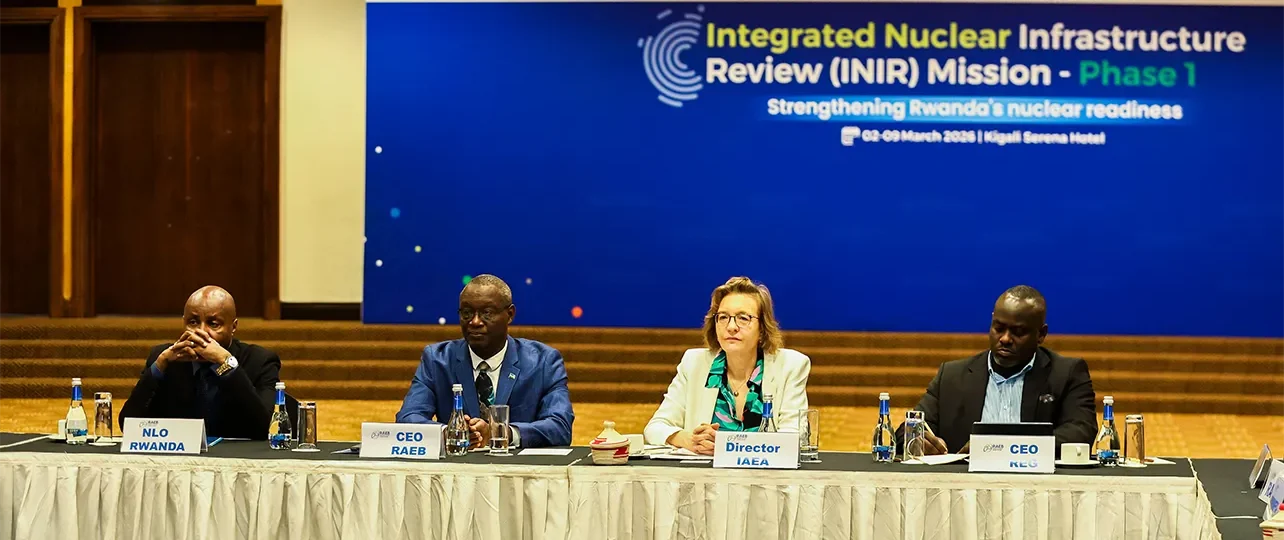
The Integrated Nuclear Infrastructure Review (INIR) mission, conducted from 2 to 9 March 2026 at the request of the Rwandan government, concluded that Kigali has demonstrated strong institutional commitment, proactive stakeholder engagement, and early preparation for emergency response — areas the IAEA identified as good practices for other nations developing nuclear energy programmes.
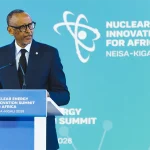
Rwanda’s nuclear ambitions are substantial. The government aims for nuclear power to supply between 60 and 70 per cent of the country’s energy mix, with its first small modular reactor (SMR) expected to be operational in the early 2030s. The programme is anchored in a 2020 Presidential Order that established the Rwanda Atomic Energy Board, and is embedded in both the national energy policy and the National Land-Use Master Plan.
“Strong government support and effective coordination helped Rwanda make significant progress toward deciding on a nuclear power programme.”
Mehmet Ceyhan, Technical Lead, IAEA Nuclear Infrastructure Development Section
The review team — drawn from Egypt, Estonia, Kenya, and Pakistan, together with six IAEA staff — noted progress in three critical areas: the drafting of a comprehensive new nuclear law, the initiation of work to strengthen the regulatory framework, and the identification of candidate sites for the planned SMR project following national site surveys.
However, the mission also identified outstanding work. Experts recommended that Rwanda finalise the comprehensive report needed to support the national decision to formally introduce nuclear power, complete its review of existing legislation, and develop and adopt policies and strategies to underpin the broader programme.
Rwanda’s Infrastructure Minister Jimmy Gasore welcomed the review findings, affirming that the country remains committed to a responsible and transparent development pathway. The IAEA and Rwanda are now expected to develop an integrated work plan to guide coordinated international support as the programme advances.
The INIR process follows the IAEA’s Milestones Approach — a phased framework spanning three stages: consider, prepare, and construct. Rwanda is currently at Phase 1, the consideration stage, with the mission’s recommendations expected to inform an action plan to address identified infrastructure gaps before the country advances to the next phase.
Rwanda’s pursuit of nuclear energy places it at the vanguard of a growing continental conversation about energy sovereignty and industrialisation. With chronic electricity deficits constraining economic growth across sub-Saharan Africa, and hydropower increasingly vulnerable to climate variability, the SMR pathway offers a potential route to reliable baseload generation without the geopolitical entanglements of large conventional nuclear projects.
The review mission marks a significant institutional milestone for a country that has, in recent years, positioned itself as one of Africa’s most ambitious technology and innovation hubs. Whether Rwanda can translate that ambition into a functioning nuclear fleet — on time, within the regulatory frameworks now being developed, and on the scale envisioned — will be closely watched across the continent.