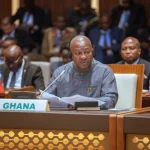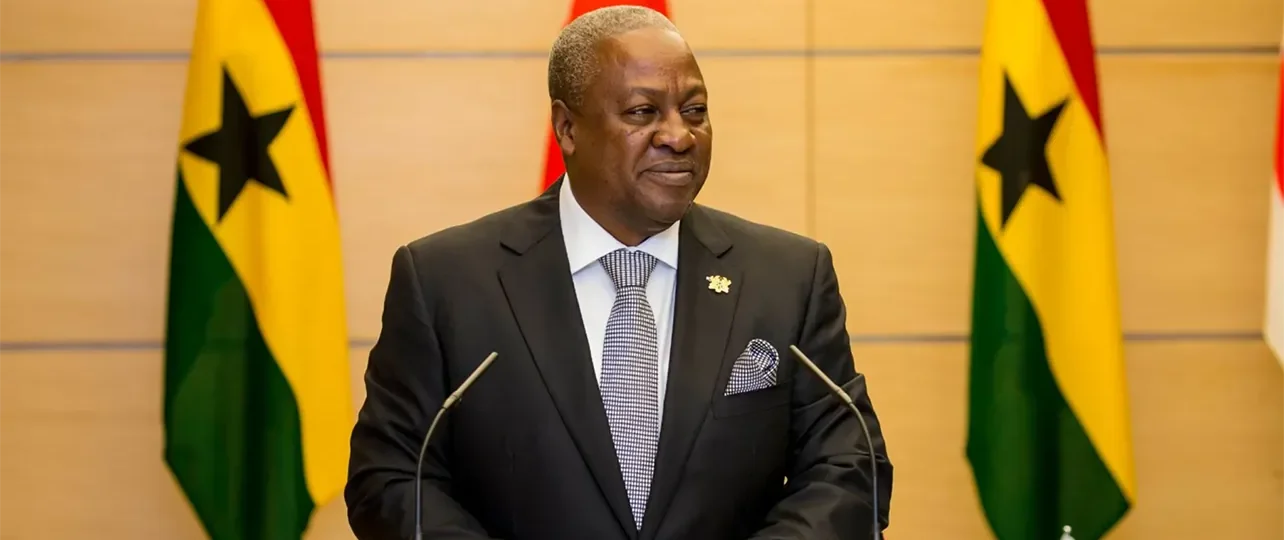

IN a move that signals Africa’s most structured institutional challenge yet to the architecture of global health governance, Ghana’s President John Dramani Mahama has unveiled an 18-member high-level panel under the Accra Reset Initiative – a body charged not with producing another declaration, but with delivering concrete proposals to restructure a system the initiative’s own framers describe as fundamentally broken.
The announcement represents the initiative’s most institutionally concrete step yet, moving from the summit declarations of its founding moment to a structured body with an explicit reform mandate and a timeline tied to major UN and World Health Assembly proceedings.
The message from Accra is unambiguous: the era of the Global South as a spectator to decisions that determine whether its people live or die is over.
The panel’s mandate is unambiguous: produce concrete, actionable proposals to restructure a global health order that, in the panel’s own framing, has long treated Global South governments as passive recipients rather than sovereign actors.
To lead that charge, Mahama has assembled a quartet of co-chairs whose combined biography reads like a map of the very terrain they are tasked with reforming. Peter Piot, former Director-General of UNAIDS, and El Hadj As Sy, Chair of the Kofi Annan Foundation, are joined by the health ministers of Brazil and Indonesia – Nisia Trindade and Budi Gunadi Sadikin – representing a powerful coalition of emerging economies.
The inclusion of serving ministers from two of the world’s most populous Global South nations is a deliberate political signal. This is not a panel of retired diplomats issuing op-eds into the void. It carries the weight of governments.
Among the broader panel membership, the names are equally consequential. Nigeria’s Minister for Health, Mohammed Pate, brings Africa’s largest country into the room. John Nkengasong, the founding Director of Africa CDC and now Executive Director of the MasterCard Foundation, represents both the scientific establishment and Africa’s institutional memory on pandemic response. Soumya Swaminathan, former Chief Scientist of the World Health Organisation, brings insider knowledge of the very house the panel is seeking to renovate.
The Sidibé Appointment: A Bridge to the Machine
Michel Sidibé, former Executive Director of UNAIDS and a former health minister of Mali, has been appointed Special Advisor to the panel and Envoy of the Co-Chairs — a role that appears designed to bridge the panel’s reform agenda with the institutions it seeks to change. Sidibé’s decades inside the multilateral machinery make him uniquely placed to navigate it, and uniquely credible when he argues it needs to change.
The Consultative Group: Reformers and the Reformed, in the Same Room
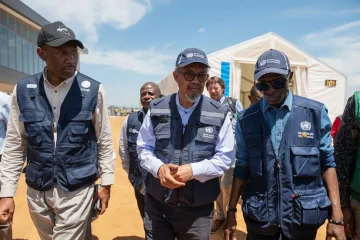
Perhaps the most architecturally audacious feature of the Accra Reset design is its High-Level Consultative Group. The panel will be guided by a consultative body that includes WHO Director-General Tedros Adhanom Ghebreyesus, WTO Director-General Ngozi Okonjo-Iweala, and senior representatives from the Global Fund, Africa CDC, AUDA-NEPAD, and the International Finance Corporation – the inclusion of heads of the very institutions the panel is tasked with reforming is a deliberate design choice, one that could either lend the process credibility and traction, or test the limits of institutional appetite for self-reform.
It is a high-wire act. Getting Tedros and Okonjo-Iweala into a consultative structure alongside a panel mandated to challenge their institutions’ operating logic requires a degree of diplomatic confidence that Accra appears to have wagered on.
The Deeper Stakes
The UN’s 2023 review highlighted that fewer than half of the 169 SDG targets are on track, with global health, inequality, and fiscal resilience in particularly dire straits. That context – of a multilateral system visibly failing to deliver – is the political oxygen that gives the Accra Reset its urgency.
The initiative grew out of the Africa Health Sovereignty Summit held in Accra on 5 August 2025, where African heads of state and global leaders endorsed the Accra Compact, declaring that the existing health governance architecture – built for a different era – no longer reflects the continent’s aspirations amid geopolitical tensions, climate shocks, and shrinking development aid.
That framing is not accidental. The Accra Compact emerged at a moment when US foreign aid cuts were reverberating across African health systems, when the US-Israel-Iran conflict was disrupting pharmaceutical supply chains, and when the post-COVID appetite for renegotiating global health financing had not yet hardened into institutional reform. Mahama moved into that space.
“This initiative represents a fundamental reimagining of how global health governance should function in the 21st century,” said Felix Kwakye Ofosu, Spokesperson to the President and Minister for Government Communications.
Analysis: From Rhetoric to Architecture
Africa has produced powerful declarations before – Abuja, Maputo, Lusaka, Kampala. The graveyard of ambitious continental health commitments is long and well-documented. What distinguishes the Accra Reset, at least in design, is its explicit ambition to move from declaration to institutional mechanism, and its decision to place the reform conversation inside the consultative structures of the organisations it seeks to change, rather than simply criticising them from the outside.
Whether the panel can convert its mandate into durable structural change will depend on factors well beyond its composition – including whether the multilateral institutions sitting in its consultative group have any genuine appetite for ceding the agenda-setting power they have accumulated over decades.
For now, Mahama has done what very few sitting African heads of state have managed: assembled a credible, globally recognised body to carry a pan-African reform argument into the rooms where the rules are made. The Accra Reset is no longer a concept. It has a panel, a mandate, and a clock.