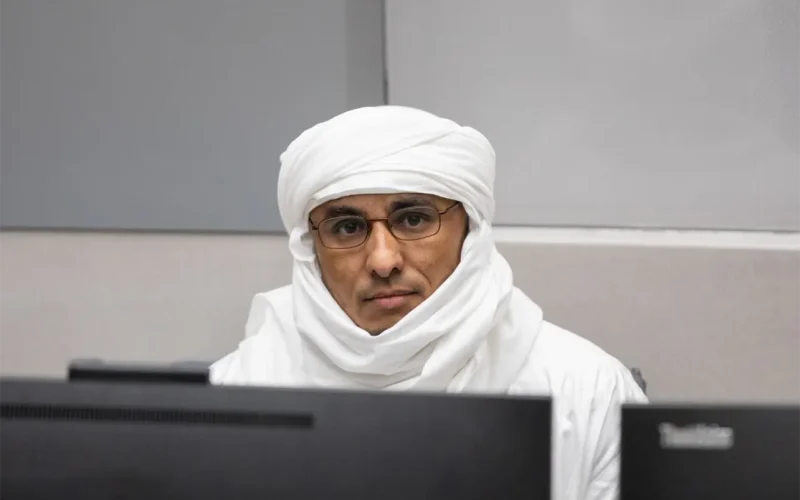
TWO years after the International Criminal Court delivered a landmark conviction against one of the key architects of Timbuktu’s darkest chapter, the same court has now ordered that the victims of his crimes be compensated – a step that legal observers and victim advocates say is as critical to healing as the guilty verdict itself.
On Tuesday, 28 April 2026, Trial Chamber X of the ICC delivered its reparations order in the case of The Prosecutor v. Al Hassan Ag Abdoul Aziz Ag Mohamed Ag Mahmoud, awarding collective community-based reparations with a limited individualised component focused on rehabilitation, alongside symbolic and satisfaction measures, to an estimated 65,202 eligible victims.
The Chamber assessed Al Hassan’s liability for reparations at approximately €7,250,000 – equivalent to XOF 4,755,688,250 CFA francs. At current exchange rates, that translates to roughly $8.4 million. Because Al Hassan has been declared indigent, the reparations will not be paid from his personal assets. Instead, they will be administered through the ICC’s Trust Fund for Victims, established by the court’s member states for precisely this purpose.
From Conviction to Compensation
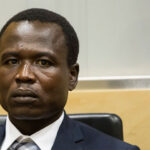
Al Hassan was convicted on 26 June 2024 of war crimes and crimes against humanity committed between 2 April 2012 and 29 January 2013 in Timbuktu, northern Mali, during a period when the city was under the control of the armed groups Ansar Dine and Al-Qaida in the Islamic Maghreb. As the 48-year-old Islamic police chief, he was found guilty on three counts of crimes against humanity and five counts of war crimes, including flogging, amputation of a hand, and torture, and was sentenced to 10 years in prison.
Judges found he was a “key figure” in a reign of terror after Islamic extremist rebels overran Timbuktu. Presiding Judge Kimberly Prost, addressing the courtroom in The Hague, stated: “Mr. Al Hassan, as the person found responsible for the crimes, which caused the harm to the victims, is the person financially liable for the cost of repairing the harm.”
What the Reparations Cover
The order is structured around collective community-based redress rather than individual cash payouts, a decision the Chamber grounded in the scale of suffering and the overriding need to avoid causing further harm to the Timbuktu community.
The Chamber awarded collective rehabilitation measures, including socio-economic support, educational programmes or training, and psychological support. It also awarded collective symbolic and satisfaction measures to acknowledge violations of victims’ rights, safeguard their dignity, and promote cohesion, reconciliation, reduction of tension in the community, and commemoration.
The court paid particular attention to the gendered dimensions of the atrocities. Women and girls were the most closely controlled by the Islamic police, and the Chamber recognised that they suffered disproportionately, directing that reparations implementation must specifically target their needs.
Victims of crimes other than persecution, as well as those who suffered acts consistent with torture, mutilation, other inhumane acts, cruel treatment, and outrages upon personal dignity, will benefit from a more individualised support in the form of rehabilitation programmes.
The Trust Fund’s Role and the Funding Gap
A significant practical challenge shadows the order. Due to Al Hassan’s current financial status, the Chamber invited the Trust Fund for Victims to use its other resources to complement the reparations award and to engage in additional fundraising efforts to meet the totality of the award. The Chamber also encouraged states, organisations, corporations, and private individuals to contribute.
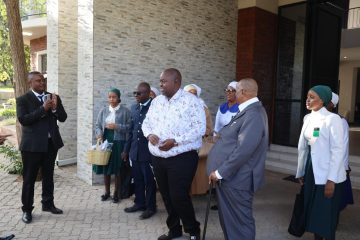
The Trust Fund’s executive director, Deborah Ruiz Verduzco, described the fund as “one of the many innovations of the Rome Statute.” It is not the first time the fund has intervened in Mali. Communities in Timbuktu have already seen some restitution following the 2016 conviction of Ahmad Al Faqi Al Mahdi for destroying historic mausoleums. In 2021, the trust fund began a project to repair those ruined buildings.
Next Steps
The Chamber instructed the Trust Fund for Victims to prepare a Draft Implementation Plan covering the details of rehabilitation and symbolic and satisfaction measures, to be submitted for the Chamber’s approval by 25 January 2027. The TFV is also directed to design reparation programmes in close consultation with the victims and the Timbuktu community.
The Defence and the Legal Representatives of the Victims may appeal the Reparations Order within 30 days.
A Broader Context of Continued Fragility
The reparations order arrives against a backdrop of continuing insecurity in the Sahel. Tuesday’s decision comes days after an alliance of al-Qaida-linked militants and separatists carried out the largest coordinated attack in Mali in over a decade. Mali, along with its neighbours Burkina Faso and Niger, has for over a decade battled an insurgency fought by armed groups, including some allied with al-Qaida and the Islamic State group. Following coups in all three nations in recent years, the ruling juntas have expelled French forces and turned to Russia’s mercenary units for security assistance instead.
That volatility makes the ICC’s insistence on community-centred, do-no-harm reparations all the more significant. For the people of Timbuktu, today’s order is not the end of their journey — but it is, at last, a formal and binding acknowledgement that the international community owes them more than a conviction.
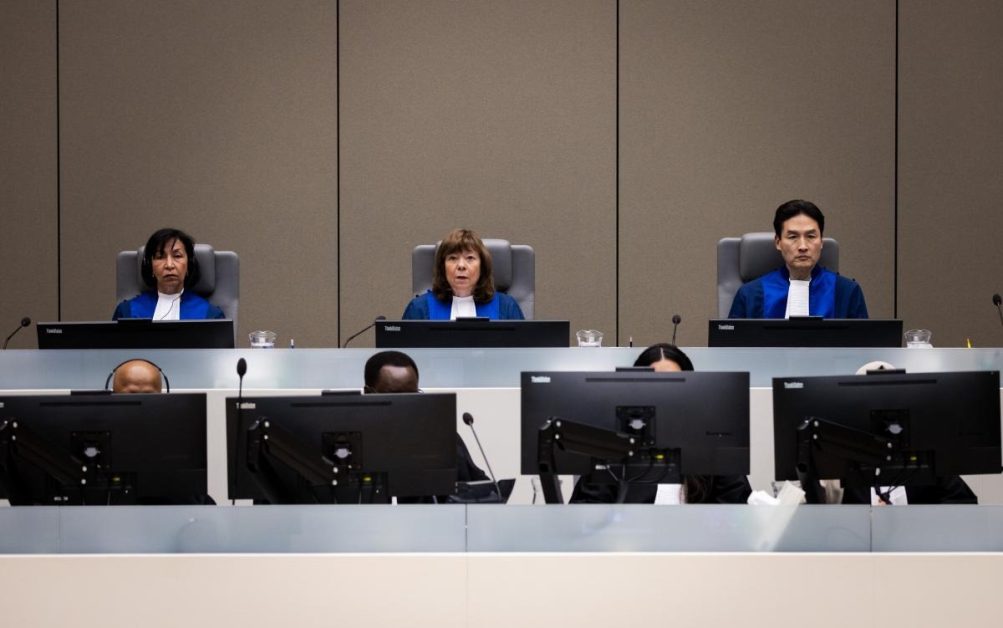
- Trial Chamber X is composed of Judge Kimberly Prost (Presiding), Judge María del Socorro Flores Liera, and Judge Keebong Paek.