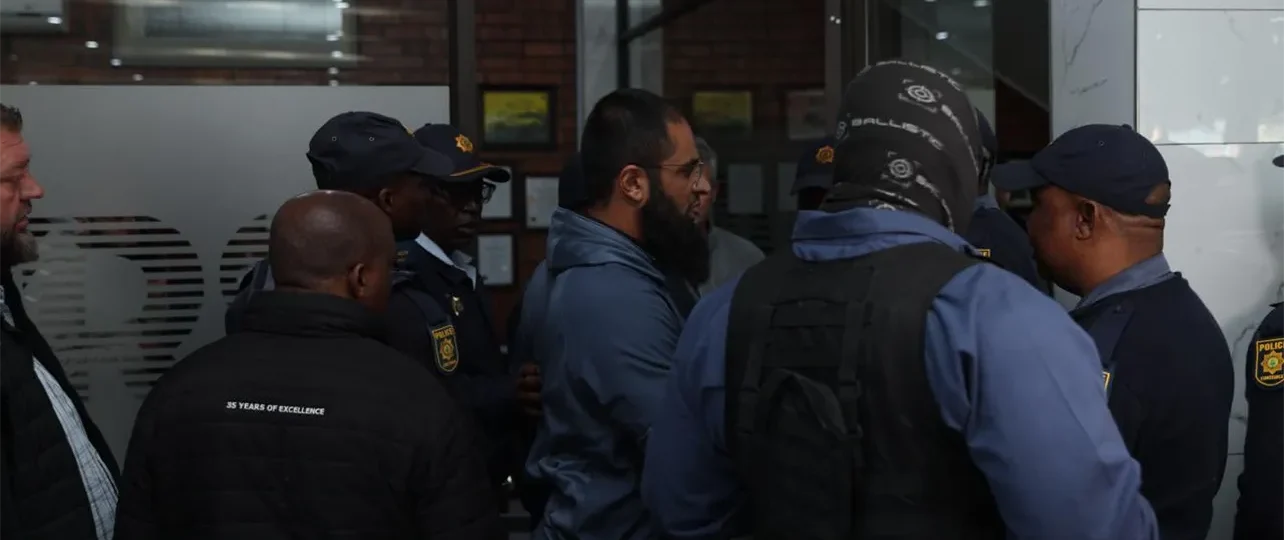

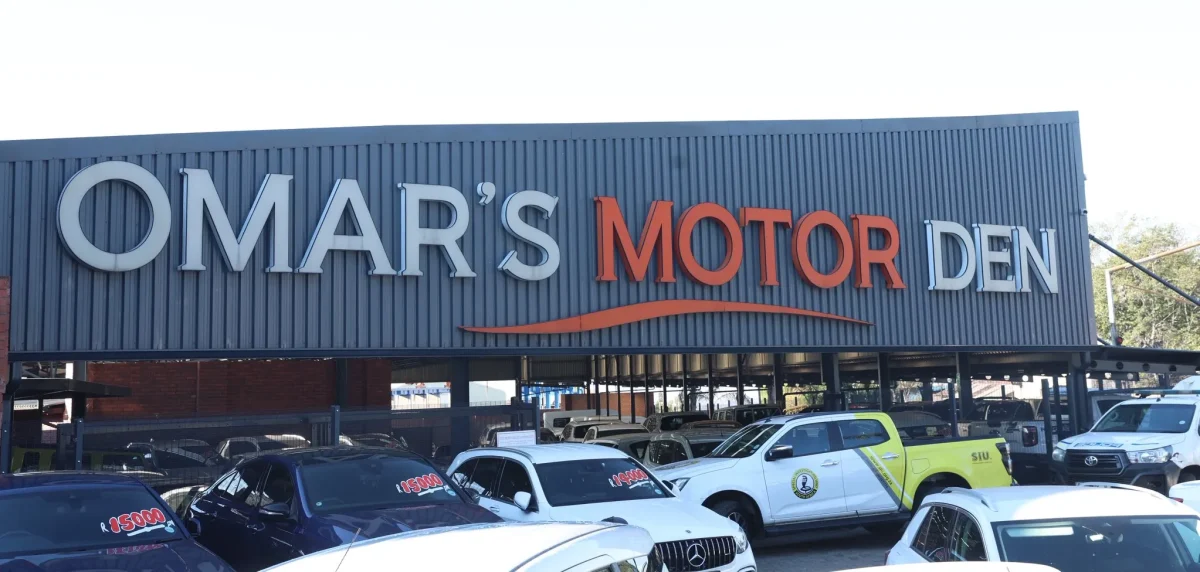
WHEN Special Investigating Unit (SIU) agents, backed by the Hawks and uniformed South African Police Service officers, descended on Omar’s Motor Den in Emalahleni on the afternoon of Friday, 5 June 2026, they were not just looking for a missing car. They were serving notice on an entire ecosystem of luxury vehicle dealerships across South Africa that the era of impunity is over.
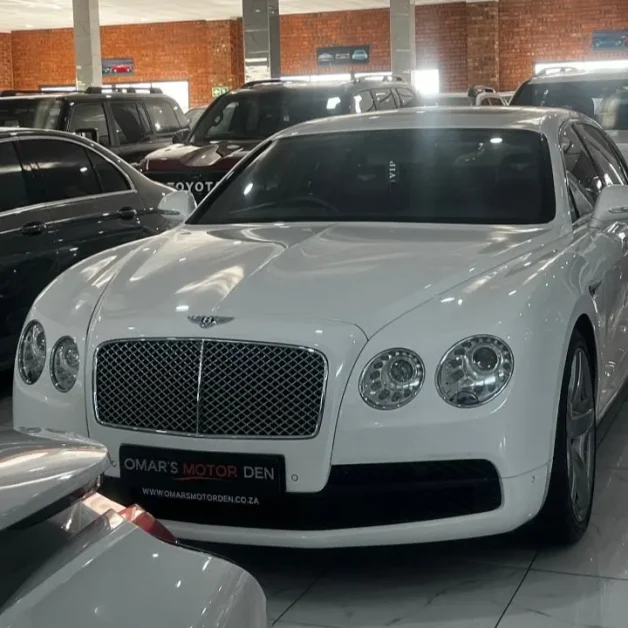
The target was a Bentley Continental GT – worth approximately R3 million and linked to Hangwani Morgan Maumela, the alleged mastermind of the most audacious healthcare heist in South African history. But the drama that unfolded outside the supercar dealership in Mpumalanga’s coal-mining heartland – owner Yusuf Omar detained in a police van before relenting and handing over CCTV footage – was a microcosm of a far larger reckoning now taking shape in the offices of the SIU, the Financial Intelligence Centre (FIC), the National Prosecuting Authority (NPA) and the Directorate for Priority Crime Investigation. Omar has denied all the allegations against him.
At stake is not merely the recovery of individual luxury vehicles. Investigators and compliance experts say the Emalahleni case has cracked open a systemic failure in South Africa’s high-value goods sector – one in which car dealerships, knowingly or not, have served as the final destination for billions of rands of stolen public money, laundered through Ferraris, Lamborghinis, Bentleys, and Rolls-Royces that sometimes never left the showroom floor.
The drama around Omar was the latest escalation in a sequence of events that began on 9 October 2025, when SIU teams and a court-appointed Curator Bonis executed simultaneous operations at a luxury property in Sandhurst, Sandton – belonging to Maumela – and at Omar’s Motor Den in Emalahleni. The first day’s haul: assets valued at approximately R133.5 million.
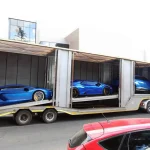
At the Sandhurst property, three Lamborghinis, estimated at R25 million and household contents valued at around R3 million were secured. At the Emalahleni dealership, the curator attached two Aston Martins, a Ferrari, and a Rolls-Royce – all found parked on the showroom floor, still registered in the dealership’s name despite having been purchased with funds allegedly looted from Tembisa Hospital’s procurement budget.
The cars were there — on the showroom floor. Sold, but never transferred. Purchased with public money, but shielded from the law by a paper trick as old as crime itself.
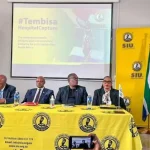
The SIU’s interim report on the Tembisa Hospital investigation, released for public consumption, reveals the extent of what it has termed the “Maumela Syndicate” – one of three coordinated criminal networks that together extracted more than R2 billion from the Gauteng Department of Health (GDOH) through Tembisa Hospital. Maumela’s identified assets were traced to approximately R520 million, including luxury vehicles and properties valued at R293 million.
The preservation order granted by the Special Tribunal on 29 September 2025 – and expanded on 7 October – interdicted Maumela and his associates from selling, leasing, donating or transferring any restrained assets. But the Bentley had changed hands multiple times. According to the SIU, the vehicle was initially held by LSM Distributors, which moved it to the MHR Maumela Family Trust around 2018/2019. DriveTime Auto CC bought it on 23 September 2022. Then Omar’s Motor Den acquired it on 31 October 2025 – just weeks after the preservation order was granted – before transferring it yet again to Khonile Trading Enterprise CC on 12 February 2026.
The SIU says the Bentley remained physically at Omar’s Motor Den throughout, suggesting that the transfers on paper were a deliberate attempt to obscure the vehicle’s true location and frustrate the preservation order. That constitutes contempt of court. The Special Tribunal has summoned Omar and his dealership to appear on 3 July 2026 to answer why they should not face sanctions, including imprisonment and punitive cost orders.
THE ANATOMY OF A MONEY LAUNDERING SCHEME
To understand why luxury car dealerships have become so central to the Tembisa Hospital probe – and to broader money laundering investigations – one must understand the modus operandi that the SIU and the FIC have painstakingly pieced together.
The scheme is deceptively simple. Corrupt officials and their syndicate partners, having looted public funds through fraudulent procurement, need to convert that money into assets. Cars – particularly high-end luxury vehicles – are ideal. They are high-value, portable, appreciating or, at worst, slowly depreciating, and critically, their ownership registration is managed by the dealership at the point of sale. In South Africa, the registration of a vehicle in the name of its true owner is a legal requirement under FICA regulations. But the system depends heavily on compliance by the dealerships themselves.
In the Tembisa case, a number of vehicles were purchased by syndicate members – or on their behalf – but the legal ownership was deliberately kept in the dealership’s name. This created a legal shield: should law enforcement come knocking with an asset forfeiture order, the vehicles could not easily be attached as proceeds of crime because, on paper, they still belonged to the dealership, not the fraud suspects.
The SIU’s interim report is unequivocal: “It is all smoke and mirrors. The hospital derived no value for money.” Every rand stolen from Tembisa’s procurement budget – intended for bandages, medicines and medical equipment for the most vulnerable patients in Gauteng – was siphoned into a web of fronts, conduit accounts, and luxury assets.
Among the vehicles preserved by the SIU’s asset forfeiture operations are a Lamborghini Urus Aventador SVJ, a Lamborghini Huracan STO, a Lamborghini Aventador Ultimate Coupe, and multiple other Lamborghinis and Bentleys – a fleet of excess purchased, according to investigators, with money stolen from South Africa’s public health system.
A NATIONAL PATTERN: BEYOND EMALAHLENI
The Emalahleni case may be the most dramatic, but investigators and compliance experts warn it is far from isolated. Sources within the law enforcement community have told The African Mirror that the practice of using luxury car dealerships as laundry points for state-looted funds is widespread across South Africa, concentrated in Gauteng, Mpumalanga, Limpopo and KwaZulu-Natal — provinces hardest hit by public sector corruption.
The pattern takes several forms. In the most brazen variant — as seen with Omar’s Motor Den — the car is sold but retained on the dealership’s books, functioning as a kind of off-balance-sheet asset held for the true beneficial owner. In other instances, vehicles are purchased with cash or through a series of structured deposits designed to stay below reporting thresholds — a practice known in anti-money laundering parlance as “smurfing” or structuring. In yet other cases, the vehicles are bought in full, transferred to shell companies or family members with no apparent economic rationale, and then resold or refinanced through channels that make the original source of funds nearly impossible to trace.
Between R20 billion and R60 billion is lost annually to money laundering in South Africa. Luxury vehicles — sold for cash, parked in names that don’t belong to buyers — are among the most preferred conversion vehicles for illicit funds.
The FIC’s own sector risk assessment on motor vehicle dealers, published in October 2025, identifies a catalogue of red flags that characterise the suspicious transactions investigators are now targeting: large cash purchases above reporting thresholds; successive structured deposits to stay below limits; third-party payments where the payer has no apparent connection to the buyer; vehicles purchased but never collected from the dealership; and the use of shell companies or trusts as the registered owners.
In the most egregious cases flagged by investigators, vehicles sit in showrooms for months or years after the supposed sale — generating no registration transfer, no change-of-address notification, no insurance update. The car, in effect, exists as a token of corrupt wealth: a store of value dressed in metal and leather, warehoused in a showroom rather than a vault.
THE REGULATORY LANDSCAPE: FICA, ACCOUNTABILITY INSTITUTIONS, AND THE COMPLIANCE GAP
South Africa’s Financial Intelligence Centre Act (FICA), through amendments gazetted in December 2022, fundamentally altered the compliance obligations of motor vehicle dealerships. Any entity selling a single physical item for R100,000 or more — a threshold easily met by virtually any transaction at a luxury dealership — is now classified as a “high-value goods dealer” (HVGD) and, critically, as an Accountable Institution under FICA. That places car dealerships under precisely the same category of legal obligation as banks and financial institutions.
As Accountable Institutions, dealerships are required to implement a Risk Management and Compliance Programme (RMCP); conduct Know Your Customer (KYC) due diligence on all clients; identify and verify Ultimate Beneficial Owners (UBOs) behind any corporate or trust purchaser; report all cash transactions exceeding R49,999.99 to the FIC; file Suspicious Transaction Reports (STRs) when red flags are identified; and register vehicles in the verified name and address of the true, beneficial owner.

The gap between legal requirements and operational reality has been staggering. In 2025, the FIC escalated its enforcement posture dramatically, issuing fines against high-value goods dealers for non-compliance — some starting as low as R10,000 for administrative failures, others reaching into the millions. LSM Distributors — which features in the Bentley’s chain of ownership in the Tembisa case — was hit with a financial penalty of more than R6 million.
Industry analysts say the automotive sector was caught almost entirely unprepared by the shift in its compliance obligations. Dealerships that had operated for decades with minimal regulatory scrutiny suddenly found themselves subject to the same anti-money laundering frameworks as commercial banks. Many responded with RMCP documents a few pages long, cursory KYC processes, and a near-total failure to identify the ultimate beneficial owner behind corporate purchasers.
“For businesses that have been putting off compliance, hoping the issue would fade, the time to act is now,” one compliance expert warned in a January 2026 industry briefing. “For HVGDs, the window for basic compliance has closed.”
FATF, GREYLISTING AND THE NATIONAL STAKES
The regulatory pressure on dealerships cannot be separated from South Africa’s fraught relationship with the Financial Action Task Force (FATF), the Paris-based intergovernmental body that sets global standards for anti-money laundering and counter-terrorist financing.
In February 2023, South Africa was placed on the FATF grey list — a designation that imposes enhanced scrutiny on the country’s financial system and signals reputational and economic risk for cross-border transactions. One of the FATF’s specific concerns was the vulnerability of non-financial businesses — including the motor vehicle sector — to exploitation by financial criminals. The FATF’s 2026 review, which will assess South Africa’s progress, is expected to focus sharply on enforcement actions against exactly the kind of conduct uncovered in the Tembisa Hospital investigation.
South Africa has made significant progress, addressing 20 of 22 FATF action items by early 2026. But the two outstanding items — related to the prosecution of complex money laundering cases and terrorist financing — remain unresolved. The Tembisa prosecution, with its intricate web of syndicates, shell companies, corrupt officials and complicit dealerships, is precisely the kind of complex laundering case the FATF is watching.
Legal experts note that the SIU’s strategy of pursuing civil asset forfeiture through the Special Tribunal — rather than waiting for the slower criminal justice process — is partly a response to international pressure. Asset recovery visible to the FATF demonstrates that South Africa is capable of following illicit money to its final destination, including the showroom floor of a supercar dealership in Mpumalanga.
THE TEMBISA SYNDICATE: WHAT WAS STOLEN, HOW IT WAS HIDDEN
The SIU’s interim report released in 2025 provides an extraordinary window into the machinery of the Tembisa Hospital looting. Three coordinated syndicates — the Maumela Syndicate, the Mazibuko Syndicate, and a third identified only as Syndicate X — together siphoned more than R2.043 billion from Tembisa Hospital’s procurement budget between 2019 and 2023. The investigation covers 207 service providers, 4,501 purchase orders, and procurement bundles in which no goods were ever actually delivered to the hospital.
The fraud was facilitated through a corrupted three-quote procurement process: suppliers were appointed using fraudulent documentation; invoices were generated for goods never delivered; and payments flowed through a complex network of conduit accounts before landing in the hands of syndicate beneficiaries — and then into assets including luxury property, supercars, and boats.
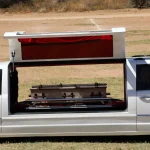
The scale is staggering. Maumela’s identified assets include properties in Bantry Bay, Sandton, Hartbeestpoort, Zimbali Estate in KwaZulu-Natal, and Cape Town — as well as a fleet of Lamborghinis, a Bentley Continental GT, an Isuzu D-Max, a multipurpose trailer and a Regency 250 LE boat. The SIU has identified at least 15 current and former officials of the GDOH and Tembisa Hospital who received corrupt payments, with the total value of corrupt payments to officials standing at R122 million. Disciplinary referrals have been prepared against 13 officials.
Crucially, the SIU found that lower-level officials — clerks and junior supply chain managers — were the ones who manipulated the procurement processes on the ground, often coerced or incentivised by more senior syndicate figures. The SIU’s report warns that the environment that made Tembisa possible — where junior staff are complicit or coerced into corruption — exists in other public institutions across the country.
Babita Deokaran, the GDOH’s former Chief Director for Financial Accounting, first flagged the suspicious spending patterns in August 2021. She was assassinated outside her home in Johannesburg on 23 August 2021, before she could fully pursue her findings. Her report — that 63 per cent of all purchase orders issued by Tembisa Hospital in a four-month period were concentrated in a suspiciously narrow value band just below the competitive tender threshold of R500,000 — became the foundation for everything that followed.
Babita Deokaran saw the numbers and raised the alarm. She was murdered for it. The supercars seized at Emalahleni’s showrooms are, in a very real sense, the proceeds of her death.
WHAT HAPPENS NOW: THE ROAD AHEAD FOR LAW ENFORCEMENT
The SIU has been unequivocal that the Tembisa investigation will intensify. The unit says it will “relentlessly follow the money” in partnership with the NPA, the Hawks (DPCI), the FIC, SAPS and the South African Revenue Service (SARS). Civil recovery proceedings through the Special Tribunal will run alongside criminal referrals to the NPA, with the SIU having already referred four matters involving a total of R42 million in corrupt payments.
The investigation is expected to be completed by November 2027, but enforcement actions — seizures, contempt proceedings, civil litigation — will continue well before then. The Special Tribunal’s 3 July 2026 hearing involving Omar Motor Den will be a watershed moment: if Yusuf Omar is found in contempt for concealing a restrained vehicle, it will send the clearest possible signal to other dealerships that preservation orders are not suggestions.
But beyond the Tembisa case, senior compliance officials and investigators say a broader audit of luxury vehicle dealerships is now inevitable. The FIC’s October 2025 sector risk assessment on motor vehicle dealers, combined with the salience of the Emalahleni case, has placed the automotive sector at the top of the regulatory agenda for 2026. The FATF review cycle adds further urgency.
Likely areas of focus include: dealerships with a pattern of high-cash-value transactions; vehicles registered in the name of the dealership beyond standard consignment periods; clients identified as politically exposed persons (PEPs) or their associates; transactions where the source of funds cannot be satisfactorily explained; and cases where vehicles change hands through multiple entities in a short period — the precise pattern observed with the Bentley Continental GT in the Tembisa case.
The FIC has made clear that high-value goods dealers who fail to report suspicious transactions, identify ultimate beneficial owners, or maintain adequate risk management programmes face not merely administrative fines but potential criminal liability. Dealership owners and compliance officers who knowingly facilitate money laundering could face prosecution under the Prevention of Organised Crime Act (POCA) and the Financial Intelligence Centre Act.