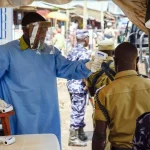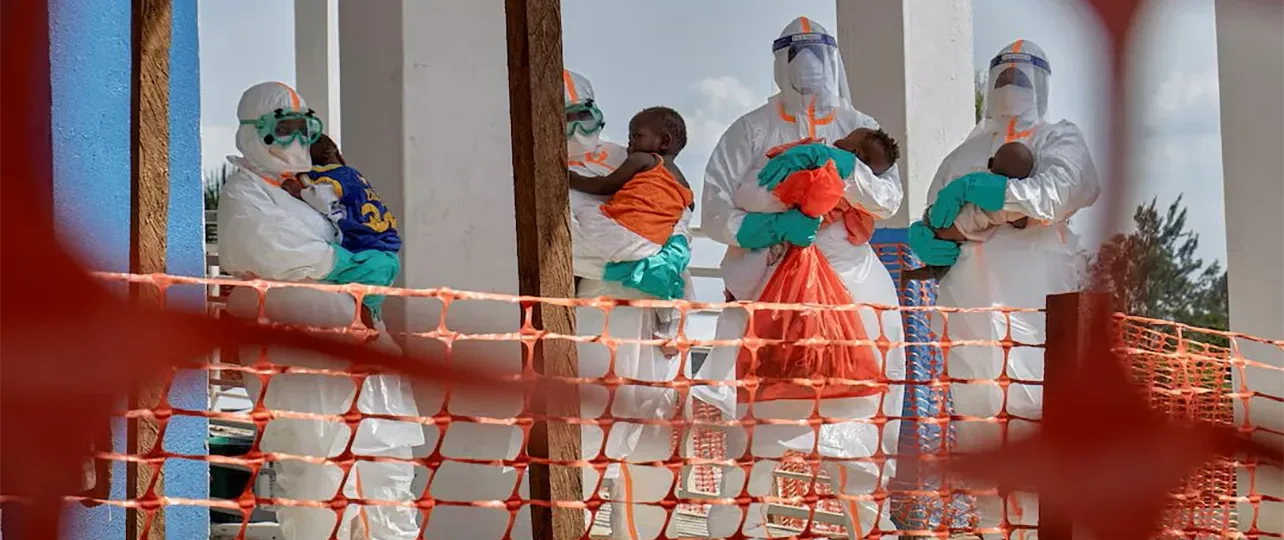

IN approximately three weeks since the outbreak was formally confirmed, the Democratic Republic of Congo’s health authorities have recorded 676 cases and 136 deaths from the Bundibugyo strain of the Ebola virus – a relatively rare variant of the disease for which no approved vaccine or targeted therapeutic currently exists. Those statistics alone are alarming. The geography behind them is catastrophic.
Active infections have now been identified across a corridor spanning some 1,000 kilometres – from Aru in the north of Ituri province to Miti Murhesa in South Kivu – with 34 health zones affected as of the last reporting cycle. New zones in North Kivu were added to that tally in a single 24-hour period. “Every day, cases are being identified in new health zones,” Dr Olivier le Polain, WHO’s unit head for epidemiology and analytics for response, told journalists via video from Beni. “That reflects really the scale of this outbreak – a scale that is much bigger than what is being detected, and the high mobility of the population in this part of the DRC.”
That last phrase – “much bigger than what is being detected” – is the sentence that should focus every editorial mind, every diplomatic channel, and every funding conversation about this crisis. It is not epidemiological caution. It is a frank acknowledgment that the confirmed case count is a floor, not a ceiling.
When Children Become the Next Statistic
The outbreak’s current profile is adult-heavy – most confirmed infections have occurred among working-age people going about daily life in conflict-stricken communities. But UNICEF’s Global Lead for Public Health Emergencies, Dr Douglas Noble, delivered a stark forecast at the same Geneva briefing: “As the outbreak evolves, we must be prepared for increasing household transmission, which means we may see more children affected in the days ahead.”
The conditions that make that forecast almost inevitable are already in place. More than half of children under five in Ituri province are chronically malnourished. More than one in five are “zero dose” – meaning they have never received a first dose of the diphtheria, tetanus and pertussis vaccine. Immunological vulnerability, in other words, is not a risk factor here. It is the baseline.
History provides the grim context. Across previous Ebola outbreaks in the DRC, children have consistently represented a disproportionate share of fatalities relative to infections – with the youngest facing the highest case fatality rates. Survivors of those earlier outbreaks were frequently left orphaned or separated from caregivers, compounding humanitarian need for years after active transmission was brought under control.
“The point is, these are already very vulnerable children,” Dr Noble said. “The capacity for this community to absorb any additional stressors was already stretched to breaking point.”
A Region That Has Never Stopped Paying
The Ituri-North Kivu corridor is not a region that encountered a crisis when Ebola arrived. It is a region that has been in continuous, compounding crisis for decades. Armed conflict between government forces and militia groups has displaced populations, gutted health infrastructure, and produced the nutritional deprivation that now leaves children so acutely exposed to the virus.
This is the context in which it becomes meaningful that UNICEF has already dispatched eight emergency transport flights — more than 100 tonnes of supplies, including personal protective equipment, medicines, hygiene materials, and medical supplies — with logistical support from the European Union. That response is significant. It is also a measure of how far behind the curve the international community typically is when crises strike this part of Africa.
The Bundibugyo strain’s particular danger is amplified by the absence of the clinical tools that have transformed the DRC’s fight against Ebola-Zaire in recent outbreaks. There are no approved Bundibugyo-specific vaccines. There are no approved therapeutics. What remains is surveillance, contact tracing, and the painstaking, resource-intensive work of containing transmission at source.
The Contact Tracing Gap
That work is improving — but not fast enough. According to Dr le Polain, contact tracing coverage has risen to approximately 70 per cent of identified contacts being appropriately tracked. “That’s a huge improvement from where we were about a week or two ago,” he acknowledged. “But it’s still too low to ensure appropriate control.”
The target for effective outbreak containment through contact tracing is typically above 80 per cent — and in a high-mobility population spanning a thousand-kilometre zone of insecurity, even that benchmark may be aspirational rather than sufficient. Testing capacity is also being scaled: a laboratory in Beni processed 500 tests in a single day during the reporting period, which WHO anticipates will sharpen the epidemiological picture considerably.
There is one point of relative reassurance amid the alarm. Unlike COVID-19, Ebola does not spread through respiratory transmission. It moves through direct contact with infected bodily fluids. This biological reality has led UNICEF to make explicit what might otherwise be lost in the noise of the outbreak: children who can safely get to school should continue doing so. “There’s no reason for a school to close,” Dr Noble said, emphasising instead the need for robust infection prevention education among teachers, staff, and students.
The Larger Accountability Question
The DRC’s eastern provinces have for too long served as the world’s stress test for how poorly the international health architecture responds to overlapping crises in African settings. A conflict emergency, a nutrition emergency, and now an active Bundibugyo Ebola outbreak — compounding in real time, across a thousand kilometres, in communities that have no margin left for catastrophe.
The question African editors, policymakers, and AU health agencies should be pressing right now is not simply whether the response is scaling fast enough — though it must. This is why the funding, vaccine development, and therapeutic pipeline for Bundibugyo has been so chronically under-resourced relative to the Zaire strain. The answer, as it so often is in global health equity, is that the communities most at risk have historically had the least geopolitical weight.
That arithmetic is unchanged. What must change is the urgency with which the world acts before the children of Ituri province become the next tragedy that the international community mourns in retrospect — and funds, belatedly, in hindsight.