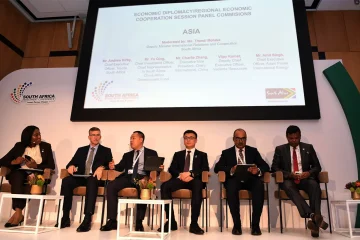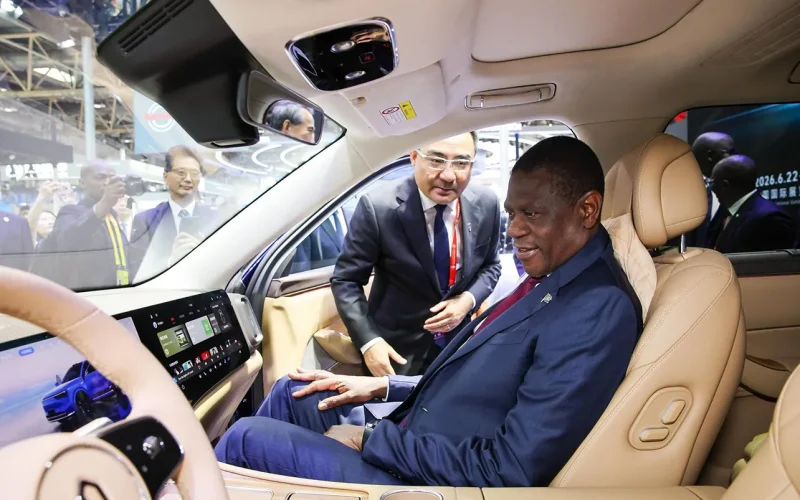
SOUTH Africa’s Deputy President Paul Mashatile used the China International Supply Chain Expo in Beijing on 22 June 2026 to launch a concentrated bid for South Africa to move from commodity supplier to industrial partner – pitching the country as a manufacturing gateway to Africa, a source of critical minerals for the green transition, and a practical partner for Chinese investment under newly operational trade rules.
Speaking at the Shunyi Exhibition Centre, Mashatile framed the moment as more than diplomacy: it was a commercial push grounded in policy tools now in force. The Framework Agreement on Economic Partnership for Shared Prosperity (CADEPA) and the zero‑tariff preference that came into effect on 1 May 2026, he said, create immediate opportunities for South African goods – notably citrus, avocados, wine and macadamias – to enter China duty‑free. Those concessions are designed to generate quick export wins while opening the case for deeper industrial collaboration.
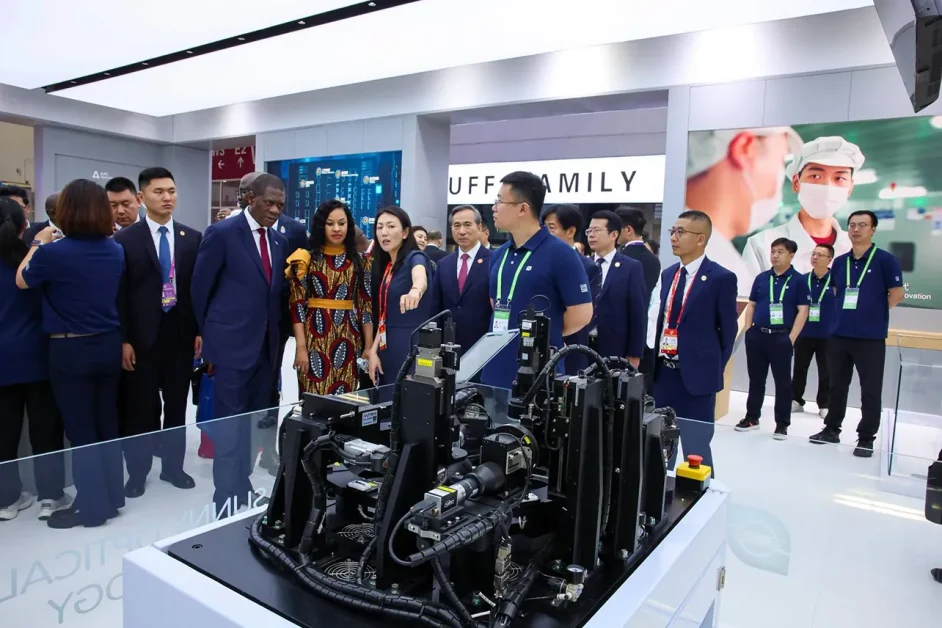
Mashatile’s priorities were explicit and strategic. He invited Chinese firms to invest in three areas: agriculture and long-term sourcing partnerships; critical minerals and green‑economy beneficiation, especially platinum group metals for fuel cells and energy storage; and advanced manufacturing — including automotive components, logistics and machinery — to serve domestic, continental and export markets. The message was clear: South Africa offers natural resources and an industrial base, plus AfCFTA access to 1.3 billion consumers, making it an attractive staging ground for regional value chains.
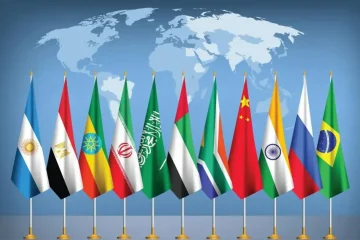
For BRICS audiences, the address matters on multiple levels. It models a South–South industrial cooperation strategy that stresses preferential access, targeted industrial policy and regional market integration rather than one‑way commodity flows. It signals an attempt to reconfigure supply‑chain geography by linking Chinese capital and markets to African production and processing. And it highlights how critical‑input geopolitics are shifting: access to platinum group metals and other strategic minerals will be a bargaining chip in the green‑transition era.
But the speech also exposed sharp implementation and political risks. Tariff preferences and signed frameworks are only entry points. Real transformation depends on predictable policy, streamlined customs and logistics, and reliable infrastructure — including consistent energy — where South Africa still struggles. Attracting Chinese capital for beneficiation will raise contentious issues around ownership, technology transfer, labor conditions and environmental standards; mismanaged deals risk public opposition and accusations of extraction dressed as investment. Moreover, turning South Africa into a continental production hub requires practical AfCFTA implementation and cross‑border infrastructure projects that have yet to materialise at scale.
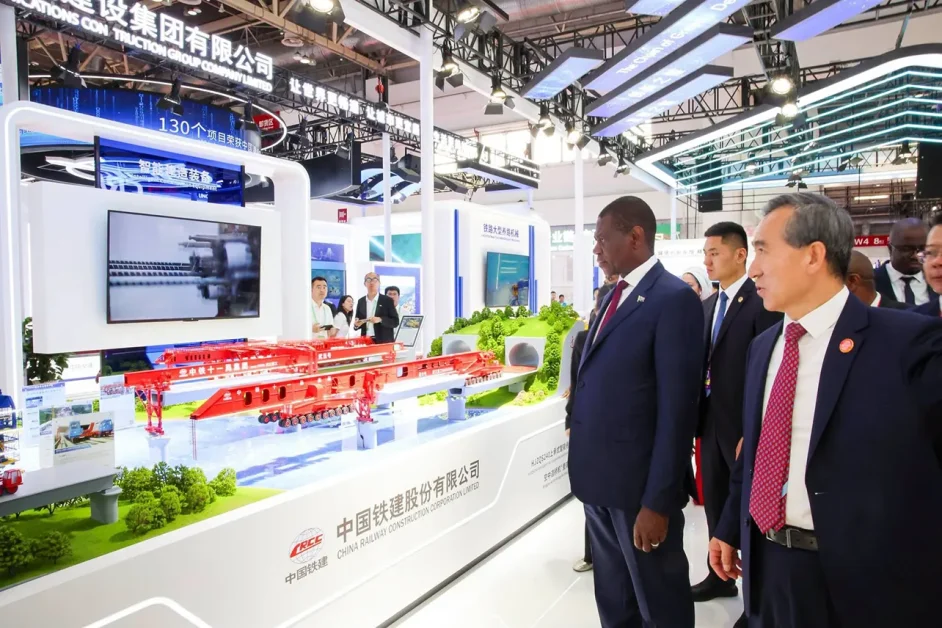
What to watch now: the substance of deals announced after Mashatile’s meetings with Vice‑President Han Zheng and corporate delegations — whether commitments take the form of joint ventures with local processing capacity, equity stakes, or simple off‑take contracts. Equally important will be South Africa’s domestic follow‑through: regulatory reforms, customs facilitation, investment in ports and power, and enforceable labor and environmental clauses in contracts. The appearance — or absence — of new smelters, refineries or component plants will determine whether the country is starting to capture value or merely exporting inputs.
Bottom line: Mashatile’s Beijing visit marks a calibrated shift from diplomatic platitudes to transactional bargaining. For BRICS members watching closely, South Africa’s pitch offers a blueprint for leveraging trade preferences and regional markets to rebuild supply‑chain relevance. The outcome will depend on hard, domestic work: converting tariff wins into industrial projects that deliver technology, jobs and sustainable, regionalised production — not just temporary export gains.