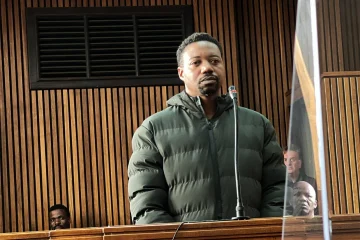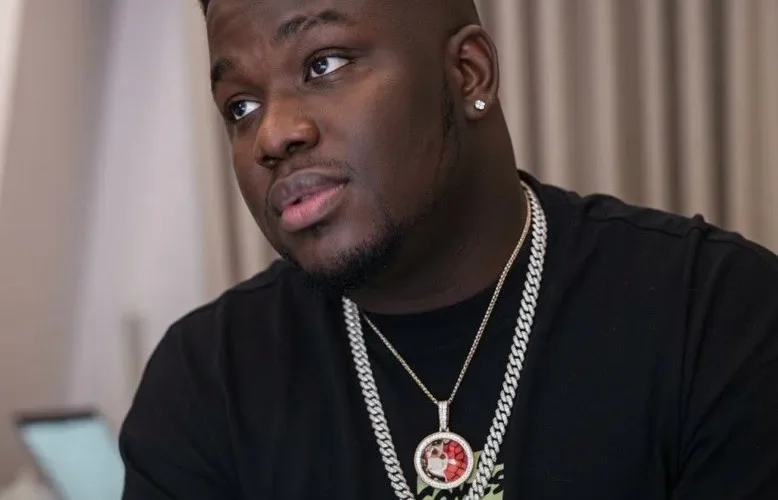
A 31-year-old Ghanaian national accused of masterminding an elaborate romance-fraud network that preyed on elderly Americans has been extradited from Ghana to the United States, where he faces federal charges carrying a possible 20-year prison sentence, the US Attorney’s Office for the Northern District of Ohio announced this week.
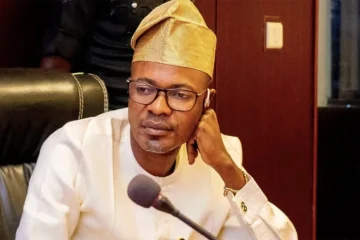
Frederick Kumi – who investigators say also operated under the aliases Emmanuel Kojo Baah Obeng and Abu Trica – was arrested in Ghana on 11 December 2025 and handed over to US authorities on 9 July 2026, the office said in a statement released from Cleveland. He now stands accused, alongside co-defendant Daniel Yussif, also known as Denteni or Slab, of defrauding more than 80 elderly victims of upwards of $8 million between April 2023 and November 2025.
A Syndicate Built on Manufactured Intimacy
According to court documents cited by federal prosecutors, Kumi and Yussif functioned as leaders of a criminal network that trawled dating sites and social media platforms to identify targets – deliberately seeking out widows and divorcees whom investigators describe as especially vulnerable to sustained emotional manipulation.
What distinguishes this case from earlier waves of West African romance scams, prosecutors indicate, is the network’s use of artificial intelligence. Court filings allege that Kumi employed AI-driven video platforms to interact with victims under fabricated female personas, lending a synthetic authenticity to relationships that, in the language of the indictment, were built entirely on deception. Other members of the network are said to have used encrypted messaging applications and telephone calls to reinforce these false identities, ensuring victims remained convinced they were speaking to a real romantic partner.
Prosecutors allege that once trust was established, victims were drawn in with fabricated stories – commonly involving supposed gold or diamond inheritances – designed to justify requests for money. Believing they were assisting a partner in genuine need, the victims wired funds to accounts controlled by members of the conspiracy.
Laundering the Proceeds Across Continents
The US Attorney’s Office alleges that the fraud did not end at the point of transfer. Portions of the stolen funds were routed to co-conspirators in Ghana and elsewhere, prosecutors say, with the network relying on Ghana-based money mules and contacts within the Ghanaian immigrant community in the United States to launder millions of dollars through shell businesses and bank accounts.
The scale of the alleged enrichment is reflected in the assets seized by international law enforcement partners: a mansion in Ghana, along with a fleet of luxury vehicles including a Lamborghini, a Tesla Cybertruck, a Mercedes-Benz and a BMW. Images released alongside the announcement show an aerial view of the seized property and a row of high-end cars lined up in a parking garage – visual evidence, prosecutors suggest, of the lifestyle allegedly funded by defrauded pensioners thousands of kilometres away.
The Charges – and the Presumption of Innocence
Kumi has been charged with conspiracy to commit wire fraud and conspiracy to commit money laundering. His allegedly ill-gotten gains are additionally subject to forfeiture proceedings. The US Attorney’s Office was explicit that, under US law, an indictment is merely a charge and not evidence of guilt, and that Kumi – like any defendant-— is entitled to a fair trial in which the government bears the burden of proving guilt beyond a reasonable doubt. Any eventual sentence, prosecutors noted, will be determined by the court after weighing the defendant’s criminal history, his role in the offence and the specific characteristics of the case, and will not exceed the statutory maximum.
The case was investigated by the FBI’s Cleveland Division and is being prosecuted by Assistant US Attorneys Brian M. McDonough and Elliot Morrison. In a notable diplomatic and law-enforcement footnote, the US Attorney’s Office publicly credited an unusually broad coalition of Ghanaian institutions for the arrest and extradition – among them the Ghana Attorney General’s Office, the Economic and Organised Crime Office (EOCO), the Ghana Police Service, the Ghana Cyber Security Authority, the Narcotics Control Commission and the National Intelligence Bureau – working alongside the US Drug Enforcement Administration, Homeland Security Investigations, the Department of Justice’s Office of International Affairs and the FBI’s Legal Attaché Office in Accra.
A Continental Reputational Reckoning
For Ghana, a country that has worked assiduously to position itself as West Africa’s stable, business-friendly democracy and a magnet for diaspora investment through initiatives like the “Year of Return”, cases of this magnitude carry consequences beyond the courtroom. The direct cooperation of Accra’s own anti-corruption and cyber-security agencies in securing Kumi’s arrest signals a government increasingly willing to be seen acting against homegrown fraud networks that have, for over a decade, damaged the reputations of Ghanaian and wider West African communities abroad – communities that are overwhelmingly law-abiding and are themselves frequently stigmatised by association.
The prosecution is being carried out under the US Department of Justice’s Elder Justice Initiative, established pursuant to the Elder Abuse Prevention and Prosecution Act of 2017, which coordinates federal efforts against the abuse, neglect and financial exploitation of older Americans. US authorities have urged members of the public who suspect elder financial abuse to file reports through the FBI’s tip portal or the Department of Justice’s elder justice resources.
As Kumi awaits his first US court appearances, the case is likely to be closely watched on both sides of the Atlantic: by American prosecutors building a wire-fraud and money-laundering case around AI-enabled deception, and by Ghanaian authorities seeking to demonstrate that cross-border cooperation – not tolerance – is now the operative posture toward cyber-fraud networks operating from West African soil.