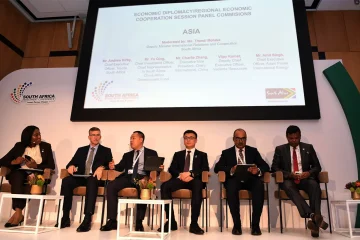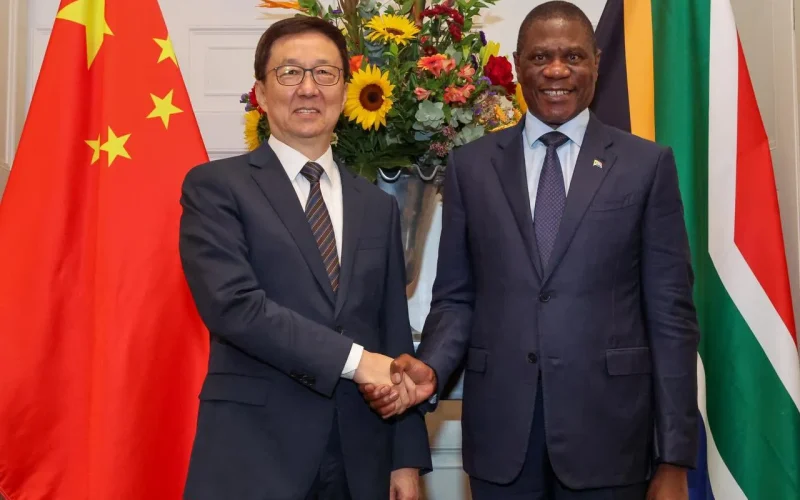
SOUTH Africa and China have reaffirmed and substantially broadened their strategic partnership following the conclusion of the 9th Session of the South Africa–China Bi-National Commission (BNC) in Cape Town on Thursday, with the two nations signalling a coordinated push to deepen economic integration, advance multilateral reform, and position themselves as anchors of a multipolar global order amid rising geopolitical turbulence.
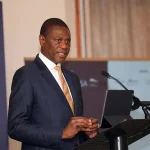
The session, co-chaired by Deputy President Shipokosa Paulus Mashatile and Chinese Vice President HAN Zheng, marked a substantive advancement in bilateral ties that have grown considerably in breadth and ambition since the 8th BNC. What emerged from the Cape Town proceedings was not merely a diplomatic courtesy — it was a structured renegotiation of how two of the Global South’s most consequential economies intend to engage one another in an era of profound geopolitical realignment.
A PARTNERSHIP WITH INSTITUTIONAL MUSCLE
At its core, the BNC functions as the apex bilateral mechanism between Pretoria and Beijing — a platform that reviews progress, resolves bottlenecks, and sets strategic direction across the full sweep of the relationship. Thursday’s session assessed implementation of the Ten-Year Strategic Programme for Cooperation, and by all accounts, the momentum is considerable.
The Foreign Affairs Sectoral Committee’s outcomes — covering debt sustainability, climate action, and the reform of international financial institutions — reflect the shared priority both countries place on reshaping the rules-based international order to better serve the interests of the developing world. This is not incidental language. For South Africa, which holds a non-permanent seat on the UN Security Council, and China, a permanent member with global leverage, alignment on these issues carries real structural weight.
“South Africa and China must continue to work together to advance shared modernisation, deepen economic cooperation, and strengthen coordination in multilateral platforms.”
Deputy President Mashatile
NUCLEAR, MINING, AND THE ENERGY TRANSITION
Perhaps the most consequential concrete development to emerge from the BNC process was the April 2025 signing of a Memorandum of Understanding between the South African Nuclear Energy Corporation (NECSA) and the China National Nuclear Corporation. Though signed months before Thursday’s session, it was formally acknowledged as a milestone in energy cooperation — one that places South Africa firmly within China’s growing footprint in civilian nuclear development across the developing world.
Alongside nuclear, the China–South Africa Mining Working Group continues to facilitate collaboration in a sector that remains fundamental to South Africa’s economy. The emphasis in Cape Town was notably forward-looking: cooperation in mineral processing, beneficiation and value addition was flagged as critical to strengthening South Africa’s industrial base. This is a direct response to longstanding criticism that the country exports raw minerals at low margins while value-added manufacturing and refining occur elsewhere. The BNC framework appears to be creating real channels to shift that equation.
In energy planning more broadly, the two governments are advancing cooperation in gas-to-power and nuclear-to-power development — two areas that will prove central to South Africa’s ongoing efforts to resolve its energy crisis while beginning a credible transition toward lower-carbon generation. Mobilising Chinese investment into the Junior Mining Exploration Fund and revitalising dormant smelters were also tabled as investment priorities, signalling an effort to unlock economic activity in sectors that have suffered under years of energy instability and capital drought.
TECHNOLOGY, AI, AND THE SKILLS IMPERATIVE
The BNC’s treatment of science, technology, and digital cooperation reflects how rapidly this dimension of the bilateral relationship has matured. Cooperation in Artificial Intelligence, innovation, and digital technologies — with an explicit focus on technology localisation and skills development — has been elevated to a strategic priority. For a country grappling with youth unemployment rates above 45 percent, the significance of this framing should not be understated.
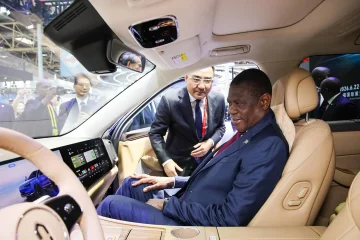
The expansion of joint research projects and people-to-people exchanges between researchers signals a longer-term investment in building indigenous capacity rather than simply importing Chinese technology solutions. Equally notable is the specific focus on new energy vehicle (NEV) technologies within the technical and vocational education and training (TVET) sector — partnerships with industry that are creating employment pathways in a globally competitive emerging industry.
China’s dominance in the NEV sector globally makes this a particularly strategic form of cooperation for South Africa, which is navigating both the collapse of internal combustion engine vehicle demand in key export markets and the ambitions of its own automotive manufacturing sector.
BRICS AS THE GEOPOLITICAL FRAME
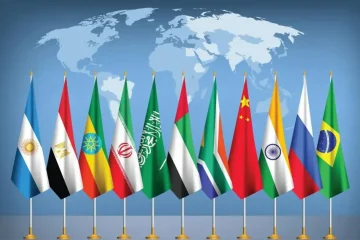
Threading through the entire session was the question of how South Africa and China position themselves within the broader BRICS framework — now substantially enlarged following the bloc’s 2024 expansion — and within multilateral institutions more broadly. Both governments reaffirmed a shared commitment to advancing a more inclusive, equitable and multipolar global order, language that has become something of a diplomatic signature for both capitals.
With ongoing conflicts in the Middle East, shifting US foreign policy postures under the current administration, and growing institutional strain on the UN system, the BNC’s emphasis on dialogue, stability and peaceful resolution of disputes takes on added urgency. South Africa’s foreign policy posture — characterised by non-alignment, active multilateralism, and increasing engagement with Global South partners — finds a natural counterpart in China’s own articulation of its international role.
For South Africa, this is a bet that the multilateral architecture of tomorrow can be shaped now — and that Beijing is the most consequential partner for that project.
THE ENVIRONMENTAL AND CULTURAL DIMENSIONS
Beyond the headline economic and geopolitical frames, the BNC session also registered progress in areas that are easy to overlook but cumulatively significant. Environmental cooperation — including agreements relating to wetlands, desert ecosystems, and wildlife — deepens a relationship with China that is often scrutinised by conservation advocates concerned about demand-side pressure on African biodiversity. Active and formal cooperation in this space represents a form of accountability architecture that the broader relationship benefits from.
In education and culture, the expansion of scholarship programmes supported by South Africa’s Sector Education and Training Authorities (SETAs), the Chinese STEM Bursary Programme, and partnerships with institutions such as Beijing Polytechnic College all point to a people-to-people dimension of the relationship that outlasts any particular government’s tenure.
ANALYSIS: WHAT THIS MOMENT MEANS
The 9th BNC lands at a moment of particular consequence for South Africa. Domestically, the Government of National Unity is under pressure to deliver economic growth, arrest unemployment, and demonstrate that its foreign policy posture — active, non-aligned, and decidedly Global South-oriented — translates into tangible benefits for ordinary citizens.
The BNC framework, at its best, offers exactly that: structured bilateral engagement that converts diplomatic relationships into investment, technology transfer, skills development, and market access. The quality of Thursday’s session suggests that the mechanisms are functioning and that both governments are serious about implementation.
For China, deepening ties with South Africa — Africa’s most industrialised economy and a continental diplomatic heavyweight — serves its broader strategic interest in Africa as a bloc of consequence within multilateral institutions and as a region of growing economic importance. For South Africa, this is a bet that the multilateral architecture of tomorrow can be shaped now, and that Beijing is the most consequential partner for that project.
Whether the ambitions articulated in Cape Town translate into the kind of structural economic transformation South Africa urgently needs will depend not on the quality of the diplomacy — which appears robust — but on the political will and institutional capacity to see implementation through. That remains, as always, the harder test.