IN a parliamentary appearance that reverberated through Uganda’s financial establishment, the Governor of the Bank of Uganda, Michael Atingi-Ego, delivered one of the most consequential warnings to come from an African central banker in recent years: a proposed law ostensibly designed to protect Uganda’s sovereignty could, in practice, destroy it.
Testifying before a joint sitting of Parliament’s Defence and Internal Affairs Committee and the Legal and Parliamentary Affairs Committee, Atingi-Ego left lawmakers with a blunt and unambiguous verdict on the Protection of Sovereignty Bill, 2026: in its current form, the legislation poses a clear and present danger to Uganda’s economy, its currency, and the constitutional independence of the institution he leads.
“A country without reserves is not sovereign,” Atingi-Ego told the committee. “The moment you tamper with these inflows here, we risk running down our reserves, and that is economic disaster for a country.”
The Governor’s testimony was grounded in hard economic data. Uganda’s foreign exchange reserves currently stand at close to USD 6 billion – a figure that represents years of careful balance-of-payments management. In the last financial year alone, the country recorded a balance-of-payments surplus of USD 1.5 billion, which directly enabled the Bank of Uganda to expand reserve coverage by that same amount.
Those reserves exist because cross-border inflows have been flowing steadily into the country. Remittance inflows to Uganda reached USD 2.5 billion in 2025, equivalent to approximately 3.8 percent of GDP, with more than 16 million individual transactions recorded in a single year. Uganda’s foreign exchange reserves rebounded strongly in 2025, rising from about USD 3 billion at the end of 2024 to about USD 6 billion by December. It is precisely this architecture of inflows that Atingi-Ego warned could be fatally disrupted by the proposed legislation.
What the Bill Actually Does
The Protection of Sovereignty Bill, 2026, was gazetted on 13 April 2026 and tabled in Parliament for the first time on 15 April 2026. If enacted in its present form, the Bill imposes criminal liability, mandatory registration, and sweeping foreign-funding restrictions on a vast range of organisations and individuals operating in Uganda across the NGO, private sector, media, academic, diplomatic, and faith-based sectors. The penalties include imprisonment of up to 20 years and fines of up to UGX 4 billion.
A Ugandan company with a foreign minority shareholder, a business operating under a foreign loan facility, a joint venture with an international partner, or an enterprise receiving supply-chain finance from a foreign bank or a law firm that is part of an international network could all be classified as agents of foreigners.
The Bill requires prior written authorisation from the Ministry of Internal Affairs for a person or agent of a foreigner to solicit or receive any financial support, donation, loan, or other assistance from a foreigner exceeding approximately USD 106,300 within a twelve-month period. For a country whose economic lifeline depends on billions in diaspora remittances, this threshold is extraordinarily low.
Currency, Confidence, and Collapse
Governor Atingi-Ego named the first-order consequence directly: if cross-border inflows are disrupted, the shilling depreciates. Currency depreciation in an import-dependent economy means higher prices for fuel, food, medicine, and industrial inputs – felt most harshly by Uganda’s poorest citizens.
Uganda is not the first country to legislate against foreign influence, but its Bill is extraordinary by any standard. The maximum criminal penalty of twenty years’ imprisonment is four times the maximum under the US Foreign Agents Registration Act, and dwarfs the fines-only regime in Israel. The prior-approval requirement for activities, the low funding cap, the economic sabotage offence, and the treatment of diaspora citizens as “foreigners” are all without parallel in comparable legislation globally, including Russia’s widely criticised foreign agent law.
The Deeper Danger: Undermining the Central Bank
Beyond the balance-of-payments risk, Atingi-Ego raised a constitutional alarm. The Bill, in his assessment, risks creating parallel oversight of financial flows that would directly undermine the Bank of Uganda’s constitutionally protected independence — inserting the Ministry of Internal Affairs, a political arm of the executive, into the supervision of cross-border financial transactions.
The Bill raises significant constitutional concerns. Various clauses create offences so broadly and imprecisely drafted as to violate the constitutional requirement that criminal offences be defined with sufficient clarity. Uganda’s Constitutional Court and Supreme Court have consistently held that vague penal provisions contravene Article 28(12) of the 1995 Constitution and are void.
The Sovereignty Paradox
There is a profound irony at the centre of this legislative moment. The government has named its Bill a protection of sovereignty. But the Bank of Uganda’s testimony establishes, with data and economic logic, that the Bill could produce precisely the conditions most dangerous to genuine sovereignty: a depleted reserve buffer, a weakened currency, a chilled investment environment, and an economy more vulnerable – not less —- to external pressure.
Human Rights Watch has described the Bill as part of a broader campaign by the Ugandan government to clamp down on free expression and peaceful assembly, drawing comparisons to laws adopted in recent years by other rights-abusing governments, which have been deemed to violate international law.
True sovereignty is built through the accumulation of reserves, the attraction of investment, the maintenance of a stable currency, and the protection of independent institutions capable of managing economic shocks without political interference. Governor Atingi-Ego said all of that plainly, under oath, before Parliament. Whether Uganda listens is a question the continent is now watching.
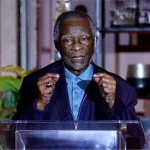
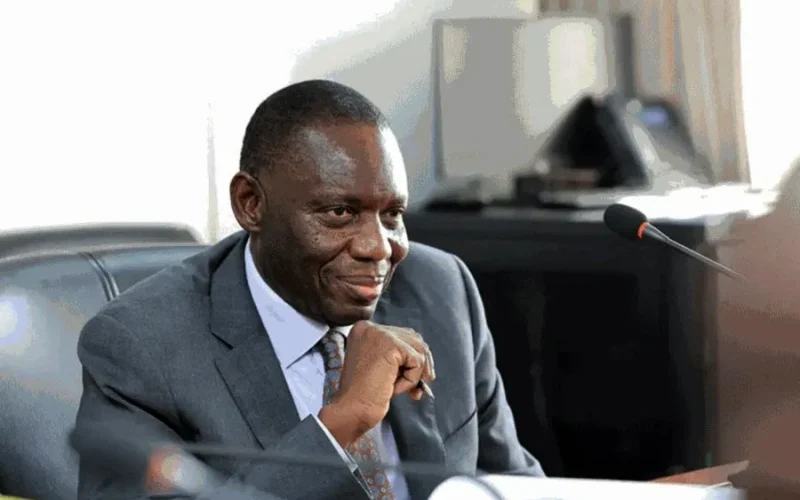
Dr Michael Atingi-Ego, the Governor Bank of Uganda, delves into the economic consequences of the proposed Protection of Sovereignty Bill before parliament.
— Wilfred Businge (@MrBusinge) April 28, 2026
Listen to 8 minutes of pure wisdom. pic.twitter.com/Txwke24Plv