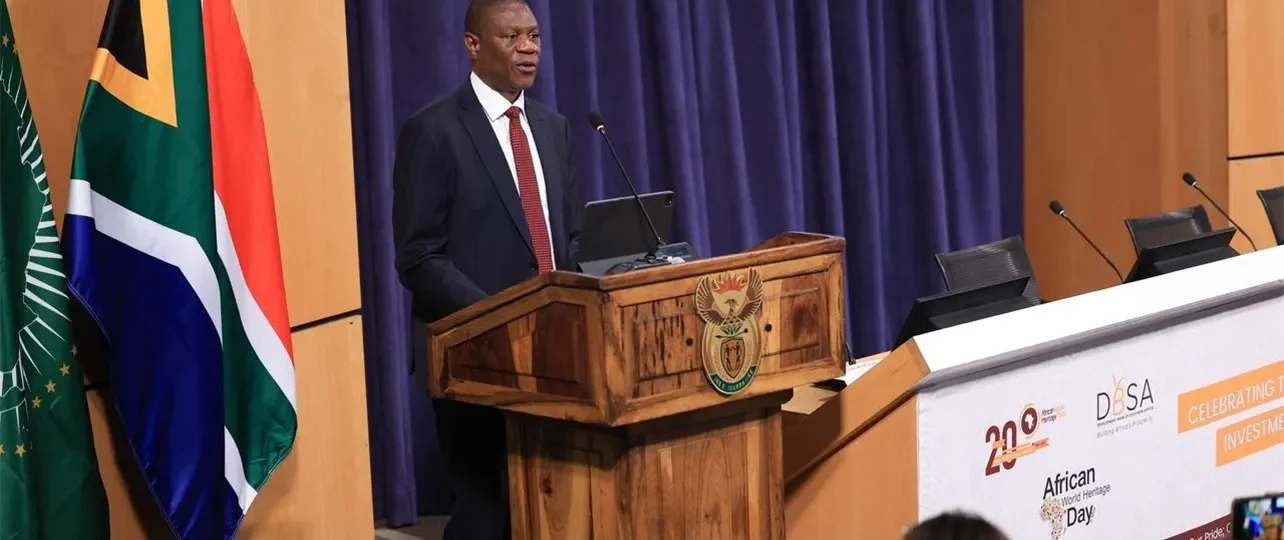

SOUTH Africa’s Deputy President Paul Mashatile has called on African governments, development finance institutions, and the private sector to fully mobilise a $25 million endowment for the African World Heritage Fund, warning that the continent’s cultural and natural legacy remained chronically underfunded two decades after the Fund’s establishment.
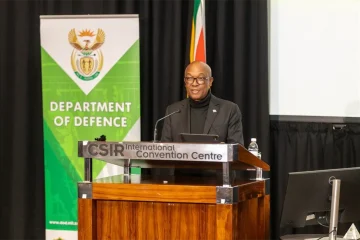
Speaking at the 10th African World Heritage Day commemorations held at the Development Bank of Southern Africa in Midrand, Mashatile said Africa had never lacked heritage wealth — but had historically lacked the African-led financing and coordination structures needed to protect and leverage it.
“Africa must take ownership of its heritage and define its future,” the Deputy President said. “The Fund is not merely a financial instrument – it is a declaration of intent.”
“Heritage is an economic sector. When managed effectively and financed sustainably, it contributes to diversified local economies, strengthens national identity, and enhances Africa’s global competitiveness.”
The gathering, which also marked the 20th anniversary of the Fund’s founding, was attended by Cape Verdean President José Maria Neves – the African Union Champion for the Preservation of Natural and Cultural Heritage – as well as South African Arts and Culture Minister Gayton McKenzie and senior officials from the AU and UNESCO.
Mashatile, who said he had contributed to the Fund’s early development during his tenure as Minister of Arts and Culture, outlined what he described as meaningful progress over the past two decades. The number of World Heritage sites on the continent has grown from 113 to 154. More than $20 million has been invested in heritage capacity-building, with thousands of professionals trained across the continent. Women, youth, and local communities, he said, now play a more central role in heritage governance than at any previous point.
But the Deputy President was candid about the scale of the challenge that remains. Africa still accounts for a relatively small share of the global World Heritage List. Many sites remain underfunded or at risk of deterioration. Several countries have yet to secure a single inscription on the list. And, Mashatile said, too many communities continued to be excluded from the economic benefits generated by the heritage they actively protect.
“Too many stories remain under-documented, and too many communities are yet to fully benefit from the heritage they protect.”
The Deputy President argued that heritage preservation could no longer be treated as a purely cultural concern. He called for its explicit integration into national development frameworks, investment strategies, and economic planning – framing it as a driver of tourism revenue, local enterprise, employment for guides, artisans, and conservators, and a vehicle for building resilient community economies.
The presence of the Development Bank of Southern Africa as host was itself symbolic of this shift in framing. Mashatile said the DBSA’s involvement underscored the importance of treating heritage not only as something to preserve, but as something to invest in strategically and systematically.
The gathering issued a renewed call for three concrete commitments: the full mobilisation of the Fund’s $25 million endowment; a deepening of partnerships across governments, development finance institutions, and the private sector; and the formal entrenchment of the Fund as Africa’s central heritage coordination mechanism – rather than a parallel or supplementary structure.
“History will judge us on how well we protect what has been entrusted to us,” Mashatile said in closing, “and on whether we have succeeded in passing it on – stronger and more vibrant – to future generations.”