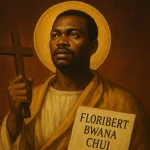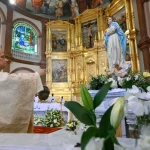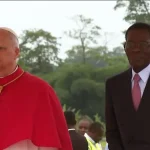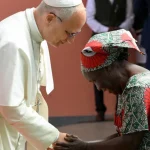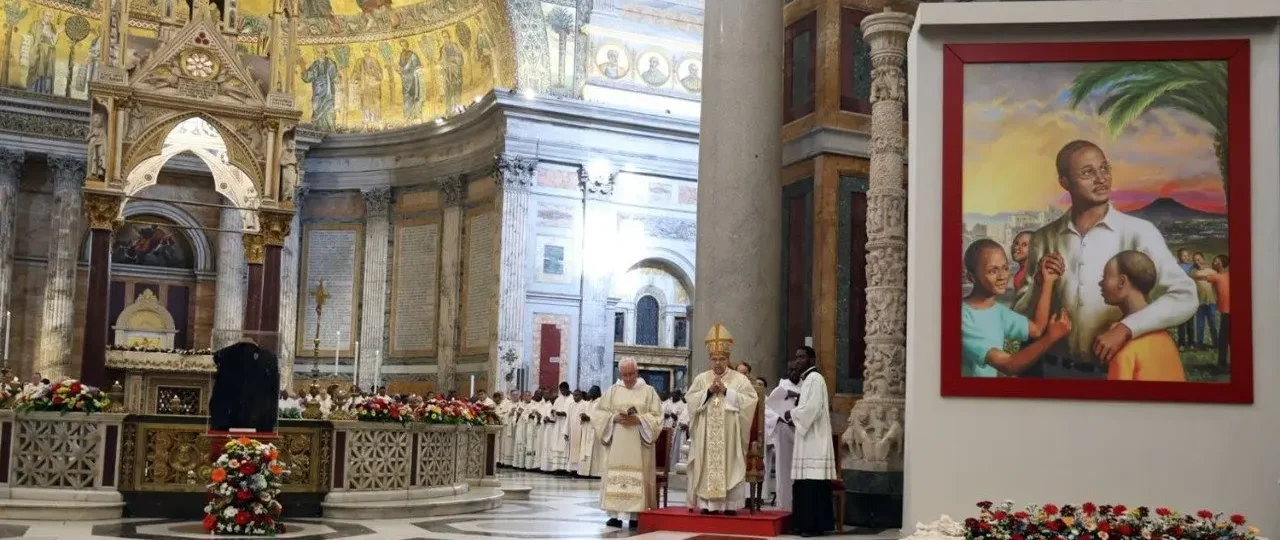

THE ancient stones of the Basilica of St. Paul Outside the Walls had witnessed countless ceremonies over the centuries, but Sunday evening, June 15, 2025, held something extraordinary. As Cardinal Marcello Semeraro raised the bloodstained jacket of a young Congolese customs officer – the relic of his martyrdom – the Church officially declared Floribert Bwana Chui “Blessed,” a saint-in-waiting whose witness now blazes as a beacon of hope across war-torn Africa.
In the front row, Gertrude, Floribert’s mother, wept tears of grief transformed into glory. Her son, murdered at twenty-six for refusing to let poisoned food cross his desk, was now being celebrated by the universal Church as a martyr whose death speaks louder than his life ever could.
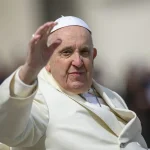
The following day, Pope Leo XIV stood before pilgrims who had journeyed from across Africa for this historic moment. His words carried the weight of prophecy as he reflected on the newly blessed Floribert’s witness:
“This African martyr, in a continent rich in youth, shows how they can be a leaven of peace – unarmed and disarming. This Congolese layman highlights the precious value of the witness of laypeople and young people.”
The Holy Father’s question pierced the heart of Floribert’s story: “Where did a young man draw the strength to resist corruption, so entrenched in the prevailing mindset and capable of any violence?”
The answer, Pope Leo explained, lay not in human willpower but in divine formation: “The choice to keep his hands clean – as a customs officer – was formed by a conscience shaped through prayer, listening to the Word of God, and communion with his brothers and sisters.”
Three P’s That Changed Everything
Pope Leo XIV illuminated the spiritual architecture that built this modern martyr, noting how Blessed Floribert embodied the spirituality of the Community of Sant’Egidio – summarised by the late Pope Francis in three transformative “P’s”: prayer, poor, and peace.
Prayer had been Floribert’s fortress. In a world where corruption whispered its seductive promises, he found his strength in communion with God. His conscience, shaped by Scripture and sustained by prayer, became an unassailable citadel against moral compromise.
The Poor were his priority. The street children of Goma—driven from their homes by endless conflict, despised and orphaned—found in Floribert not just a benefactor but a brother. “He loved them with the charity of Christ,” Pope Leo recalled. “He cared about them and was concerned with their human and Christian formation.”
Peace was his mission. In the violence-scarred region of Kivu, where armed conflict had become the tragic norm, Floribert chose a different path. “He carried on his struggle for peace with gentleness,” the Pope emphasised, “serving the poor, practising friendship and encounter in a divided society.”
The Holy Father painted a powerful picture of Floribert’s ministry among Goma’s abandoned youth. While many young people “felt abandoned and without hope,” this young customs officer heard Christ’s promise differently: “I will not leave you orphans; I will come to you.”
Floribert’s dream, Pope Leo explained, was “nourished by the words of the Gospel and closeness to the Lord.” He was not resigned to evil but actively opposed it through radical love – a love that ultimately cost him everything.
The Night That Changed History
July 7, 2007. As darkness enveloped Goma, Floribert faced his defining moment. The corrupted food shipments from Rwanda sat at his desk, accompanied by bribes that could have secured his future. His choice echoed through eternity:
“As a Christian, I cannot accept to sacrifice the lives of others. It is better to die than to accept this money.”
Cardinal Semeraro, who presided over the beatification, captured the essence of this moral courage: “Floribert chose not to live for himself, but for Christ, resisting evil to the point of shedding his blood.”
By dawn on July 8, Floribert was dead. But his martyrdom—recognised as being “in hatred of the faith”—became a thunderous witness against what Pope Francis had called the “swamp of evil” that is corruption.
The bloodstained jacket presented during the beatification ceremony told its own story. This simple piece of clothing, worn during Floribert’s abduction and murder, had become a powerful symbol of resistance to evil. His brothers, carrying this sacred relic, embodied the Church’s recognition that sometimes the most profound holiness emerges from the most ordinary circumstances.
Cardinal Semeraro noted the deep significance of holding the ceremony in Rome due to ongoing insecurity in Goma: “Today, Floribert becomes a pilgrim to Rome, his dream before his martyrdom.” The young man who had served street children in Africa was now being honoured in the eternal city, his witness proclaimed to the world.
Pope Leo XIV’s declaration rang with hope across a continent too often dismissed as hopeless: “No land is abandoned by God!” The Pope saw in Blessed Floribert’s great faith and trust in the Lord a template for Africa’s future—not a future built on violence and corruption, but on the “unarmed and disarming” witness of faithful young people.
The liturgy itself embodied this vision. Animated by the Congolese community in Rome and Sant’Egidio members from across Africa, marked by song and joy, the celebration became a foretaste of the peace Pope Leo envisions for the continent.
A Teacher of Hope
“Floribert is a teacher of hope,” Cardinal Semeraro proclaimed during his homily. “He teaches us to overcome evil with good.” This lesson resonates far beyond the borders of the Democratic Republic of Congo, speaking to every young person facing the choice between expedience and integrity, between personal gain and the common good.
During the Sunday Angelus following the beatification, Pope Leo XIV distilled Floribert’s witness into words that should echo across Africa: “He was killed at 26 for resisting injustice and defending the poor. May his witness bring hope to the youth of Congo and all of Africa.”
As the ceremony concluded, Pope Leo XIV offered a prayer that captured the deepest hope of the Church for Africa: “Through the intercession of the Virgin Mary and Blessed Floribert, may the long-awaited peace soon come to Kivu, to Congo, and to all of Africa!”
This prayer transforms Blessed Floribert from a historical figure into a living intercessor, a young African saint whose blood cries out not for vengeance but for peace. His feast day—July 8, the anniversary of his martyrdom—will now be celebrated annually as a reminder that in a continent “rich in youth,” young people can indeed be “a leaven of peace.”
From Goma to Glory
Eighteen years after that dark night in Goma, Blessed Floribert Bwana Chui has become what Cardinal Semeraro called “a teacher of hope.” His witness proves that peace is possible, that corruption can be resisted, that young people can change the world—not through violence, but through the “unarmed and disarming” power of radical love.
The bloodstained jacket now rests as a relic, but the witness it represents lives on. In every customs office where an officer chooses integrity over bribes, in every government building where a young person refuses to compromise their principles, in every street where someone chooses to serve the poor rather than exploit them, Blessed Floribert’s legacy continues.
His beatification is more than a celebration—it’s a call. A call to the youth of Africa to be “unarmed and disarming” agents of peace. A call to reject the “swamp of evil” that is corruption. A call to believe that “no land is abandoned by God.”
Most powerfully, it’s a call to hope that the “long-awaited peace” Pope Leo XIV prayed for is not just a distant dream, but a present possibility—embodied in the witness of a young man who chose death over dishonesty and now stands as Africa’s newest blessed, interceding for the continent he loved enough to die for.
“As a Christian, I cannot accept to sacrifice the lives of others. It is better to die than to accept this money.”
These words, spoken in a moment of ultimate testing, have become a charter for hope across Africa. Blessed Floribert Bwana Chui: martyr of integrity, teacher of hope, and herald of the long-awaited peace.