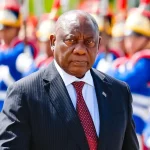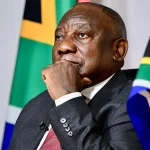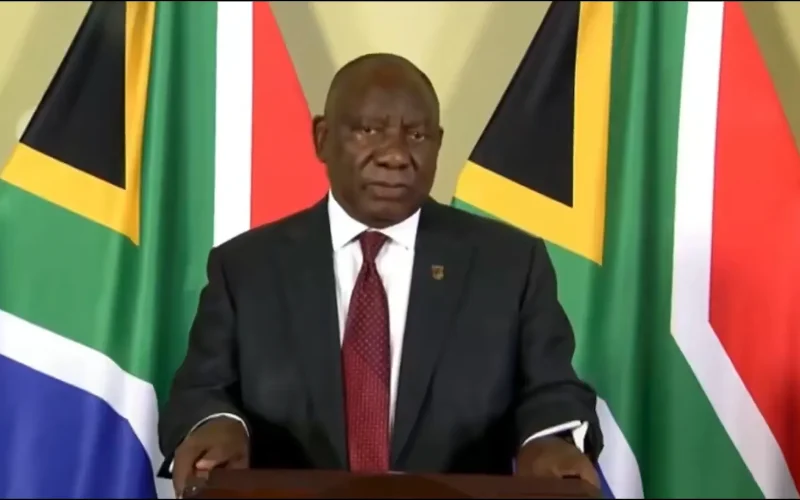
PRESIDENT Cyril Ramaphosa has told South Africans he will not resign in the wake of the Constitutional Court’s landmark ruling that Parliament acted unconstitutionally when it blocked the Section 89 Independent Panel report, saying he intends to take the parliamentary panel’s findings on review.
Addressing the nation following the Constitutional Court judgment handed down on Friday, 8 May 2026, Ramaphosa was unequivocal: he would contest the determination by the Independent Panel, chaired by retired Chief Justice Sandile Ngcobo, that there is a prima facie case he violated his oath of office.
“I am not resigning,” Ramaphosa declared, signalling his intention to mount a legal challenge that will wind through the High Court, the Supreme Court of Appeal, and potentially the Constitutional Court — a journey whose legal lifecycle could span years rather than weeks.
The Constitutional Court ruled that Rule 129I of the Rules of the National Assembly is unconstitutional and invalid, and set it aside. The court also declared unconstitutional the decision taken by the National Assembly on 13 December 2022 — when the ANC used its parliamentary majority to vote against referring the Independent Panel report to an Impeachment Committee.
Critically, the court did not find the President guilty of any offence. The Ngcobo panel itself made no such finding. Its mandate was limited to determining whether there is a prima facie case to answer – not to adjudicate guilt. That function falls to the Impeachment Committee, which must now be constituted and undertake its own thorough investigation before arriving at any factual finding.
Opposition parties have sought to characterise the Constitutional Court’s judgment as a finding of presidential guilt. That characterisation is legally and factually incorrect. The court ruled on the constitutionality of parliamentary procedure, not on the merits of any allegation against the President.
THE SPEAKER’S PROCESS
The Speaker of the National Assembly, Thoko Didiza, has set out the steps Parliament will take following the judgment. The Speaker will formally table the Independent Panel report and provide the President with a copy, as directed by the court. She will initiate the process to constitute the Impeachment Committee in terms of Rules 129J to 129O of the National Assembly Rules.
Parliament has reaffirmed its respect for the Constitutional Court’s judgment and said it will act in full compliance with the court’s order and directions. The Speaker will also refer the judgment to the National Assembly Subcommittee on the Review of Rules for the amendments required to the Rules of the National Assembly.
The work of the committee can only start once Ramaphosa’s legal challenge has been exhausted.
By taking the Section 89 panel decision on review, Ramaphosa has exercised a right available to every citizen. A High Court review application will be the first port of call. Should it fail, an appeal to the Supreme Court of Appeal follows, with a further appeal to the Constitutional Court remaining open. Each leg of this process carries its own filing timelines, hearings, and judgment cycles.
It remains unclear whether the President intends to simultaneously re-engage with the parliamentary Impeachment Committee process while the review is in motion, or whether he will seek to stay the parliamentary proceedings pending the outcome of the review litigation.
Political parties that have tabled motions of no confidence against the President are engaged in intense behind-the-scenes lobbying to garner sufficient support to unseat him. The arithmetic of the National Assembly, however, makes the passage of a motion of no confidence uncertain.