THE mahogany doors of the Union Buildings have witnessed many defining moments in South Africa’s democratic journey, but few as consequential as the one that awaits President Cyril Ramaphosa. As he prepares to address the nation on the explosive revelations that have shaken the very foundations of law enforcement, the weight of history presses down upon his shoulders with unprecedented force.
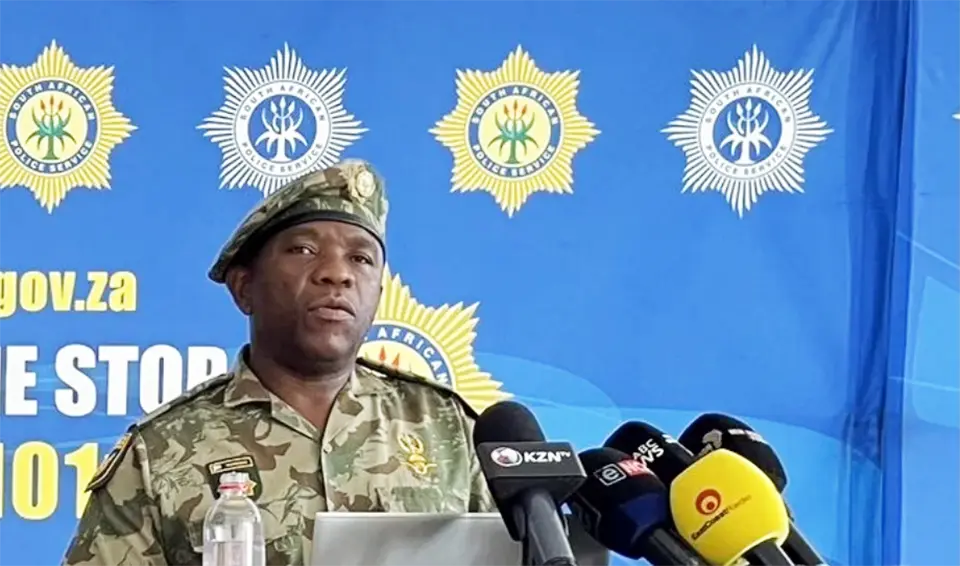
South African Police Service’s KwaZulu-Natal Provincial Commissioner Lieutenant-General Nhlanhla Mkhwanazi’s bombshell testimony has torn away the veil of respectability that has long shrouded South Africa’s criminal justice system. His stark declaration that drug cartels have infiltrated the highest echelons of the police, prosecution services, and judiciary reads like a script from a crime thriller – except this is the brutal reality of a nation under siege from within.
The revelations strike at the heart of everything Ramaphosa has promised since ascending to power: clean governance, the rule of law, and the restoration of public trust in state institutions. Yet as the President contemplates his response, the ghosts of his past indecision hover ominously around him. The litany of ministers who have remained in their posts despite scandals, the endless reshuffles that have become his signature move, the promises of action that have dissolved into committees and investigations – all of it now stands as testament to a leadership style that has frustrated even his most ardent supporters.
The Minister of Police, Senzo Mchunu, whose alleged interference in investigations has become the lightning rod for public anger, represents more than just another scandal. This is about the very institution tasked with protecting citizens from the criminal networks that Mkhwanazi describes with such chilling clarity. When the guardians become complicit, when those sworn to serve and protect become servants of drug lords and cartel bosses, the social contract between state and citizen doesn’t just fray – it snaps.
For Ramaphosa, this moment represents both his greatest challenge and his most profound opportunity. The nation watches, not just with the usual weary cynicism that has characterised public discourse around political scandals, but with a desperate hunger for authentic leadership. South Africans have grown tired of eloquent speeches followed by tepid action, of moral outrage that dissipates into procedural delays and political calculations.
The President’s expression of shock at the revelations, while understandable, also reveals the dangerous disconnect between the Union Buildings and the streets where ordinary citizens live with the daily reality of crime and corruption. That drug cartels could capture senior officials across multiple institutions without the President’s knowledge speaks to either a troubling lack of intelligence or a willful blindness that has characterised his administration’s approach to systemic corruption.
The ANC’s swift response in summoning ministers to face an integrity committee represents a political lifeline for Ramaphosa, but it also underscores the party’s own complicity in creating the conditions that allowed such rot to take hold. The integrity committee, much like the President’s previous responses to misconduct, risks becoming another forum for political theatre rather than genuine accountability.
What makes this moment particularly poignant is the broader context of South Africa’s struggle with state capture. The Zondo Commission’s findings, while focused on the Zuma era, revealed the deep structural weaknesses that have made the state vulnerable to criminal infiltration. Ramaphosa’s promise to clean up government has been the cornerstone of his political legitimacy, yet the persistence of corruption and the brazen nature of the police revelations suggest that his remedies have been insufficient to the scale of the disease.
The President now faces a choice that will define not just his legacy, but the trajectory of South African democracy. He can continue down the familiar path of measured responses, commissions of inquiry, and cabinet reshuffles—a path that has preserved political stability at the cost of genuine reform. Or he can seize this moment to demonstrate the kind of decisive leadership that the gravity of the crisis demands.
The nation’s hunger for leadership is palpable. Citizens who have watched their communities ravaged by crime, their institutions hollowed out by corruption, and their faith in democracy steadily eroded are looking for a leader who will match the severity of their rhetoric with the boldness of their actions. They want to see consequences that are swift, visible, and proportionate to the crimes committed.
The stakes could not be higher. South Africa stands at a crossroads where the rule of law itself hangs in the balance. If drug cartels can indeed control senior police officers, prosecutors, and judges, then the very notion of justice becomes a cruel joke. The President’s response will signal whether South Africa is serious about reclaiming its institutions or whether it will continue to drift toward a state where criminal networks operate with impunity.
As Ramaphosa prepares to face the nation, he must understand that this is not just another political crisis to be managed. This is a moment that will test whether South Africa’s democracy has the antibodies necessary to resist the cancer of state capture. The President’s words will matter, but his actions will matter more. The nation is watching, waiting, and hoping that this time will be different—that finally, a South African leader will rise to meet the moment with the courage and conviction that the crisis demands.
The mahogany doors of the Union Buildings are about to open. What emerges will shape South Africa’s destiny for generations to come.