IN a deadly escalation of Nigeria’s ongoing security crisis, armed insurgents have struck back with devastating force just days after military forces rescued dozens of kidnap victims, killing at least two people and abducting over 100 others, mostly women and children, in a brazen attack on Zamfara State villages.
The recent assault represents a violent response to recent Nigerian Air Force operations that freed 76 kidnap victims in neighbouring Katsina State, highlighting the increasingly volatile cycle of military action and terrorist retaliation that has gripped Nigeria’s northwest region.
The Latest Terrorist Offensive
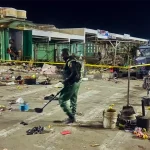
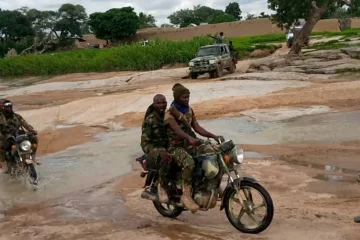
The attackers stormed the village of Gamdum Mallam in Adafka, Bukkuyum, around midday on Saturday, deploying dozens of motorbikes and firing indiscriminately at civilians, according to village head Muhammadu Mai Anguwa.
“They killed and kidnapped many women and children, and took them towards Makakari forest,” Mai Anguwa told local media, describing scenes of terror that have become tragically familiar across Nigeria’s volatile northwest.
The assault demonstrated sophisticated tactical coordination, with insurgents splitting into two operational groups. One unit focused on mass kidnapping of civilians and livestock, while a second group established roadblocks at Adafka’s main entrance, shooting at anyone attempting to pass through the area.
“We were being treated like slaves in our own land, as if there was no government,” said Huzaifa Isa, a resident who witnessed the attack.
Local lawmaker Hamisu Faru confirmed the scale of the operation, stating that at least 100 people have been abducted since Saturday morning. The terrorists expanded their assault to neighbouring communities, attacking Nasarawa Burkullum under heavy rain before crossing rivers to reach Ruwan Rana village, where they seized an additional 46 victims.
Retaliatory Pattern Emerges
The Zamfara assault comes just days after Nigerian Air Force precision strikes rescued 76 kidnap victims from a bandit stronghold in Katsina State’s Pauwa Hill. That operation, targeting gang leader Babaro’s network, represented a significant military victory in the government’s intensified campaign against criminal organisations.
However, Saturday’s coordinated attacks across multiple villages suggest insurgent groups are responding with increased aggression to military pressure, creating a dangerous cycle of escalation that places civilian populations at the centre of an intensifying conflict.
Strategic Battleground
Zamfara State has emerged as the epicentre of armed group activities in northwest Nigeria, where gunmen have systematically made travel and farming dangerous for rural communities. The region’s vast forests provide natural refuges for criminal networks that have operated with increasing boldness despite military operations.
Recent intelligence data reveals the staggering scope of the crisis: between July 2024 and June 2025, at least 4,722 people were abducted across the northwest, according to SBM Intelligence. These figures underscore how kidnapping for ransom has become a systematic tool of terror and economic warfare against the Nigerian state.
Military Gains Under Pressure
Despite Saturday’s devastating attack, Nigeria’s military leadership continues to report significant operational successes across northern theatres. Chief of Defence Staff General Christopher Gwabin Musa recently revealed that over 2,000 kidnapped victims have been rescued in the past two years as part of comprehensive counter-insurgency operations.
The military has neutralised over 3,000 terrorists and bandits while securing the surrender of more than 120,000 insurgents, according to official figures. Operations have recovered over 2,300 weapons and 72,000 rounds of ammunition, demonstrating substantial tactical gains.
However, the Zamfara assault exposes the challenges facing Nigerian forces in maintaining security across the country’s vast and difficult terrain, where insurgent groups can rapidly relocate and strike vulnerable communities.
Escalating Conflict Dynamics
The pattern emerging from recent operations suggests a dangerous tit-for-tat dynamic between government forces and terrorist networks. Military successes in rescuing victims and dismantling criminal strongholds are being met with increasingly violent reprisals against civilian populations.
This escalation places enormous pressure on Nigeria’s military to not only conduct successful rescue operations but also provide sustained protection for vulnerable communities that may face retaliation for military successes in their regions.
Community Terror and Displacement
Residents of affected areas report living in constant fear as armed groups demonstrate their ability to strike with impunity despite increased military presence. The psychological impact extends beyond immediate victims to entire communities who must navigate the threat of kidnapping, murder, and economic disruption.
“The bandits attacked Nasarawa Burkullum under heavy rain, crossed the river into nearby villages,” local lawmaker Faru explained, highlighting how weather conditions and geographic features provide tactical advantages to insurgent forces familiar with local terrain.
Community leaders report that residents fear further attacks as intelligence suggests the armed groups are attempting to cross into forest boundaries again, potentially positioning for additional operations.
Broader Security Implications
The escalating conflict represents more than localised criminal activity, constituting a direct challenge to Nigerian state authority in the northwest. The systematic targeting of civilians, destruction of agricultural activities, and disruption of economic life constitute asymmetric warfare designed to undermine government legitimacy.
As Nigeria’s military pursues enhanced operational capabilities and regional cooperation initiatives, including hosting the African Chiefs of Defence Conference in Abuja, the immediate challenge remains protecting vulnerable populations caught between military operations and terrorist retaliation.
The Zamfara attack serves as a stark reminder that despite tactical military gains, the broader security crisis requires sustained pressure against criminal networks while addressing underlying socioeconomic factors that enable insurgent operations across Nigeria’s expansive northern regions.
Saturday’s assault offers a sobering assessment of the security challenges ahead as both government forces and terrorist networks demonstrate increasing capability and determination in what has become an escalating battle for control of Nigeria’s northwest territories.