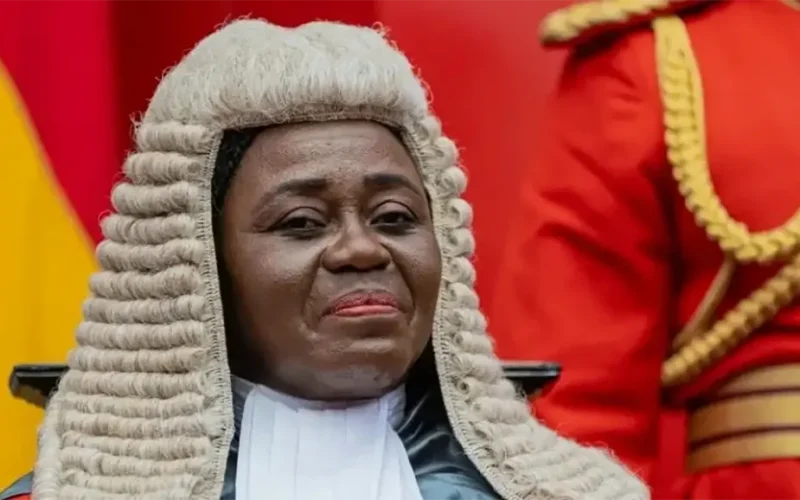
PRESIDENT John Dramani Mahama on Monday removed Chief Justice Gertrude Araba Esaaba Sackey Torkornoo from office with immediate effect, following a constitutional committee’s recommendation that found grounds for her dismissal based on stated misbehaviour.
The removal, conducted under Article 146(9) of Ghana’s 1992 Constitution, follows a months-long investigation into petitions filed against the Chief Justice. The decision represents a historic moment as it marks the first successful removal of a sitting Chief Justice through Ghana’s constitutional process.
Investigation Findings
The action stems from the first of three petitions submitted against the Chief Justice, with the initial petition filed by Ghanaian citizen Daniel Ofori. A Committee of Inquiry established under Article 146(6) of the Constitution conducted an extensive investigation that included testimony from 25 witnesses and a review of approximately 10,000 pages of documentary evidence.
After what committee chair Justice Gabriel Pwamang described as “critical and dispassionate examination and assessment of all the evidence,” the committee determined that grounds of stated misbehaviour under Article 146(1) had been established and recommended Torkornoo’s removal from office.
President Mahama was constitutionally required to act on the committee’s recommendation under Article 146(9).
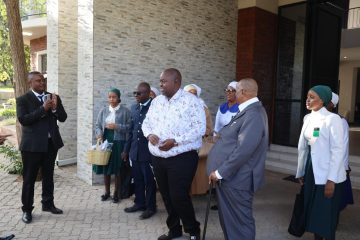
The five-member investigative committee, chaired by Supreme Court Justice Gabriel Pwamang, presented its first report to President Mahama on Monday morning at a brief ceremony at the Presidency. The committee heard evidence from 13 witnesses on behalf of petitioner Daniel Ofori, while Chief Justice Torkornoo testified and called 12 witnesses, including expert witnesses. Both sides were represented by four lawyers each.
Background to the Case
Chief Justice Torkornoo was initially suspended in April 2025 after President Mahama, in consultation with the Council of State, determined that a prima facie case had been established regarding three separate petitions filed against her. The petitions included allegations of misconduct, with accusations ranging from tampering with court records to misuse of public funds.
Torkornoo, Ghana’s 15th Chief Justice and the third woman to hold the position, was appointed by former President Nana Akufo-Addo and sworn in on June 12, 2023. She had previously survived an earlier removal attempt when President Akufo-Addo dismissed a petition against her, citing procedural deficiencies.
Committee Process and Transparency
Justice Pwamang emphasised that the committee conducted its work “in camera” as required by Article 146(7) and (8) of the Constitution, while clarifying that “in camera proceedings are not the same as in secret.” He noted the committee refrained from public commentary despite what he described as “blatant false statements made about members of the committee and our work.”
The committee presented its recommendation to President Mahama in a sealed envelope, maintaining the confidentiality of its deliberative process while fulfilling its constitutional mandate.
The removal process followed Ghana’s established constitutional framework for judicial accountability. Under Article 146, when petitions for a Chief Justice’s removal are received, the president must consult with the Council of State to determine if a prima facie case exists. If established, a committee of inquiry is appointed to investigate the allegations.
The committee’s findings that grounds for stated misbehaviour had been established under Article 146(1) left President Mahama with no constitutional discretion but to act on the recommendation.
The committee chair revealed that both the second petitioner and Chief Justice Torkornoo requested an adjournment regarding the second petition, which was granted by the committee. “Accordingly, we shall be reporting on the second and third petitions in due time,” Justice Pwamang stated.
This indicates that additional proceedings may continue even after Torkornoo’s removal from office, as the remaining petitions work their way through the constitutional process.
The removal concludes a process that began in April 2025 with Torkornoo’s initial suspension and represents a significant development in Ghana’s judicial system, demonstrating both the accountability mechanisms within the country’s constitutional framework and the potential for executive-judicial tensions when such processes are invoked.
The position of Chief Justice now remains vacant pending the appointment of a successor by the President.