SOUTH AFRICA’S Criminal justice system faces its gravest crisis in decades after the country’s top police officer delivered damning testimony that fully corroborated shocking allegations first made public three months ago – confirming that criminal syndicates have systematically infiltrated the highest echelons of law enforcement leadership.
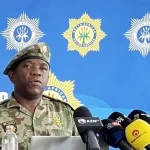
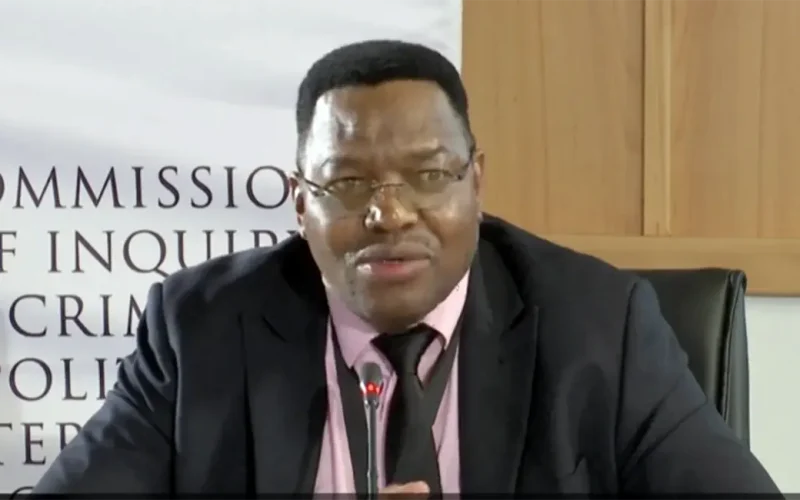
National Police Commissioner General Fannie Masemola concluded two days of explosive testimony at the Madlanga Commission of Inquiry on Tuesday, providing concrete evidence that validates the watershed allegations made by KwaZulu-Natal Provincial Police Commissioner Lieutenant-General Nhlanhla Mkhwanazi at a press conference on July 6, 2025, that initially shocked the nation.
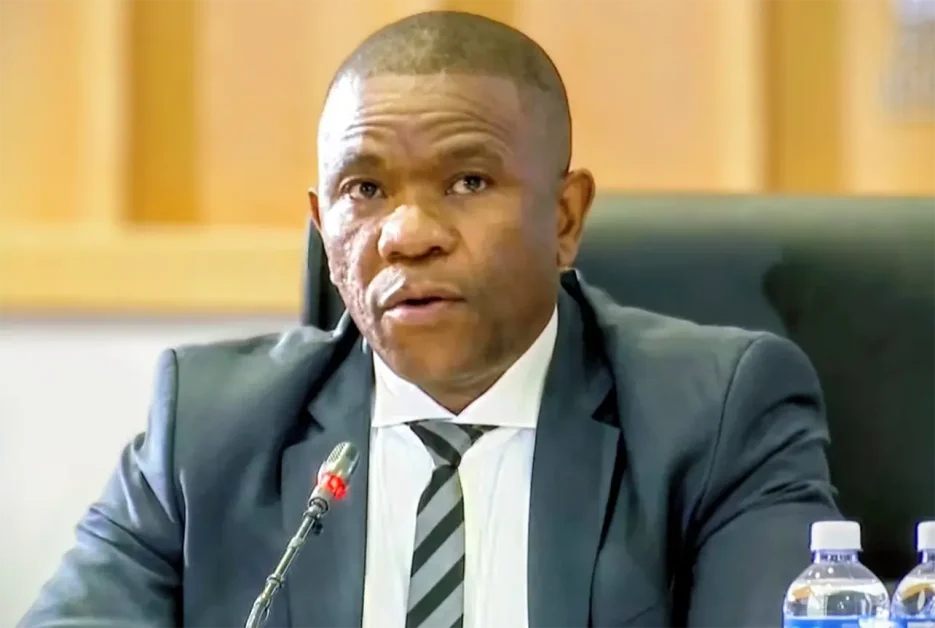
Mkhwanazi, who served as the Commission’s first witness and testified for three days, had courageously exposed what many dismissed as too explosive to be true. His allegations that suspended Police Minister Senzo Mchunu and suspended Deputy National Police Commissioner Lieutenant-General Shadrack Sibiya were linked to criminal syndicates seemed almost unbelievable when first aired in July.
But Masemola’s testimony has now provided the smoking gun evidence that supports every major allegation made by his KwaZulu-Natal counterpart, transforming Mkhwanazi from a lone whistleblower into a vindicated truth-teller whose courage may have saved South Africa’s criminal justice system from complete capture.
At the heart of Masemola’s corroborating testimony lies chilling evidence: phone records obtained from attempted murder accused Vusimuzi “Cat” Matlala’s device show direct communication linking Sibiya to criminal syndicates. These records, Masemola told the commission, “suggest that Sibiya is tied to deeper connections of members of the cartels” and reveal his intent to “shield the cartel members from ongoing investigations.”
The timing proves Mkhwanazi’s allegations. Between December 6, 2024 – when police raided Matlala’s home – and December 31, 2024, there was frantic “communication” to disband the KwaZulu-Natal Political Killings Task Team (PKTT). Mchunu’s formal disbandment letter was issued on the final day of 2024, capping what Masemola described as a coordinated effort to protect criminal interests – exactly as Mkhwanazi had alleged.
A Task Team Targeted for Success
The PKTT had become too effective for its own survival, precisely as Mkhwanazi had warned in July. The specialized unit had successfully arrested key cartel figures, including Matlala and Katiso Molefe, along with their associates. But rather than celebrating these victories, senior leadership moved to eliminate the team entirely.
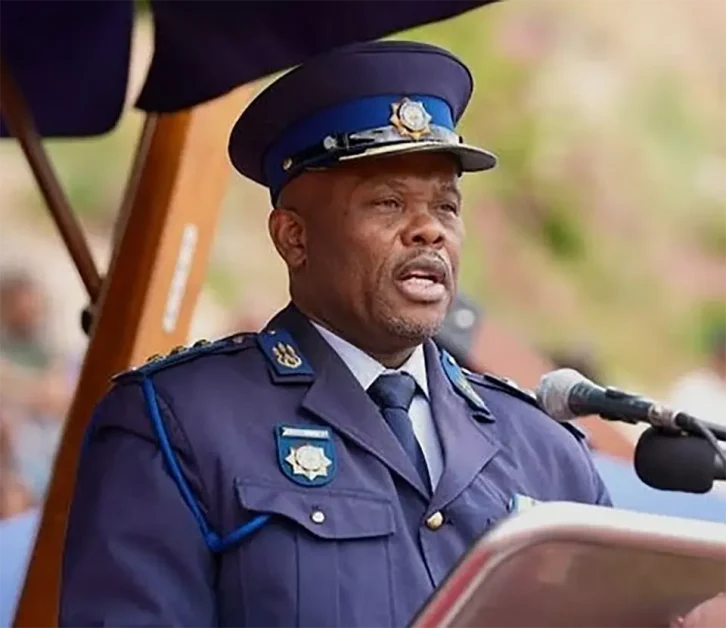
“Sibiya’s move to issue instructions for the immediate disbandment of the PKTT was not based on a procedural motive. It was based on a motive to protect cartels,” Masemola testified, echoing Mkhwanazi’s earlier allegations. The deputy commissioner’s subsequent decision to transfer 121 PKTT dockets from KwaZulu-Natal to his Pretoria headquarters was, according to Masemola, a calculated move to interfere with ongoing Gauteng cases involving 10 PKTT members.
Perhaps most disturbing was Masemola’s revelation about how the disbandment was justified – corroborating Mkhwanazi’s claims about high-level deception. At a March 27 meeting, Mchunu told SAPS management that President Cyril Ramaphosa supported the PKTT’s dissolution, stating he “did not understand why we were so adamant that the PKTT must not be disbanded.”
But Masemola’s account reveals this as likely fabrication. The president had previously been “satisfied with the performance” of the task team and had even “requested the PKTT to assist with Fort Hare University murder investigations.” When Masemola briefed Ramaphosa in February about the disbandment, the president was “surprised and taken aback that the team had been disbanded with no reasons given” – exactly contradicting Mchunu’s claims.
The Matlala Connection Confirmed
Central to both Mkhwanazi’s original allegations and Masemola’s corroborating evidence is Vusimuzi “Cat” Matlala, whose arrest for the attempted murder of actress Tebogo Thobejane appears to have triggered panic in criminal circles. During his July press conference, Mkhwanazi revealed that Matlala had been awarded a SAPS tender worth over R360-million in 2024 – a contract Masemola cancelled just one day before Matlala’s arrest in May 2025.
The 49-year-old faces charges alongside his wife, Tsakani and three others for conspiracy to commit murder, attempted murder, fraud, and money laundering. While denied bail and currently held at Kgosi Mampuru II correctional centre, Matlala’s phone records have become the key evidence validating Mkhwanazi’s explosive July allegations.
Both Mchunu and Sibiya now find themselves suspended as internal investigations proceed – a direct result of Mkhwanazi’s courage in going public. Masemola confirmed that prima facie evidence suggests Sibiya “interfered and delayed police investigations” while maintaining associations with criminal syndicates. Sibiya awaits a disciplinary hearing, while Mchunu remains on special leave.
Both men are expected to testify in their defence before the commission, providing them an opportunity to respond to the mountain of evidence that has emerged since Mkhwanazi’s watershed July 6 press conference.
A System Under Siege
The revelations at the Madlanga Commission, established by President Ramaphosa to investigate criminality and political interference in the criminal justice system, now paint an undeniable picture of a law enforcement apparatus compromised from within. Masemola’s testimony has transformed Mkhwanazi’s shocking allegations from seeming conspiracy theories into documented facts backed by hard evidence.
The systematic effort to dismantle the PKTT – precisely because of its effectiveness against criminal cartels – represents a direct threat to South Africa’s rule of law that has now been exposed by two of the country’s most senior police officers working in tandem.
As the commission continues its work, with a third witness expected to testify Thursday, Mkhwanazi’s courage in breaking ranks has been thoroughly vindicated. The PKTT’s recent courtroom victory – securing two life sentences for a man convicted of murdering a KwaZulu-Natal municipal manager – serves as a powerful reminder of what South Africa stands to lose when effective law enforcement units are disbanded to protect criminal interests.
With both whistleblower allegations and corroborating evidence now on record, attention turns to how the Ramaphosa administration will respond to this validated crisis. The Commission’s findings, supported by testimony from South Africa’s two most senior operational police commanders, could fundamentally reshape the country’s approach to combating organized crime and political interference in the justice system.