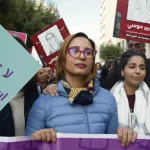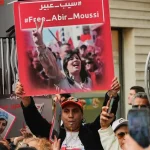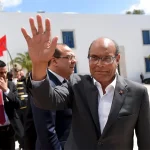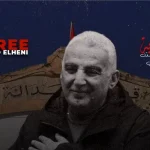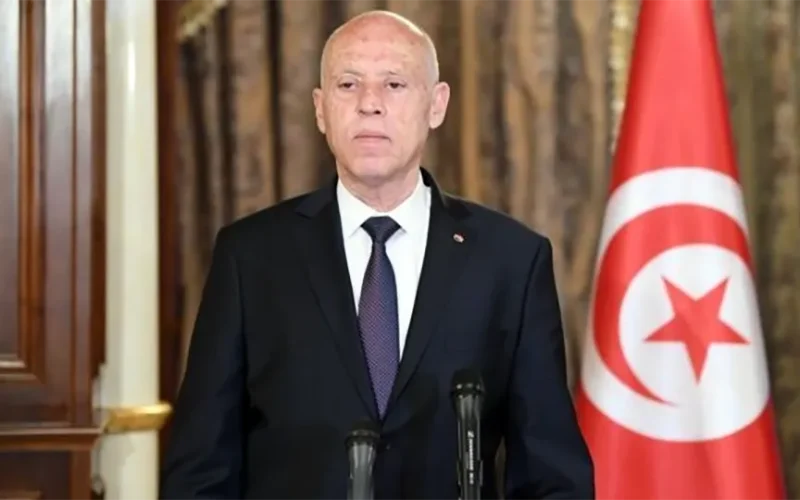
THE Tunisian appeals court’s decision Tuesday to uphold and dramatically increase prison sentences against opposition figures represents not justice, but the latest chapter in President Kais Saied’s methodical dismantling of the country’s post-Arab Spring democracy. The verdicts – including a 20-year sentence for 84-year-old opposition leader Rached Ghannouchi and a 35-year term for Saied’s former chief of staff – expose a judiciary that has been transformed from an independent check on power into a blunt instrument of political retribution.
The mass trial that concluded Tuesday encapsulates the Saied regime’s approach to opposition: sweep up critics under vague conspiracy charges, conduct proceedings that lack basic due process, and deliver sentences so severe they amount to political elimination. Twenty-one defendants faced charges of “conspiring against the state” – accusations the defendants uniformly reject as fabricated. Ten languish in prison; eleven have been forced into exile, tried and convicted in absentia with no meaningful opportunity to defend themselves.
The sentences themselves reveal the punitive logic at work. Ghannouchi, already serving time on separate charges, now faces a cumulative 50 years in prison – a de facto life sentence for the octogenarian Ennahda party leader. Former intelligence chief Kamel Guizani, former foreign minister Rafik Abdessalem, and Ghannouchi’s son Mouadh each received 35-year terms. Most strikingly, Nadia Akacha, once Saied’s own chief of staff, was handed 35 years, a stark warning that even former loyalists who break with the president will face ruthless consequences.
Tuesday’s verdicts cannot be understood in isolation. They are the logical product of Saied’s systematic capture of Tunisia’s judicial system following his 2021 power grab. After dissolving parliament and concentrating authority in his own hands, moves opposition figures accurately characterized as a coup, Saied moved decisively to neutralize the one institution that could constrain him: the courts.
In 2022, he dissolved the Supreme Judicial Council, the body that had guaranteed judicial independence since Tunisia’s 2011 revolution. He then purged dozens of judges, removing anyone who might resist his agenda. What remains is a judiciary stripped of autonomy, its decisions predetermined by political considerations rather than law or evidence.
The pattern is unmistakable. Since 2021, Tunisia has witnessed the imprisonment of most major opposition leaders, journalists who dare to criticize the president, and activists who defend democratic principles. These prosecutions share common features: vague charges related to state security, lack of credible evidence, denial of fair trial guarantees, and sentences calibrated not to the alleged crime but to the political threat posed by the defendant.
The Betrayal of the Arab Spring
The cruel irony is inescapable. Tunisia was the birthplace of the Arab Spring in 2011, the one country where popular uprising seemed to yield genuine democratic transformation. For a decade, despite economic struggles and political turbulence, Tunisia maintained competitive elections, a vibrant civil society, independent media, and, crucially, judicial independence. It was an imperfect democracy, but a democracy nonetheless.
Saied rode to power in 2019 on popular frustration with political dysfunction and corruption. But rather than reform the democratic system, he has demolished it. His justification, that he needed extraordinary powers to combat chaos and corruption within the political elite, has proven hollow. The real chaos has been his own making: the arbitrary arrests, the show trials, the destruction of institutions that took years to build.
The international community’s muted response to Tunisia’s authoritarian regression has been shameful. Western democracies, preoccupied with migration concerns and regional stability, have largely acquiesced to Saied’s consolidation of power. Economic aid continues to flow with minimal conditions attached. Rhetorical expressions of concern about human rights violations are rarely backed by concrete consequences.
This complicity sends a clear message: Tunisia’s nascent democracy was expendable, its sacrifice acceptable in exchange for a strongman willing to control migration flows and maintain a facade of stability. The defendants receiving decades-long prison sentences this week have learned that lesson bitterly.
The trajectory is ominous. With the opposition leadership imprisoned or in exile, the judiciary subordinated, parliament neutered, and civil society increasingly constrained, Saied faces few institutional obstacles to expanding his authoritarian control. The harsh sentences handed down Tuesday serve multiple purposes: they punish those who defied him, they intimidate potential dissidents, and they signal that no form of opposition will be tolerated.
For Ghannouchi, now facing 50 cumulative years in prison at age 84, the sentence is effectively a death sentence. For the many defendants tried in absentia, it means permanent exile. For Tunisia’s citizens, it means the death of the democratic dream that briefly flowered after 2011.
The appeals court’s decision this week is judicial only in the most technical sense. In substance, it represents something far darker: the formalization of authoritarian rule, the codification of political vengeance, and the final burial of Tunisia’s democratic aspirations under the weight of presidential dictatorship disguised as law.