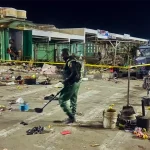
AT least 50 civilians are dead and an unknown number of women and children abducted after armed militants swept through a remote northwestern Nigerian village – the latest atrocity in a grinding insurgency that has defied both government crackdowns and growing international intervention.
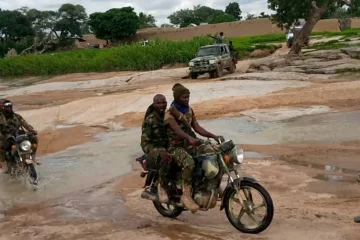
The assault, which began around 5 p.m. and did not end until 3:30 a.m. Friday, followed a pattern that has become grimly familiar across northern Nigeria’s vast rural hinterland – a fast-moving column of motorcycle-borne militants, overwhelming a community with little means to defend itself, before disappearing back into the bush.
What made this attack particularly damning for Nigerian authorities was the warning that went unheeded. Abdullahi Sani, 41, a Tungan Dutse resident who lost three family members in the assault, said locals had spotted more than 150 motorcycles carrying armed men the day before and immediately alerted security forces and local government officials. Their warnings were ignored.
“No one slept yesterday; we are all in pain,” Sani said.
The number of abducted victims has yet to be determined, with traditional leaders and local officials still accounting for the missing, according to lawmaker Hamisu A. Faru, who represents the Bukkuyum South constituency and was among the first to go public with the death toll. A Zamfara state police spokesperson had not responded to requests for comment at the time of publication.
Qatar’s Ministry of Foreign Affairs swiftly condemned the attack, expressing condolences to the families of the victims and calling on the international community to reject “violence, terrorism, and criminal acts, regardless of the motives and reasons.”
A Crisis That Defies Easy Solutions
The Zamfara massacre is not an isolated tragedy. It is the latest chapter in an escalating conflict that has turned northern Nigeria into one of the most dangerous regions in the world for civilian populations. Armed groups – variously described by Nigerian authorities as “bandits,” but increasingly linked by security analysts to jihadist networks with ties to groups like Islamic State West Africa Province (ISWAP) and Boko Haram – have carved out swaths of territory across the northwest and northeast, raiding villages, kidnapping for ransom, and displacing hundreds of thousands of people.
Nigeria’s federal government, under intense domestic pressure to restore order, has committed substantial military resources to the fight. Airstrikes, ground operations and the deployment of additional troops to affected states have all been employed. Yet the violence has continued to surge, exposing a troubling gap between stated policy and operational reality on the ground — a gap illustrated starkly by Thursday’s attack on Tungan Dutse, where a community’s advance warning to authorities produced no response whatsoever.
The limitations of Nigeria’s security apparatus have drawn in international partners. The United States has stepped up its involvement in recent months, first conducting airstrikes on targets identified as militant positions — a significant escalation that underscored American concern about the spread of jihadist influence in West Africa’s most populous nation. U.S. Army advisers have since been deployed to train Nigerian soldiers in counterterrorism tactics, part of a broader effort to build the capacity of local forces to take the fight to militant networks more effectively.
Whether that assistance will translate into meaningful protection for villages like Tungan Dutse remains deeply uncertain. The militants’ tactics – rapid motorcycle raids, exploitation of intelligence failures, and deliberate targeting of remote communities far from military garrisons – have consistently outpaced the government’s response capabilities. The ten-hour duration of Thursday’s attack, in a state that has nominally been a priority for security operations, suggests the gap remains wide
The Human Cost
Behind the strategic failures lie individual tragedies on a staggering scale. In Zamfara state alone, years of raids have killed thousands, displaced entire communities, and created a climate of fear that has disrupted farming, schooling and basic economic life across a vast region. Women and children, selectively targeted for abduction, face the additional horror of captivity, with many held for ransom or subjected to abuse at the hands of their captors.
For the families of Tungan Dutse, the immediate reality is grief and trauma. For Nigerian policymakers and their American partners, the attack is another urgent reminder that a conflict which began in remote corners of the country’s north has grown into a full-blown security emergency – one that neither airstrikes nor training missions alone are likely to resolve.
The deeper question now confronting Abuja and Washington alike is whether the strategy being pursued is adequate to the scale of the threat, or whether Thursday’s massacre is a sign that the jihadist networks operating across northern Nigeria are gaining ground faster than anyone is willing to publicly admit.