
A seismic 24-hour corruption crackdown tore through the South African Police Service (SAPS) elite, arresting 12 senior officers tied to a crooked R360 million health tender and slapping a court summons on National Commissioner General Fannie Masemola. As public outrage swells, President Cyril Ramaphosa’s measured response – vowing to “address the matter in accordance with the law” – has ignited demands for Masemola’s immediate suspension to safeguard SAPS stability.
The frenzy erupted Tuesday evening with IDAC-led raids, cuffing officers from captain to major general for allegedly rigging the Tshwane District tender to Vusimuzi “Cat” Matlala’s unqualified Medicare24. Despite a lower R228 million bid elsewhere, BEC insiders – flouting Treasury rules – funnelled over R50 million to Matlala before cancellation. Kickbacks flowed to accomplices, exposing a betrayal of public funds.
The blitz kicked off with Hawks raids across Gauteng, hauling in Brigadiers Rachel Matjeng, Alpheus Thembinkosi Ngema, Patrick Nethengwe, Kirsty Jonker, Petunia Reabetsoe Lenono, Onica Ofentse Tlhoale; Majors General Busisiwe Precious Temba; Colonels Nonjabulo Nomfundo Mngadi, Anton Paulsen, Natsenge Johannes Monyai; Captain Brian Neville; and procurement officer Tumisho Nehemiah Maleka. Their alleged kingpin: Vusimuzi “Cat” Matlala, director of Medicare24, the fly-by-night firm, handed a dubious R360 million SAPS health services tender for the Tshwane District.
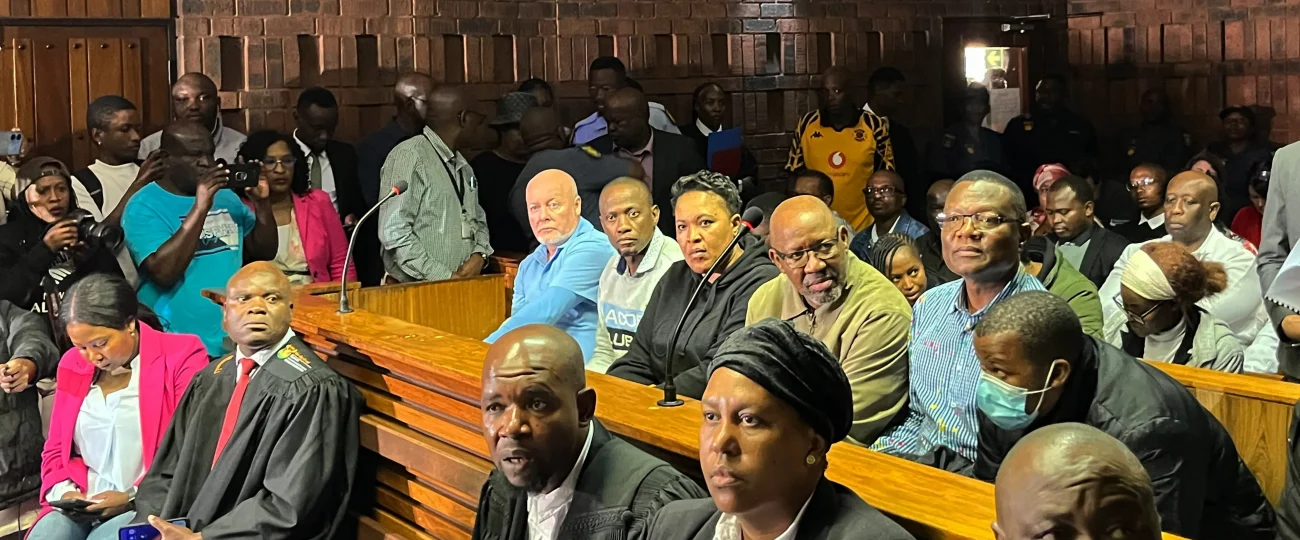
Pretoria Magistrate’s Court buzzed with tension on Wednesday as the 12 officers, faces grim under fluorescent lights, faced charges of fraud, corruption, money laundering, and Public Finance Management Act (PFMA) violations. Bail was granted swiftly – R40,000 to R80,000 each – with ironclad conditions, but Matlala, already cooling his heels as an awaiting-trial prisoner in unrelated cases, walked away empty-handed. His solo appearance is slated for 7 April; the officers return 13 May for deeper probes.
The rot runs deep. Evidence points to a rigged Bid Evaluation Committee (BEC) colluding with Matlala, flouting Treasury rules to crown Medicare24 – despite lacking staff, facilities, or equipment – over a cheaper R228 million rival bid. Matlala pocketed over R50 million before SAPS yanked the plug. Accused officers allegedly skimmed kickbacks, trading badges for bribes in a scandal exposing how SAPS insiders peddle public trust for private gain.
Then came the gut punch: As the courtroom drama peaked, a warrant was issued against Masemola, dragging South Africa’s police chief into the fray. He’s due in court on 21 April on criminal charges linked to the tainted tender. The NPA’s Investigating Directorate Against Corruption (IDAC), tipped off by SAPS insiders in 2024, vows more revelations.
President Cyril Ramaphosa weighed in swiftly, noting the charges and vowing legal process while partnering with Police Minister Senzo Mchunu to steady SAPS. “The Presidency is committed to a stable force fulfilling its mandate,” spokesperson Vincent Magwenya stated.
This 24-hour saga underscores a no-holds-barred war on graft: NPA spokesperson Kaizer Kganyago and IDAC’s Henry Mamothame hailed the arrests as proof agencies can still bite. Yet it lays bare tender tender traps, ensnaring even law enforcers, fueling public fury over billions lost to cronies. Matlala received a payment of just over R50 million before the unlawful contract was cancelled by SAPS. Some of the accused also benefited financially from this contract through money received from Matlala to which they were not entitled.
“There are 14 accused on the roll, which include Matlala and 12 are members of the SAPS, ranging in rank from Brigadier to Captain, two entities and a director of one of the entities. This matter again highlights how tender processes in government, including law enforcement, are compromised through government officials who are prepared to compromise themselves and their institutions just to make money on the side or to pay back favours. The matter was referred to IDAC in 2024 by a component of SAPS. The arrests show that agencies are still able to deal with corruption and effectively so,” the NPA and IDAC said.