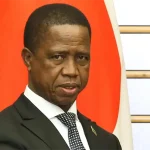
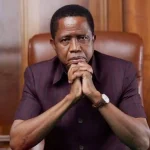
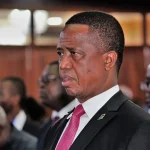
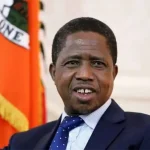
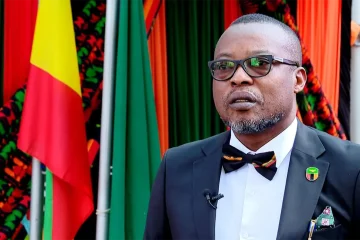
EDGAR Lungu, Zambia’s sixth president, has died at the age of 68 while receiving specialised medical treatment at Mediclinic Medforum Hospital in Pretoria, South Africa. His death was confirmed on Thursday, June 5, by both his political party, the Patriotic Front, and his daughter, Tasila Lungu-Mwansa, who is a member of parliament in Zambia.
Lungu had been under medical supervision for several weeks prior to his passing, with his condition managed privately and with dignity, according to statements from his family. While the specific cause of death was not disclosed, Lungu had reportedly suffered from recurring achalasia, a rare disorder affecting the oesophagus, for which he had previously sought treatment in South Africa.
Lungu served as Zambia’s president from 2015 to 2021, initially assuming office after the death of President Michael Sata and later winning a full term in the 2016 elections. His tenure ended following a landslide defeat by opposition leader Hakainde Hichilema in 2021. After stepping back from politics, Lungu returned to the public sphere in 2023, expressing intentions to contest the 2026 presidential elections. However, his ambitions were curtailed in December 2024 when Zambia’s Constitutional Court ruled him ineligible to run due to constitutional term limits.
A trained lawyer and former military officer, Lungu described himself as an “ordinary Zambian of humble beginnings” and held several key cabinet positions before ascending to the presidency. His leadership was marked by both economic challenges and political controversies, including accusations of corruption involving his family and disputes with the judiciary over his eligibility for future office.
In a video statement, Tasila Lungu-Mwansa paid tribute to her father, invoking the national motto “One Zambia, One Nation” and thanking well-wishers for their support during his illness. The Patriotic Front stated that further details regarding funeral arrangements would be communicated in due course.
Lungu’s passing marks the end of a significant chapter in Zambia’s political history, with tributes and condolences expected from across the nation and the region.
The death of Lungu is likely to have a significant impact on Zambia’s political landscape, though the extent and nature of this impact are complex and multifaceted.
He was a deeply influential figure in Zambian politics, having led the country from 2015 to 2021 under the Patriotic Front (PF) banner. His tenure was marked by increasing authoritarianism, political controversies, and allegations of corruption involving his family and associates. After losing the 2021 election to Hichilema and being barred from contesting the 2026 election by the Constitutional Court, Lungu remained a vocal presence in politics, attempting a comeback that many viewed as an effort to capitalise on opposition weaknesses rather than a genuine resurgence of political power.
His passing removes a polarising figure who had both loyal supporters and detractors. For the Patriotic Front, Lungu’s death could create a leadership vacuum and internal power struggles, as he was a unifying figure for the party’s faction eager to reclaim lost influence. This may weaken the PF’s ability to mount a strong challenge in upcoming elections, especially given the party’s association with past governance failures and corruption scandals.
For the ruling United Party for National Development (UPND) under President Hichilema, Lungu’s death could reduce immediate political tensions with the opposition but also presents a challenge to consolidate democratic gains. Zambia’s recent political history shows a pattern of oscillation between democratic openings and authoritarian tendencies, with Lungu’s presidency representing a period of increasing authoritarianism that was partially reversed in 2021. However, concerns remain about the current government’s own democratic credentials and governance challenges.
Overall, Lungu’s death may accelerate political realignments within the PF and the broader opposition landscape, potentially opening space for new leadership and political narratives. Yet, it also underscores the fragility of Zambia’s democratic progress and the ongoing struggle to balance political competition with national unity and stability.
Lungu’s passing marks the end of an era characterised by authoritarian rule and political controversy, and it is likely to influence Zambia’s political dynamics by weakening the Patriotic Front’s cohesion, altering opposition strategies, and testing the resilience of the country’s democratic institutions.