HISTORIC partnership promises energy independence and economic revival as diamond-dependent nations pivot toward industrial powerhouse status
IN a transformative move that could reshape Southern Africa’s economic future, Namibia and Botswana have announced plans for a massive $4 billion joint oil refinery – the largest energy infrastructure project in the region’s history.
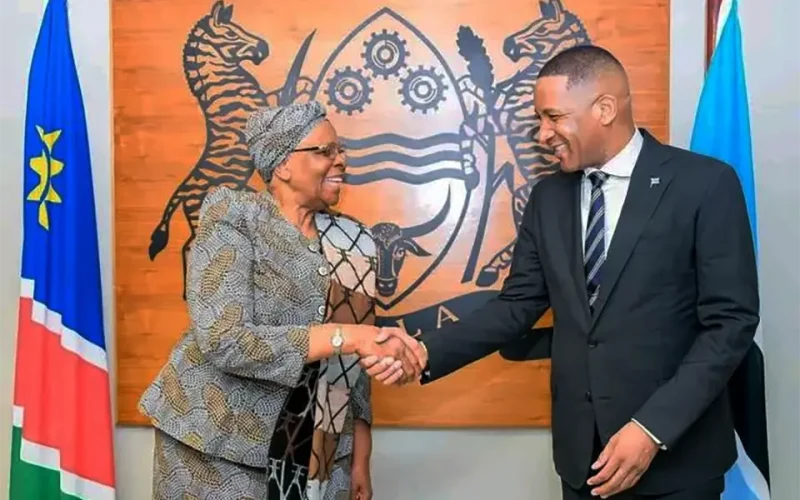
The ambitious venture, formalised through recent high-level talks between Namibian President Netumbo Nandi-Ndaitwah and Botswana President Duma Boko, will process up to 100,000 barrels of crude oil daily, producing essential fuels for domestic consumption and regional export.
Breaking Free from Energy Dependence
For decades, both nations have remained vulnerable to volatile international oil markets, importing refined petroleum products primarily from South Africa. The new facility promises to end this dependency while positioning the partnership as a regional energy hub serving Zimbabwe, Zambia, and the Democratic Republic of Congo.
“This refinery represents more than infrastructure—it’s about economic sovereignty,” said regional energy analyst Dr. Sarah Mthembu. “Southern Africa is finally taking control of its energy destiny.”
The facility will produce petrol, diesel, kerosene, and jet fuel, with potential locations under assessment near Namibia’s Walvis Bay and Botswana’s Ghanzi region. Environmental and social impact studies are currently underway to determine the final site.
Economic Lifeline as Diamond Era Dims
The timing proves critical as both countries grapple with declining diamond revenues – their traditional economic backbone – amid weakening global demand and competition from synthetic alternatives. The refinery offers a crucial economic diversification pathway.
Conservative estimates suggest the project will generate thousands of jobs during construction and operations, directly addressing youth unemployment rates exceeding 30% in both countries. Beyond immediate employment, the venture promises to catalyse broader industrial development and skills training programs.
“We’re witnessing a fundamental economic pivot,” noted Johannesburg-based economist Prof. Michael Kariuki. “This could be the foundation for Southern Africa’s next industrial revolution.”
Financing the Future
Project financing combines public-private partnerships with support from the African Development Bank and the Development Bank of Southern Africa. International oil companies are reportedly in early discussions to provide technical expertise and operational standards.
Both governments have committed to implementing cutting-edge refining technologies and renewable energy integration, addressing environmental concerns while maintaining commercial viability.
Regional Game-Changer
The refinery’s strategic importance extends far beyond national borders. By reducing regional dependence on external fuel sources, the project strengthens Southern Africa’s economic resilience against global market shocks and geopolitical pressures.
The initiative aligns with Southern African Development Community goals for enhanced regional integration, potentially spurring additional cross-border infrastructure projects and trade relationships.
Timeline and Next Steps
Feasibility studies and financing agreements are expected to conclude by late 2025, with construction beginning in early 2026. The project timeline suggests operational capacity could be achieved within three to four years.
As Southern Africa faces mounting economic pressures and energy security challenges, the Namibia-Botswana refinery partnership emerges as a bold blueprint for regional cooperation and sustainable development.
The success of this venture could establish a new model for African nations seeking energy independence while building stronger economic ties across traditional borders—marking the beginning of a transformative era for Southern Africa’s energy landscape.