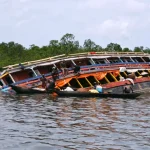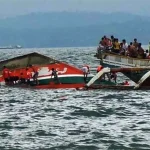
THE muddy waters of the Congo River have turned crimson with tragedy after two catastrophic boat accidents claimed at least 193 lives in a devastating 48-hour period that has shattered communities across the Democratic Republic of Congo (DRC)’s remote Equateur Province.
INFERNO ON THE WATER
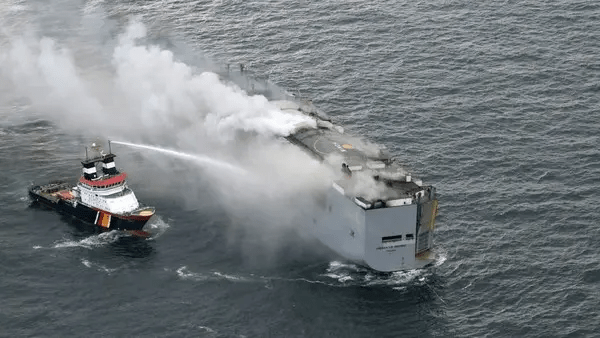
The second disaster which took place on Thursday, disaster unfolded like a nightmare on the Congo River’s deceptively calm surface. A wooden vessel groaning under the weight of nearly 500 desperate passengers suddenly erupted in flames before capsizing in the Lukolela territory’s treacherous waters. The floating pyre claimed 107 souls while 146 others vanished beneath the river’s unforgiving embrace, their bodies likely swept away by currents that have claimed countless lives before them.
Survivors – 209 in total – were plucked from the water near Malange village by rescue boats that raced against time and the river’s deadly pull. Their accounts paint a picture of chaos: screaming passengers trapped by flames above and drowning waters below, children separated from parents in the pandemonium, and the sickening sound of wood splintering as the overladen vessel surrendered to forces beyond human control.
STUDENTS’ FINAL JOURNEY
Just 24 hours earlier, another aquatic tomb had already been carved from the river’s depths. On Wednesday, 86 people – most of them young students whose dreams died with them – perished when their motorized boat capsized in the Basankusu territory. The vessel, victim of what authorities grimly termed “improper loading and night navigation,” became a mass grave in minutes.
Images from the scene reveal the stark reality of river transport gone wrong: villagers gathered in silent vigil around bodies pulled from the water, their faces etched with the particular grief that comes when an entire community loses its children to preventable tragedy.
These latest casualties add their names to a growing ledger of lives lost to the DRC’s maritime roulette. In this vast Central African nation where roads crumble and fuel costs soar, millions have no choice but to entrust their lives to aging wooden vessels that were never designed to carry such desperate human cargo.
The boats that ply these waters are floating disasters waiting to happen: ancient timber groaning under impossible loads, passengers and goods crammed into every available space, life jackets as rare as hope itself. Many vessels operate under cover of darkness, transforming routine journeys into games of chance where rescue becomes nearly impossible when fate inevitably intervenes.
RIVER OF NO RETURN
Local civil society groups have pointed accusing fingers at government negligence, claiming the true death toll far exceeds official numbers and that preventable tragedies continue to claim lives while authorities turn blind eyes to the carnage.
The Congo River, once the economic lifeline that connected remote villages to the wider world, has become a watery cemetery where entire families disappear without trace, their bodies swept downstream to join countless others who gambled their lives on rotting wood and rusted metal.
As search efforts continue and communities count their missing, the fundamental question remains unanswered: How many more must die before the Democratic Republic of Congo confronts the maritime massacre happening on its doorstep?
The river flows on, indifferent to human suffering, carrying both the living and the dead toward an uncertain horizon.