AFRICA’S richest man is spearheading what analysts are calling the continent’s most ambitious indigenous industrialisation drive, with Aliko Dangote’s conglomerate announcing over $3.5 billion in new investments across Ethiopia and Zimbabwe, following the successful launch of Africa’s largest oil refinery.
Ethiopian Investment Holdings and Dangote Group signed an agreement to develop a three-million-metric-ton-per-annum urea fertiliser production complex in Gode, Ethiopia, with project costs estimated not to exceed $2.5 billion.
Under the partnership structure, Ethiopian Investment Holdings will hold 40% equity while Dangote Group maintains 60% ownership of what will become one of the world’s five largest urea production facilities. The project targets completion within 40 months from commencement.
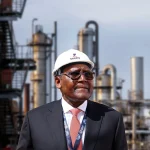
“This partnership represents a pivotal moment in our shared vision to industrialise Africa and achieve food security across the continent,” Dangote said in a statement. “The strategic location of Gode, combined with Ethiopia’s abundant natural gas resources from the Hilal and Calub reserves, makes this an ideal location for what will become one of the world’s largest fertiliser complexes.”
The facility will include advanced gas transport pipelines connecting Ethiopia’s Hilal and Calub natural gas reserves to the Gode production site, along with storage facilities, logistics infrastructure, and export capabilities designed to serve both domestic and regional markets.
Dr Brook Taye, CEO of Ethiopian Investment Holdings, called the agreement “a significant milestone in Ethiopia’s journey toward industrial self-sufficiency and agricultural modernisation,” noting that the project will substantially enhance agricultural productivity while positioning Ethiopia as a regional fertiliser production hub.

Zimbabwe Investment Tops $1 Billion
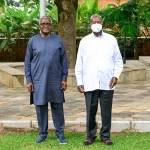
In a separate development, Dangote has announced at least $1 billion in investments in Zimbabwe following a meeting with President Emmerson Mnangagwa in Harare.
“We have just signed an agreement between Zimbabwe and the Dangote Group to do various investments in various sectors, some of which are, of course, cement, power generation and a pipeline to bring petroleum products,” Dangote told reporters.
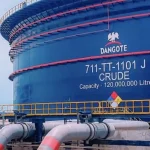
The pipeline component is designed to complement the Dangote Group’s 650,000-barrel-per-day oil refinery in Nigeria, which began operations in February 2024 and stands as the world’s largest single-train refinery.
Asked about his return to Zimbabwe after abandoning investment plans in 2015 under then-President Robert Mugabe, Dangote cited improved governance. “There are quite a lot of changes between the time when we came and now. The government is solid, there is a lot of transparency,” he said.
Record $4 Billion Refinery Refinancing Secured
The investment announcements follow the African Export-Import Bank’s recent disclosure of a $1.35 billion financing facility to Dangote Industries Limited as part of a larger $4 billion syndicated refinancing arrangement for the Dangote Petroleum Refinery and Petrochemicals Complex.
Afreximbank contributed the largest share among participating banks in what officials described as one of the largest syndicated loans in recent African financial markets. The financing refinances capital expended on constructing the refinery and alleviates operational expenditures while enhancing Dangote Industries’ balance sheet.
“With this landmark deal, we once again demonstrate that Africa’s development can only be meaningfully financed from within,” said Professor Benedict Oramah, President of Afreximbank. “It is only when African institutions lead the way that others can follow.”
Dangote added: “Afreximbank’s contribution to this milestone financing underscores our shared vision to industrialise Africa from within. This refinancing strengthens our balance sheet and accelerates with ease the refinery’s supply of high-quality refined petroleum products across Africa.”
Strategic Impact on Food and Energy Security
The Ethiopian fertiliser complex addresses a critical gap in agricultural supply chains. With over 70% of Ethiopia’s population employed in agriculture, the facility is expected to significantly reduce the country’s dependence on fertiliser imports while creating thousands of direct and indirect jobs in the Somali Regional State.
The 3-million-ton annual capacity will substantially exceed most existing facilities worldwide, positioning Ethiopia as a major supplier for the African continent and potentially reducing import costs across East Africa.
For Nigeria, the refinery’s 650,000-barrel-per-day capacity ends decades of the paradox where Africa’s largest oil producer exported crude oil while importing refined petroleum products. The facility has been operational since February 2024, with Afreximbank providing ongoing financing solutions for crude supply and product offtake.
Continental Expansion Strategy
The Dangote Group now operates in 17 African countries, with Dangote Cement ranking as a leading cement manufacturer on the continent. The group’s expansion strategy focuses on sectors critical to industrialisation: energy, agriculture, construction materials, and infrastructure.
The syndicated facility for the refinery attracted participation from leading African and international financial institutions, reflecting what Dangote described as “enduring confidence in Africa’s industrial potential.”
The fertiliser agreement also provides for potential expansions into ammonia-based fertilisers, including ammonium nitrate, ammonium sulfate, and calcium ammonium nitrate, further cementing Ethiopia’s position as a regional fertiliser production hub.
Employment and Economic Multiplier Effects
The combined investments are expected to create thousands of direct jobs in construction and operations, with significant indirect employment through supply chains, logistics, and related services.
The 40-month construction timeline for the Ethiopia project alone will require substantial workforce mobilisation, while the pipeline infrastructure connecting the Hilal and Calub gas reserves to Gode will develop previously remote regions.
In Zimbabwe, the cement, power generation, and pipeline investments will support broader infrastructure development across the southern African country, which has struggled with industrial capacity following years of economic challenges.
Market Positioning and Global Competition
With the Ethiopia facility targeting 3 million metric tons annually, the complex will compete directly with major global fertiliser producers while serving a continent that has historically relied on imports from outside Africa.
The utilisation of domestic gas reserves through dedicated pipeline infrastructure is designed to ensure cost competitiveness in global markets while providing energy security for decades.
The Dangote Refinery’s 650,000-barrel-per-day capacity similarly positions it among the world’s largest refining operations, with the single-train design offering operational efficiencies that traditional multi-train refineries cannot match.
African-Led Development Model
The transactions represent a shift toward African institutions financing African development. Afreximbank’s $1.35 billion contribution to the refinery refinancing marked the largest share among participating banks, with Professor Oramah emphasising that “the journey to utilise African resources for its own economic transformation is well underway.”
The model contrasts with traditional development financing dominated by Western institutions and bilateral aid, instead leveraging African financial institutions, African entrepreneurs, and African natural resources for continent-led industrialisation.
The Ethiopian partnership structure, with EIH holding 40% and Dangote Group 60%, ensures significant local ownership while bringing Dangote’s experience in large-scale industrial projects across Africa to the development.
Regional Integration Implications
The projects support broader regional integration objectives by creating reliable supply chains for essential products. The fertiliser complex will serve neighbouring countries beyond Ethiopia, potentially transforming agricultural productivity across East Africa.
Similarly, the Zimbabwe pipeline infrastructure will facilitate petroleum product distribution across southern Africa, reducing logistics costs and improving supply reliability.
The Dangote Refinery has already begun supplying markets beyond Nigeria, with Afreximbank supporting product offtake across the continent.