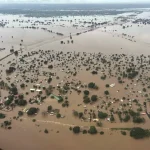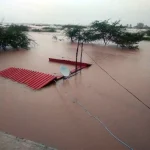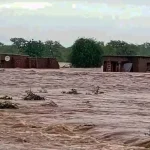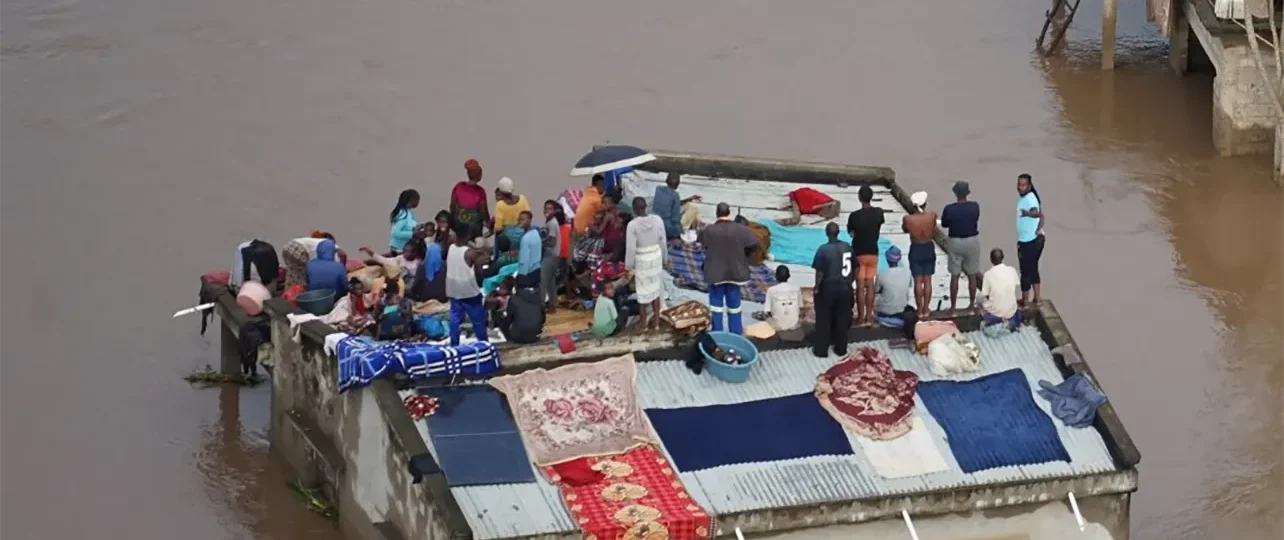

A catastrophic convergence of climate extremes and structural vulnerability is transforming Mozambique’s flooding crisis into what UN officials warn could become a public health emergency, with more than half a million people caught between rising waters, collapsing infrastructure, and the looming spectre of waterborne disease outbreaks.
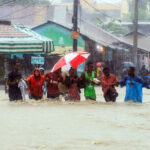
The scale of the disaster defies easy comprehension. Dams are discharging 10,000 cubic meters of water per second – enough to fill a large auditorium 25 times over every 60 seconds – even as the immediate rainfall threat subsides. This relentless deluge has already damaged 5,000 kilometres of roads across nine provinces and severed the main artery linking the capital Maputo to the rest of the nation, strangling supply chains at a moment when humanitarian access is most critical.
“The numbers keep rising as extensive flooding continues and dams keep releasing water to avoid bursting,” said Paola Emerson, head of the UN aid coordination office (OCHA) in Mozambique, speaking from flood-ravaged Xai-Xai, the capital of the hardest-hit Gaza province.
A Nation Built on Dissolving Foundations
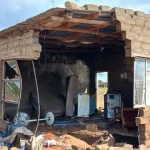
What distinguishes this crisis from typical flooding disasters is Mozambique’s fundamental architectural vulnerability. Ninety percent of the population lives in adobe houses – earth-based structures that, as Emerson noted with stark simplicity, “basically melt after a few days’ rains.” This isn’t merely infrastructure damage; it’s the wholesale dissolution of shelter for millions.
The Gaza, Maputo, and Sofala provinces bear the brunt of destruction, with health facilities and critical infrastructure succumbing to waters that have breached the boundaries between wilderness and civilisation. Authorities in Xai-Xai have issued warnings that would seem surreal in any other context: crocodiles from the swollen Limpopo River are now prowling flooded urban areas, forcing evacuations and adding a predatory dimension to an already dire humanitarian situation.
Children in the Crosshairs
The flooding strikes at a population already teetering on the edge of malnutrition. UNICEF’s Chief of Communication in Mozambique, Guy Taylor, emphasised that even before the floods, four out of every ten Mozambican children suffered chronic malnutrition. The current disruption to food supplies, health services, and care systems threatens to push the most vulnerable into what he described as “a dangerous spiral.”
“The combination of waterborne diseases and malnutrition can often prove lethal,” Taylor warned, speaking from Xai-Xai. His concern takes on added urgency given Mozambique’s demographic reality: with a median age of just 17, this is fundamentally “a country of children and young people,” making the youngest the hardest hit when disasters strike.
Taylor’s warning carries additional weight as Mozambique enters its annual cyclone season, raising the spectre of compounding catastrophes that could overwhelm an already fractured response capacity.
A Test of Emergency Response
The Government of Mozambique has declared a national emergency and established an emergency operations centre in Gaza province, but the physical reality on the ground presents formidable challenges. With the main road to Maputo impassable and thousands of kilometres of secondary routes damaged, delivering aid to isolated communities becomes a logistical puzzle with life-or-death consequences.
“We can prevent disease, deaths and irreversible losses to children, but we need to act fast,” Taylor insisted, distilling the crisis to its essential imperative: speed matters when contaminated water, hunger, and disease form a lethal triangle closing in on the most vulnerable.
As floodwaters continue to rise and dams maintain their torrential releases to prevent catastrophic failure, Mozambique faces a race against compounding threats—where infrastructure collapse, ecological displacement, and public health vulnerabilities converge into a humanitarian emergency that demands immediate international attention and resources.