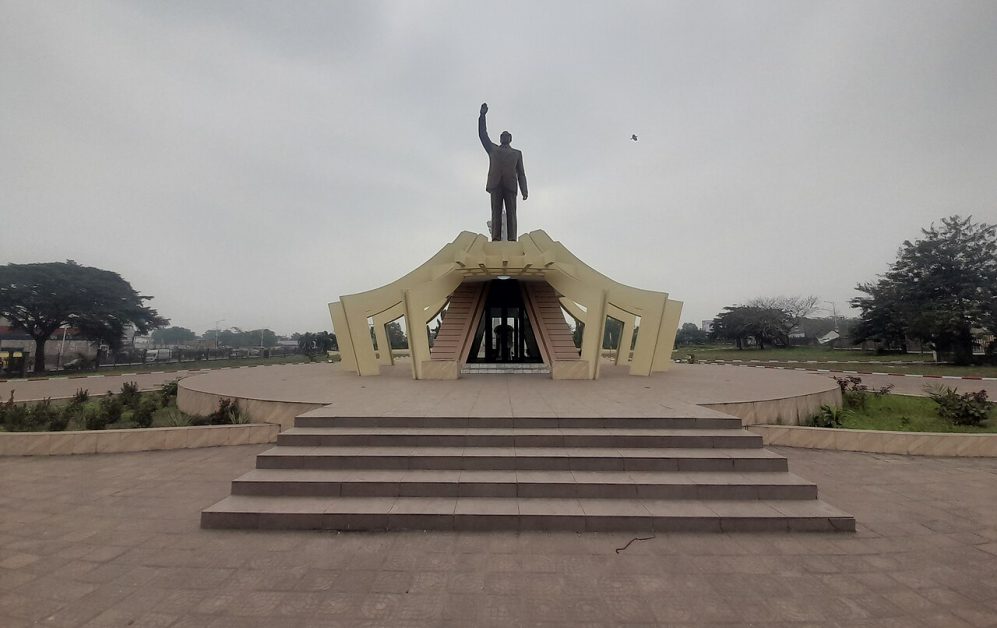
IN the annals of colonial violence, few cases illustrate the glacial pace of accountability quite like the murder of Patrice Lumumba. Sixty-five years after the Congolese independence leader was executed and his body dissolved in acid – a grotesque attempt to erase him from history itself – his family gathered outside a Brussels courtroom this week with something they’ve been denied for generations: hope that justice might finally arrive.
“We cannot turn back time,” said Yema Lumumba, 33, the slain leader’s granddaughter, her words carrying the weight of three generations who have pursued answers in a legal wilderness. “But we are counting on the Belgian justice system to do its job and shed light on history.”
The wheels of justice turn slowly. In the case of Patrice Lumumba’s family, they have turned painfully, agonisingly slow-grinding through 15 years of formal legal action, preceded by decades of official denials, diplomatic obfuscation, and what the family describes as a “vast conspiracy” to bury the truth alongside their patriarch’s remains.
The Man They Tried to Erase
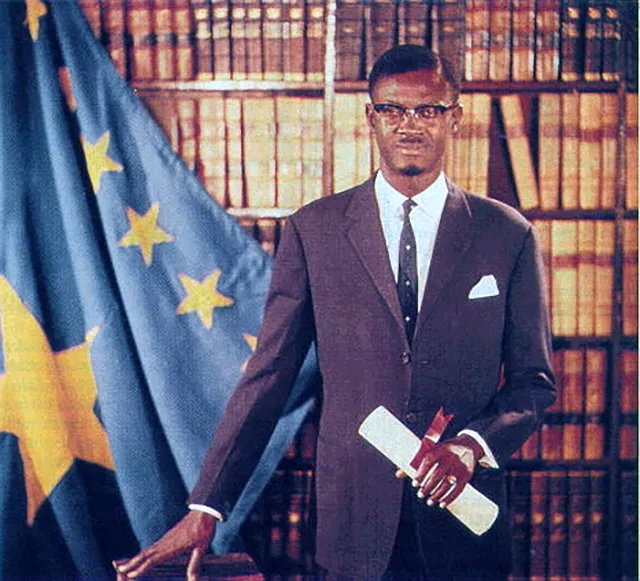
Patrice Lumumba was not merely a politician; he was the embodiment of African self-determination at a pivotal moment in history. When the Democratic Republic of Congo gained independence from Belgium on June 30, 1960, Lumumba became the nation’s first democratically elected prime minister. His crime, in the eyes of those who orchestrated his downfall, was unforgivable: he refused to be a puppet of Western interests during the Cold War’s most volatile period.
Lumumba’s tenure lasted a mere 81 days. His fiery speeches denouncing colonialism and his vision of genuine Congolese sovereignty made him dangerous to multiple power structures – Belgian colonial interests determined to maintain control over Congo’s vast mineral wealth, Western governments fearful of Soviet influence in resource-rich Africa, and Congolese separatists in the mineral-wealthy Katanga province.
In January 1961, Lumumba was executed by a firing squad in Katanga, with Belgian mercenaries and officials facilitating his capture, transfer, and murder. His body was dismembered and dissolved in sulfuric acid in what can only be described as an attempt at historical erasure – destroying not just a man, but the very evidence of his existence.
A Single Tooth: The Weight of Remnants
The discovery during Belgium’s investigation into potential war crimes proved as macabre as it was significant: a single tooth, seized from the daughter of a deceased Belgian police officer who had participated in the body’s disappearance. This fragment – the only known physical remains of Patrice Lumumba – became a symbol of both colonial brutality and the impossibility of complete erasure.
In June 2022, the tooth was returned to DRC authorities in an official ceremony laden with historical weight. A coffin bearing this solitary relic travelled from Brussels to Kinshasa, where it was received by a nation still grappling with the legacy of a leader taken too soon. Then Belgian Prime Minister Alexander De Croo offered formal apologies for his government’s “moral responsibility” in Lumumba’s disappearance, pointing to Belgian officials who “chose not to see” and “not to act.”
For Lumumba’s children, who attended the ceremony, the return of their father’s tooth was bittersweet recognition – an acknowledgement of wrongdoing that came more than six decades too late for them to hear it with their father present, yet still meaningful in its symbolic power.
The Last Man Standing
Today, only one suspect remains alive to face potential prosecution: Etienne Davignon, now 93, a former European Commissioner who was a junior Belgian diplomat during Congo’s tumultuous independence period. Belgian federal prosecutors accuse him of involvement in the “unlawful detention and transfer” of Lumumba, as well as subjecting him to “humiliating and degrading treatment.”
Davignon has consistently denied Belgian complicity in the murder. His lawyer declined comment before Tuesday’s closed-door hearing, where the Brussels court heard arguments on whether to proceed with a full trial.
The prosecution of a 93-year-old man for crimes committed when he was a young diplomat raises profound questions about justice delayed. Yet for Lumumba’s descendants, his age is irrelevant to the principle at stake.
“This is not about revenge, but about a thirst for knowledge,” Roland Lumumba, one of Patrice’s sons, explained from Kinshasa. “Millions of people would like to know the truth.”
A Nation’s Demand for Reckoning
The Lumumba family’s pursuit of justice exists within a broader movement among Congolese citizens demanding reparations and accountability for colonial crimes. Belgium’s rule over Congo – first as the personal possession of King Leopold II, then as a Belgian colony – represents one of history’s most brutal colonial enterprises, resulting in millions of deaths through forced labour, violence, and exploitation.
The assassination of Lumumba is viewed not as an isolated incident but as emblematic of Belgium’s broader pattern of interference in Congolese affairs, prioritising access to resources like cobalt, copper, and diamonds over Congolese lives and sovereignty. For many Congolese, the pursuit of justice in Lumumba’s case represents a proxy battle for recognition of colonialism’s ongoing impact on their nation’s development.
In recent years, pressure has mounted on Belgium to confront its colonial past more honestly. The handover of Lumumba’s tooth in 2022 marked a shift in official Belgian rhetoric, moving from ambiguity to explicit acknowledgement of “moral responsibility.” Yet activists and scholars argue that moral responsibility without legal accountability remains insufficient – a symbolic gesture that costs nothing while changing little.
The Long Arc Bends—But Toward What?
Christophe Marchand, a lawyer representing the Lumumba family, framed Tuesday’s hearing in stark terms: “Refusing this trial would amount to definitively confirming the impunity for major colonial crimes.”
The hearing provided an opportunity for the family to file new civil lawsuits on behalf of approximately ten of Lumumba’s grandchildren – six of whom attended the proceedings. Their presence underscores that this pursuit has become multigenerational. Yema Lumumba articulated the torch-passing taking place: “Our parents are getting on in years. It’s important for us to show that this fight continues, that we are here to ensure it is carried through to the end.”
A decision on whether to proceed to trial is expected within weeks. If approved, Marchand anticipates a trial in early 2027, which would be 66 years after the murder itself.
Justice and the Weight of Time
The Lumumba case forces us to confront uncomfortable truths about accountability in international affairs. When crimes are committed by or with the complicity of powerful states, the mechanisms of justice operate on geological timescales. Witnesses die. Evidence disappears. Officials retire to comfortable lives, their involvement in atrocities becoming historical footnotes rather than courtroom facts.
Yet the Lumumba family’s persistence offers a counternarrative to inevitable impunity. Their 15-year legal battle – and the decades of advocacy that preceded it – demonstrates that while justice delayed is indeed justice denied, the pursuit itself carries meaning. Each hearing, each official apology, each returned relic chips away at the edifice of denial that has protected the powerful for generations.
After Davignon’s diplomatic service in 1959 and involvement in Congolese independence negotiations, he ascended to prominence, becoming a European Commission vice-president for industry in the 1980s. He built a distinguished career while the family of the man whose fate he allegedly helped seal lived with absence and unanswered questions.
Now, in the twilight of his life, that past has arrived to demand answers.
Whether a Belgian court will ultimately hold a trial, and what such a trial might reveal about the network of complicity surrounding Lumumba’s assassination, remains uncertain. But for millions of Congolese and for Lumumba’s descendants, the mere possibility represents something profound: the chance that history might finally speak its truth, that the mechanisms of erasure might prove incomplete, and that even after 65 years, the arc of justice—however painfully slowly – might still bend.
As Yema Lumumba stood outside that Brussels courthouse, she embodied a simple but revolutionary principle: some truths are too important to let die, some crimes too significant to forget, and some fights too just to abandon – no matter how many decades the powerful make you wait.