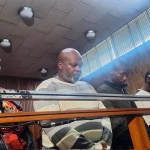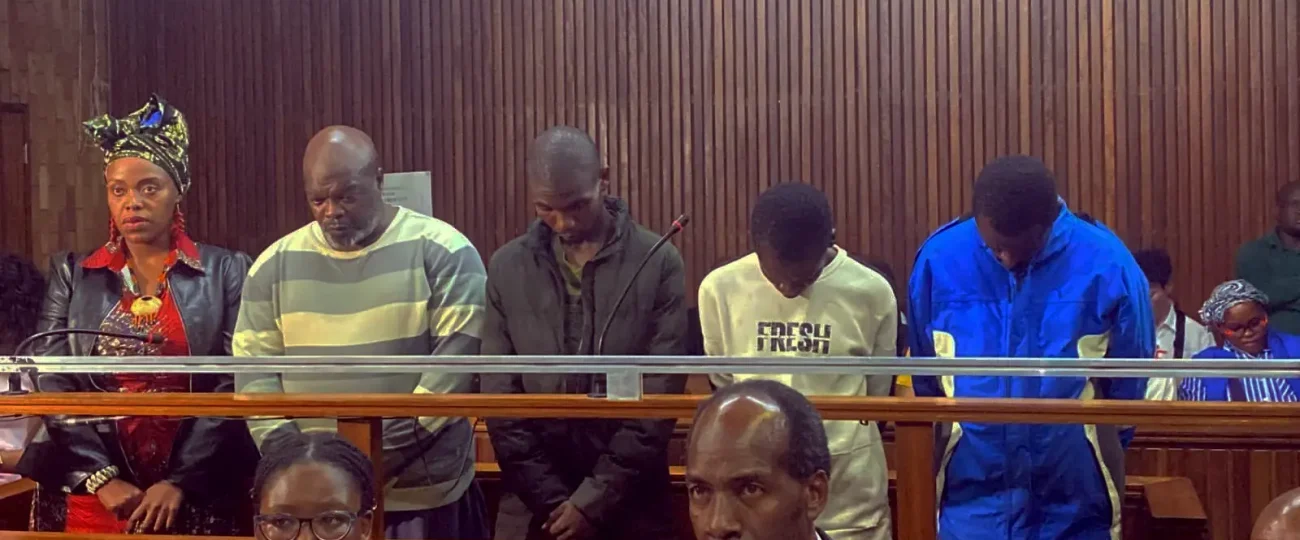

FIVE suspects accused of illegally recruiting South Africans to fight in the Russia-Ukraine war will spend the next seven days behind bars after appearing in Kempton Park Magistrates Court on Sunday and being remanded in custody pending formal bail applications.
The Directorate for Priority Crime Investigation (Hawks) charged Nonkululeko Mantula (39), Thulani Mazibuko (24), Xolani Ntuli (47), Siphamandla Tshabalala (23), and Sfiso Mabena (21) with violating the Regulation of Foreign Military Assistance Act—one of Africa’s toughest anti-mercenary laws carrying sentences up to 25 years. The case was postponed to Monday, December 8, 2025, for formal bail hearings.
The arrests mark the first prosecutions in a widening scandal that has already claimed a major political casualty: on Friday, Duduzile Zuma-Sambudla resigned as a Member of Parliament representing the uMkhonto weSizwe Party after her elder sister filed criminal charges accusing her of recruiting 17 South Africans—including eight Zuma family members—to fight for Russia under false pretences.
From Tip-Off to Arrests
The operation began when OR Tambo International Airport police flagged three males travelling to Russia via the United Arab Emirates as suspicious and removed them from their boarding gate. Investigators from the Hawks’ Crimes Against the State (CATS) unit – typically reserved for national security threats—discovered that a South African female had been facilitating recruitment into the Russian military.
Search warrants executed across multiple locations yielded electronic devices and backpacks containing evidence. When one suspect returned from overseas on November 27, their interview “uncovered further evidence” leading to three additional arrests on November 28. The fifth suspect, Sfiso Mabena, was arrested on November 29.
The court’s decision to remand all five in custody suggests prosecutors convinced the magistrate that the accused pose flight risks, might interfere with witnesses, or that the offences are serious enough to warrant pre-trial detention—particularly given their international connections and the ongoing nature of the investigation.
Political Earthquake: Duduzile’s Friday Resignation
Days before the court appearance, Duduzile Zuma-Sambudla’s resignation on Friday represented a spectacular political collapse for the daughter of former President Jacob Zuma. Sources say she claimed she had been “misled” about the recruitment operation—what legal experts characterise as an indirect confession while attempting to establish a defence.
The resignation came after her sister, Nkosazana Bonganini Zuma-Mncube, filed charges at Sandton Police Station on November 22, naming Duduzile and two others—Siphokazi Xuma and Blessing Khoza—as orchestrators of the trafficking scheme.
“These men were lured to Russia under false pretences and handed to a Russian mercenary group to fight in the Ukraine war without their knowledge and consent,” Nkosazana stated in a public declaration. “Among the 17 men are eight of my family members.”
Duduzile was already facing separate charges for allegedly inciting the July 2021 riots in KwaZulu-Natal that killed over 350 people. Her exit from Parliament suggests either recognition that her legal position had become untenable, or that MK Party leadership—possibly including her father—concluded she had become an unacceptable liability for a party claiming the mantle of South Africa’s liberation legacy.
The Recruitment Network
The five accused now in custody appear to represent a sophisticated multi-layered operation:
Mantula (39), identified as the primary facilitator, likely coordinated between Russian contacts and South African recruits. Ntuli (47) may have handled logistics or finances. The three youngest – Mazibuko (24), Tshabalala (23), and Mabena (21) – likely served as street-level recruiters, using peer credibility to target young men facing South Africa’s 60% youth unemployment rate.
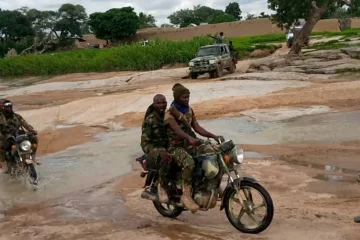
Recruits were promised up to $18,000 for “security work,” “bodyguard training,” or “technical jobs”—anything but combat. Instead, they were delivered to Russian military formations and deployed to the Donbas region, where casualty rates in some units exceed 70%.
Legal Hammer: Foreign Military Assistance Act
South Africa’s Foreign Military Assistance Act of 1998 explicitly prohibits citizens from fighting in foreign conflicts without government authorisation – a law born from the determination that post-apartheid South Africa would not export mercenaries as the apartheid regime had done.
The statute’s application is straightforward: the accused allegedly recruited South Africans for a foreign military without authorisation. That recruits now plead for government help from a war zone provides compelling evidence of the harm the law was designed to prevent.
Violations carry severe penalties, including imprisonment for up to 25 years for the most serious offences, along with asset forfeiture and significant fines.
International Investigation Expands
The Hawks confirmed “coordination with intelligence and international law enforcement agencies is ongoing to determine the full extent of the network and any further security threats.”
This international cooperation likely involves:
- Interpol for transnational crime coordination
- Russian and Ukrainian authorities to determine the fate of recruits and establish recruitment methods
- UAE authorities since the suspects travelled through the Emirates
- Western intelligence services are intensely interested in Russian military recruitment
The reference to “further security threats” suggests investigators are probing whether the network involved espionage, organised crime connections, or compromise of South African border and security agencies—explaining why the case was assigned to the Crimes Against the State unit rather than ordinary criminal investigators.
Continental Crisis: 1,400 Africans Fighting for Russia
South Africa’s aggressive response contrasts sharply with most African nations’ inaction. Ukrainian intelligence reports more than 1,400 Africans from over 30 countries fighting for Russia. Kenya confirmed 200+ citizens deployed, with recruitment networks still active despite government awareness.
Most African countries lack South Africa’s legal frameworks. The Foreign Military Assistance Act and Trafficking in Persons Act provide prosecutors with tools that few continental counterparts possess. These prosecutions could establish a precedent pressuring other governments to act.
But underlying pathologies remain: catastrophic youth unemployment makes young Africans vulnerable to deceptive recruitment. Until economies generate viable opportunities, networks will find willing targets.
The 17 Stranded: Victims Awaiting Rescue
While prosecutors pursue their recruiters, 17 South African men remain trapped in Donbas, facing artillery warfare without training or language skills. They cannot easily surrender to Ukrainian forces without POW detention, cannot flee Russian formations without facing desertion charges, and depend on diplomatic negotiations between countries with conflicting interests.
Former President Zuma has reportedly appealed directly to Russia for their release—shadow diplomacy now complicated by his daughter’s Friday resignation and alleged involvement in their recruitment.
MK Party’s Existential Crisis
For the uMkhonto weSizwe Party, named after the ANC’s liberation army, Duduzile’s Friday resignation begins what could be catastrophic damage. The party faces devastating questions: Was party infrastructure used for recruitment? What did Jacob Zuma know? How does a party claiming the liberation legacy explain having an MP implicated in human trafficking?
The ANC and opposition parties are already exploiting the scandal with pointed questions: Has uMkhonto weSizwe—once a genuine liberation force—been reduced to mercenary trafficking for profit?
What Comes Next
As the five accused spend their first week in custody, the December 8 bail hearing will be critical. Prosecutors will argue the accused pose flight risks given international connections, potential access to recruitment proceeds, and the serious nature of charges carrying 25-year maximum sentences. Defence attorneys will likely argue their clients were themselves deceived, pose no danger to the public, and deserve release pending trial.
The Hawks’ statement that investigations continue and that authorities are determining the network’s “full extent” signals expectations of additional arrests. The question looms: Will those named in Nkosazana Zuma-Mncube’s November 22 criminal complaint—including her sister Duduzile, despite her resignation—face arrest in the coming days?
Diplomatically, repatriation efforts for the 17 trapped men continue, now complicated by arrests, Duduzile’s resignation, and mounting political fallout. The Zuma family drama—siblings turned adversaries, family members in a war zone, a former president navigating between protecting daughters and relatives in Ukraine—will play out publicly for months.
The five arrests and Sunday’s remand decision mark important victories for South African law enforcement, but they represent opening moves in an extended campaign. As the Hawks continue coordinating with international agencies and pursuing additional suspects, one thing is clear: Africa’s mercenary recruitment crisis has finally provoked a serious legal response.
Whether other African nations follow South Africa’s lead—and whether prosecutions can address the economic desperation that makes recruitment possible—will determine if these arrests represent a turning point or merely a temporary disruption in networks that continue exploiting the continent’s most vulnerable young people.